105 – They Shall Not Grow Old

Commemorating the centenary of the First World War, Peter Jackson was approached by 14-18 NOW and the Imperial War Museum to make use of their extensive archive of wartime footage. He responded to the call by performing significant alterations to it, including colourisation and conversion to 3D, hoping to present it afresh and help modern audiences feel closer to the war it documents. It’s been a controversial project, surrounded by much commentary on its ethics, but after all the hype and chin-stroking, They Shall Not Grow Old – even the title of which has been edited to suit modern syntax – is finally here.

Those ethical questions occupy a good deal of our attention, justifiably so, but we find there’s a good deal more to consider about the film too. Perhaps unusually for a First World War film, it eschews entirely any discussion of the political background to the war or criticism – even mention – of the top brass, instead focusing entirely on the experience, in quite general terms, of the British soldiers. Narrated entirely by some 114 different servicemen, their commentary drawn from BBC and IWM interviews, Jackson builds a portrait of a mindset of the salt-of-the-earth Tommy, keen to go to war at a tender age, open to new experience, happy to do as he’s told and get on with his job under terrible, and terrifying, circumstances. It’s a portrait that leaves out at least as much as it includes, and the question of how choices were made as to what footage and audio was included from the archives made available to Jackson is arguably more pressing, and certainly less clear, than that of why the footage was altered in the ways it was.

We grapple with all sort of these issues and touch on several more, particularly the traditional, unfair, untruthful, and insidious permission the film gives English audiences to believe we won the war without help – an issue that angers José, a Canadian, and rightly so. Mike also picks up on a couple of moments that struck him as of particular relevance in the age of Brexit, though that’s also because it’s a topic he can be relied upon to bring up at a moment’s notice.

As to those pesky ethics, we come away, despite some fair criticisms, a little milquetoast on the subject. Mike has a bigger issue with the quality of the alterations than the justification, finding them genuinely unpleasant to look at for the most part, but suggests that the modifications have been so extensive that the footage has been transformed into something qualitatively different, that to take the film seriously as a document would be an act of madness. José, rather more simply, sees value in the work, pointing out how it allows us to pick out aspects of scenes, and particularly faces, more easily, and allowing a more visceral closeness to the environments depicted than we might otherwise have.

All in all, as long as the original black and white film remains extant and publicly available, and provided that, when used as teaching material, the conceptualisation and production of They Shall Not Grow Old is included as a matter for classroom discussion, we’re not convinced that the film is a bad idea.

Below are links to a few blog entries and reviews we mentioned in the podcast, from Lawrence Napper and Pamela Hutchinson.

Lawrence Napper’s first blog entry: https://atthepictures.photo.blog/2018/10/05/they-shall-not-grow-old/

Lawrence’s second blog entry: https://atthepictures.photo.blog/2018/10/12/they-shall-not-grow-old-2-the-abject-archive-the-sacred-archive/

Lawrence’s review on Iamhist: http://iamhist.net/2018/10/they_shall_not_grow_old/

Pamela Hutchinson’s review on Silent London: https://silentlondon.co.uk/2018/10/16/lff-review-they-shall-not-grow-old-honours-veterans-but-not-the-archive/

The podcast can be listened to in the players above or on iTunes.

With José Arroyo of First Impressions and Michael Glass of Writing About Film.

104 – Bad Times at the El Royale

We pick at flaw after flaw in a film we sincerely enjoyed! Drew Goddard’s post-noir, post-Tarantino, post-Hitchcock thriller is an oddball, a delightfully playful collection of stories about secrets and regrets and temptations and damage. A fabulous ensemble cast is split up and paired off in all sorts of ways, histories are exposed, deception is currency, violence is brutal and shocking. And it all happens on one rainy night in a broken old motel in 1969.

We have few issues with Goddard’s screenplay, which, but for the exception of one or two characters who we reckon could have been given a little more flesh, is creative, clever, witty, and energetic. But as a director, we find him lacking – as José phrases it, he has no instinct for cinema. It’s a significant problem in a film that’s building upon and pastiching entire genres and movements of cinema.

We go back and forth on some of the performances, though they’re primarily good, and Jeff Bridges and Lewis Pullman in particular are just perfect. Mike appreciates that the film understands when to pull the rug out from under you and when not to. We agree that it’s destined to become a cult success, the type of film you want to know if your friends have seen. And we like trifle.

The podcast can be listened to in the players above or on iTunes.

With José Arroyo of First Impressions and Michael Glass of Writing About Film.
103 – First Man

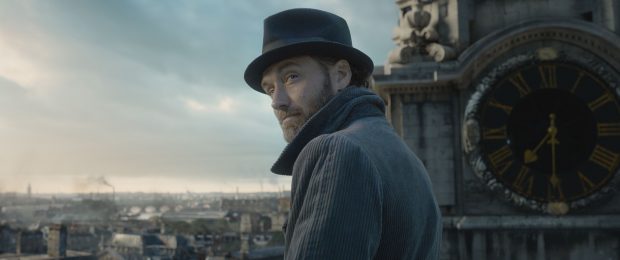
A weird failure, as Mike puts it, we struggle a little bit to get a read on First Man, Damien Chazelle’s biopic of Neil Armstrong. Not content to adopt a mainstream tone, not willing to go full art movie, it gets lost in the middle somehow. Mike sees Armstrong as incongruously passive in his own story, his – and, for that matter, everyone else’s – drive for the Moon light, not believable, ultimately making the landing scene feel cheated, the film trying to convince you of the incredible achievement of the mission only at the last minute.

José finds aspects of the plot interesting, particularly the portrayal of marriage, but sees the use of the daughter as disjointed. Mike finds the film misunderstands Ryan Gosling’s style – his minimalism requires rich surroundings off which to reflect, and with so little here, Armstrong comes across blank. We appreciate the physicality of the space sequences, shot almost entirely with close ups on interiors, though the extension of the shaky cam to the rest of the film is irritating.

A confusing film that we find misguided, and a glance at its opening weekend box office doesn’t bode well. Claire Foy is very good though.

The podcast can be listened to in the players above or on iTunes.

With José Arroyo of First Impressions and Michael Glass of Writing About Film.

102 – A Star Is Born

Hyped up, already very successful, and widely well-received, A Star Is Born earns strong reactions from us. To Mike it’s at points truly reprehensible, to José simply a confused failure. Mike has never seen any of the previous versions – he tried and couldn’t make it – while José finds writer/director/star Bradley Cooper’s new remake unworthy to share their company. The novelty of seeing Lady Gaga unmasked soon wears off, her performance opaque and lacking in presence. We agree that Cooper is very good and truly a star, though with the opprobrium he receives from one half of us, he must have done something to Mike in a previous life.

We discuss and debate what we make of the film’s characters – Mike finds them deeply unlikeable, toxically compatible, which isn’t in itself a bad thing but for the fact that the film wants to render it romantic. (Cooper has a real problem with consent and personal space.) José finds their love difficult to believe in, particularly Gaga’s for Cooper. Quite why she’s so hot for him is barely even told, let alone shown.

Cooper’s take on the music industry is out of date and simplistic, which is more than disappointing considering he was working with one of the biggest pop stars of the last decade. We each have our reasons for finding the suicide scene nonsensical. And Mike describes his problem with the film’s ending.

A lot to talk about, most of it negative. See you again in between twenty and forty years for the next version.

The podcast can be listened to in the players above or on iTunes.

With José Arroyo of First Impressions and Michael Glass of Writing About Film.

101 – The Little Stranger

You find us in contemplative mood, picking apart a film described by José as “genuinely puzzling” and Mike as “The House with a Doc in Its Walls”. The Little Stranger builds light gothic horror around class and ambition in 1940s Warwickshire, a stately home providing the setting of the action and focus of Domhnall Gleeson’s town doctor.

With some difficulty, we attempt to grasp the film’s themes and intentions, never quite feeling we get the full measure of it. It doesn’t help that it basks, to some extent, in ambiguity, and also that half the lines are mumbled so as to be rendered truly unintelligible. There are things we like, particularly its sure sense of era and class, and its rich production design, but we can’t overall say we recommend it.

What we can recommend, though, is a visit to Evesham’s Regal Cinema, where we saw the film. A multipurpose venue that hosts live shows as well as regular cinema screenings, it oozes charm and style. A leisurely Sunday drive amongst sunny A roads took us there, and what a lovely day was had by all. Even if the film was a bit disappointing.

The podcast can be listened to in the players above or on iTunes.

With José Arroyo of First Impressions and Michael Glass of Writing About Film.

100th Anniversary Extra – Eavesdropping on Ourselves

With 99 podcasts under our belt at time of recording, we take the opportunity to look back and reflect. At Eavesdropping at the Movies we try to speak honestly about what we see and don’t attach too much of a formula to our discussions. Our philosophy – yes, philosophy! – is to try to see films as unmolested by hype and expectation as we can, and to consider questions of aesthetics and individual experience as well as the likes of plot and performance.

So what do feel we’ve done well, what have we done badly or too little of? And are there films that, with hindsight – given that the podcast records our first impressions, by and large – we’d reevaluate now?

A slightly self-indulgent but hopefully frank look at a podcast we’re ultimately very proud of but has room to improve. Happy 100th anniversary!

The podcast can be listened to in the players above or on iTunes.

With José Arroyo of First Impressions and Michael Glass of Writing About Film.
100 – Venom

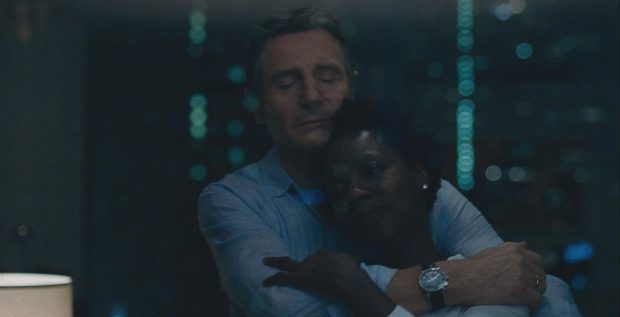
Venom utterly charms the pants off us, its bizarre knockabout body horror surprising us with a great sense of humour and unexpected variations on the idea of a dweeb made more masculine. From the trailer, Mike was worried about the broadness of Tom Hardy’s accent – actually, it’s tonally perfect as broadness is exactly what the film is going for in every respect, in the very best way.

Hardy is superb, giving his all to a role that demands physical dexterity and comic ability; the CGI bowls José over; the sense of Hardy’s body being shared by another physical entity, rather than being merged with it, is tactile and interesting. Mike’s also been watching the Sam Raimi Spider-Man trilogy recently, in which Venom appears, and holds court on a trend in the villains he sees Venom as adhering to. And the dog is so funny.

The podcast can be listened to in the players above or on iTunes.

With José Arroyo of First Impressions and Michael Glass of Writing About Film.
99 – Climax

A group of dancers parties the night away, but someone has spiked the sangria with LSD. There are extraordinarily long takes, sex, drugs, violence, and horror. Yes, it’s a Gaspar Noé film.

Climax is a singular cinematic escape into a vision of Hell. Boy, there’s a lot going on. We grapple with the film’s themes of sex, violence, drugs, youth, dance, sexuality, nationality, culture, and whatever else we can remember of its insane 96 minutes. We discuss what we did and didn’t like about the dancing – the pros and cons of the way it’s shot – and what value there is in extraordinary cinematic violence in a world in which footage of horrific real-life violence is commonplace. We discuss the detail of Climax‘s cinematography and editing and the effects they have on our experiences, particularly shooting upside-down and inserting almost subconsciously brief flashes of black frames in otherwise normal cuts. We’re reminded of Do the Right Thing, The Exterminating Angel, and Salò, and indeed Climax wears its influences on its sleeve. José reads it allegorically, finding reference to Europe, cultural power, and race, though so far adding it all up remains beyond us.

It fired Mike up enough to have a go at a guy who’d had his phone on during the cinema, but it enveloped José so completely that he didn’t even notice the distraction. And Mike made a film like this once! As he puts it, “Not as good as this, probably, but a lot shorter.” You can see that here if you like:

In short, Climax is certainly worth your time. There’s so much going on and we’ll be seeing it again when the mac screens it in November.

The podcast can be listened to in the players above or on iTunes.

With José Arroyo of First Impressions and Michael Glass of Writing About Film.

98 – A Simple Favor

“From the darker side of director Paul Feig”, as the ubiquitous advertising has it, and the film doesn’t disappoint. A Simple Favor pairs Anna Kendrick with Blake Lively as the least compatible friends you can imagine, friends with dark secrets and desires. We find Feig a complete master of tone, able to control the film’s descent into some very, very murky places without ever losing its ability to remain light and likeable. It’s a quite an achievement.

We discuss the way the film makes the female characters prominent and diminishes the role of men, eschewing the typical noir hero role for Kendrick’s Nancy Drew escapades, and the pleasure in seeing her character develop and assume control. The use of flashback is interesting and at some points quite brilliant, with important plot points being conveyed through subtle eyeline matches and just a few short shots recontextualising things we already know, or think we know. Mike finds the plot grows a little overcomplicated towards the end, and indeed predicted one or two developments – normally he prides himself on his gullibility – but these are nitpicks, at best, in a hugely entertaining film.

And it’s a film noir played for laughs! José can’t stress that enough.

The podcast can be listened to in the players above or on iTunes.

With José Arroyo of First Impressions and Michael Glass of Writing About Film.

97 – The House with a Clock in Its Walls

We’re disappointed with The House with a Clock in Its Walls, a children’s horror fantasy that insults its audience’s intelligence by assuming that this is the kind of simplistic shit kids love. We find some aspects of its design to enjoy but for the most part find it close to charm-free and not up to the standards of its stars – though Mike is keen to point out it’s probably director Eli Roth’s best film, which isn’t saying much.

The podcast can be listened to in the players above or on iTunes.

With José Arroyo of First Impressions and Michael Glass of Writing About Film.