115 – Shoplifters

Intriguing, calm, witty, touching. Hirokazu Kore-eda’s Shoplifters, winner of the 2018 Palme d’Or, is a modern-day Oliver Twist with real depth of feeling and naturalistic charm. Deceptively simple, it asks big questions of its audience, questions about family, love, loneliness, and how to live a good life.

It’s largely free of significant plot points – it begins with a very young girl, abused by her parents, being taken in by a motley crew of a family living on the poverty line, but from there takes an approach to story that is driven by character and situation. Everything is rendered complex – on the one hand, the young girl is taken in by a group of rescuers who care for her; on the other, they are kidnapping her. It would be true to say the aren’t easy answers to be found, but don’t let that fool you into thinking it’s a harsh watch. It isn’t. There’s an impressive lightness of tone, the film refusing to wallow in victimhood, instead focusing on getting on, day to day. And it has a great sense of humour and keen eye for the romantic and emotionally open. It’s truly moving.

Amongst our praise for the film, we find time to discuss the projection and atmosphere at The Electric, a cinema we’re probably a little unkind to at times, and José orates on the relative lack of circulation of films such as these to a cinephile culture that does exist outside London and would gratefully receive more arthouse and foreign cinema.

The podcast can be listened to in the players above or on iTunes.

With José Arroyo of First Impressions and Michael Glass of Writing About Film.

114 – Robin Hood (2018)

We argue about a film that neither of us can possibly claim is good, but in which one of us found things to like. Hot on the heels of watching Errol Flynn’s Technicolor classic a few weeks ago, we catch the latest telling of the Robin Hood folk tale, fittingly titled Robin Hood, a desaturated, guns and geezers-inflected version that transports us to a somewhat otherworldly, sci-fi-ish version of the medieval Midlands. Church and state are in cahoots, the poor are exploited – and it doesn’t look like they have much left to exploit anyway – and with Sherwood Forest nowhere to be seen, the only green thing around is Robin of Loxley.

We can both agree that no matter the intention, the film is poorly directed, though José would decry it more than Mike, who tries to look beneath the incoherent camerawork and dull set pieces to find areas of interest, such as the tangible sense of growing revolution and the charming Black Hawk Down version of the Third Crusade, complete with shoulder-mounted arrow bazookas, why not. We have good and bad words to say about the performances in equal measure, Jamies Foxx and Dornan standing out but Ben Mendelsohn and star Taron Egerton failing to meet expectations set by their previous performances. And Tim Minchin, with the best will in the world, isn’t an actor.

Mike takes issue with the film’s conception of Robin; a character learning to become the hero is one thing, but simply being nudged and told by everyone around him how to do so makes for poor character development. Little John is so significant he’s known here only as John, José speculating that as the biggest actor in the film, Jamie Foxx had the role improved at the expense of balance. We do find common ground in praising aspects of the world and visual design, but it’s always with the caveat that the direction generally works better to obscure than exhibit it.

All this and more in an edition packed with disagreement. Arguments and quibbles aplenty!

The podcast can be listened to in the players above or on iTunes.

With José Arroyo of First Impressions and Michael Glass of Writing About Film.

113 – Mildred Pierce

We’re joined by Birmingham blogger Laura Creaven (www.constantlycurious.co.uk) for a discussion of our fourth Michael Curtiz film, the film noir Mildred Pierce. We’re glad of her perspective, as this is a film all about women, their relationships and desires.

We discuss the film’s flashback structure – though it helped the film get made in the Hays Code era, would the film be even stronger with a simple chronological plot? Class is everywhere too, motivating the mother-daughter conflict that’s central to the film, and we consider America’s class system and social mobility, and whether you could tell this story in Britain.

We look closely at Curtiz’s use of shadows and mirrors to imply off-screen space and create meaningful, poetic images. And there’s a lot to discuss in the construction of the characters, both male and female – we think about how masculine and feminine characteristics are deployed in both, and how roles are reversed.

Mike and Laura talk about how they each had differing attitudes to the framing device of showing the climax first, Mike wanting to know how the film would tie its plot up and Laura not caring very much. It reminds Mike of discussing Carmen Maria Machado’s brilliant short story The Husband Stitch (free to read here: www.granta.com/the-husband-stitch) with previous podcast guest Celia, and finding a similar difference in the experience. Mildred Pierce is without question a film aimed at women, but as a film noir does the framing device work to capture their interest?

And indeed, how much is the film a noir? With shadows and murder and intrigue, it’s inseparable from it, but there’s a lightness to the image and combination with family drama that serves to adjust it. To José the film is unambiguously noir; to Mike and Laura, the noir elements invade an otherwise normal world in interesting ways.

The podcast can be listened to in the players above or on iTunes.

With José Arroyo of First Impressions and Michael Glass of Writing About Film.
112 – Widows – Second Screening

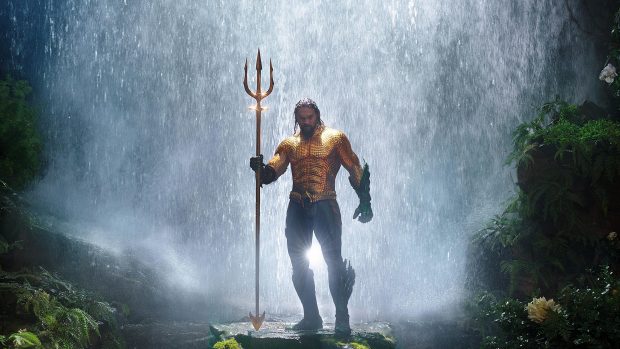
José drags a somewhat recalcitrant Mike to the cinema for a second go at Widows, joined by Lee Kemp (@leekemp), a Birmingham-based filmmaker and founder of Vermillion Films. And wow, we cover a lot!

Mike and Lee both agree that some of the cinematic technique is distracting on the first viewing, whereas second time round, knowing what to expect, it’s easier to appreciate the art of some shots and evaluate them more intimately. José simply luxuriates even more deeply than before in the visual splendour and tone. We agree that it’s a heist film that isn’t really about the heist, though what we then make of that – how clever we think that is – is up for debate. What isn’t up for debate is the film’s economy, both visually and in dialogue. It’s so, so elegant and deliberate, and that all becomes clear as we compare things that struck us.

The film’s use of the Church comes into focus – morality and God is almost never in question when it comes up, the film instead framing it in political, corporate and corrupt terms. The film equates the worlds of politics and gang crime, one white, the other black, a theme expressed through the two opposing political candidates and their associates.

We take time to consider the similarities and differences between the central female characters; how, for instance, the two black women are members of very different social classes. We praise how the film depicts how they deal with grief, the lack of connection they so desperately feel, and the way it affords each of them their scene to express it. Mike has, since the first podcast, watched the first Prime Suspect (written by Lynda La Plante, creator of the original Widows) and talks a little about it; José finds it interesting that an originally British television programme adapted in part by a British filmmaker should yield such a sharp commentary on American society.

We also consider wider questions of how to watch films critically. Mike goes on a brief rant about why the lack of seriousness with which media studies education is still taken has resulted in a world of Trump, Brexit, and fake news. Methods of analysis come in for scrutiny; we mention the video essay series Every Frame a Painting and discuss how one of its episodes in particular, the one on 2011’s Drive, is or isn’t a good example of textual analysis. We discuss the scene in which we see the protagonist’s son’s death; would we have watched it differently ten years ago, when it’s set?

All this and even more in a discussion that’s full to the brim. Mike is begrudgingly forced to concede that he misjudged the film the first time. José loves it even more than he thought he could. And many, many thanks to Lee for joining us. And check out War of Words, the UK battle rap documentary on which he worked as executive producer, now on iTunes!

The podcast can be listened to in the players above or on iTunes.

With José Arroyo of First Impressions and Michael Glass of Writing About Film.

111 – Fantastic Beasts: The Crimes of Grindelwald

The second Fantastic Beasts film, J. K. Rowling’s Harry Potter spin-off series, has numerous pleasures, but makes it hard to appreciate them thanks to a pointlessly convoluted plot and unimaginative character goals. Jude Law stands out, bringing a calm control and gravity to Dumbledore, and Eddie Redmayne, while typically a little irritating, is cast well in the role of a near-autistic, nerdy zoologist who connects far better with animals than people. The question of who the film is aimed at is an interesting one – the animal designs and elements of performance are quite cartoony and broad, and the film as a whole is borne of a world-renowned children’s fantasy series, but in this film alone two infants die, and there’s almost no levity to be found anywhere. Certainly, as a middle child of a forthcoming five-part series (how!?), it’s a bit of a holding pattern, interested primarily in making situations worse so as to provide the foundation for future triumphs.

Two of the film’s love stories provide food for thought; one a bizarre love spell story that, upon the charm being broken, attempts to cast the enchantress – or as we think of her, rapist – as the victim; the other a subtle, quiet, but clear gay romance between Dumbledore and Johnny Depp’s Grindelwald. We disagree on the film’s visual qualities – Mike finds beauty in some shots but more or less everything fails to arouse José – and some of its attempts as charm and humour, but despite our deep, deep reservations about the storytelling and lack of interest in the characters or plot, somehow we’re still keen to see the next one.

The podcast can be listened to in the players above or on iTunes.

With José Arroyo of First Impressions and Michael Glass of Writing About Film.
110 – Angels with Dirty Faces

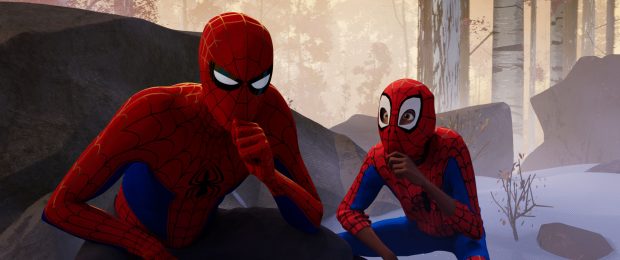
We continue our Michael Curtiz kick with Angels with Dirty Faces, a James Cagney gangster film with surprising subtleties. We consider Cagney’s stardom and how he remains unique, the film’s themes of hero worship and glorification of crime, and the interesting relationship between Cagney’s gangster and Pat O’Brien’s priest.

A film that’s very much of its time but remains an interesting and entertaining watch.

The podcast can be listened to in the players above or on iTunes.

With José Arroyo of First Impressions and Michael Glass of Writing About Film.

109 – The Adventures of Robin Hood

One of the first three-strip Technicolor films, and an action adventure classic, we visit 1938’s The Adventures of Robin Hood, featuring Errol Flynn at his dashing, cheeky peak. We get swept up in its excited use of colour, social conscience, pleasantly laddish tone and swashbuckling combat.

Mike sees some of the film at an ironic distance, particularly the action, which he finds charmingly amateur. But while some things might have significantly changed over the last eighty years, the connection to the characters and the film’s sense of fun is intact. There’s a discussion to be had over the film’s messaging – José greatly appreciates the democratic tone to everything, the fairness with which Robin treats everybody and the grace with which he is able to accept defeat, while Mike suggests that his magnanimity would be more impactful if we were able to feel he were ever in true peril – but Flynn is simply so charming, so in control, and indeed, such a star, that the film can never sell it. Flynn conveys a certain superiority through masculinity, as José notes – he is a man among men.

The Robin Hood legend endures, this 1938 version only one of countless film adaptations, and we discuss why that might be. And there’s always room to mock Americans who try to tell English stories and get things wrong. It’s the joy of being English.

The podcast can be listened to in the players above or on iTunes.

With José Arroyo of First Impressions and Michael Glass of Writing About Film.
108 – Bohemian Rhapsody

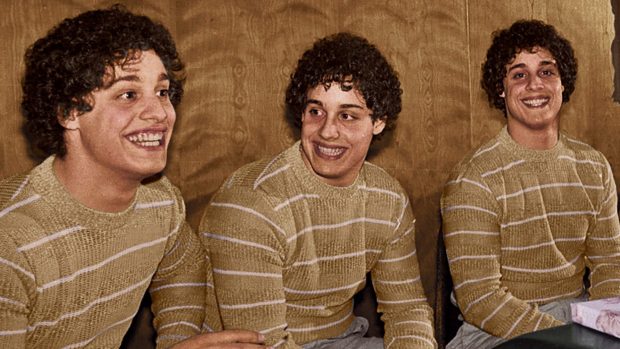
The road to banal and disappointingly homophobic biopics of rock legends is, as they say, paved with good intentions. The Queen story/Freddie Mercury biopic has been in the works since 2010, with creative differences amongst the filmmakers made public and Brian May and Roger Taylor apparently exercising tight control over how the story would be told. What they apparently wanted was sanitised, bowdlerised, pasteurised, inoffensive to the delicate sensibilities of an audience that would rather not look too closely at the sexuality of a gay icon. Which sounds absurd, but considering the old man sat near us in the cinema who audibly said, “oh dear”, when Freddie was shown kissing a man… Jesus, they might have had a point.

José expresses his disappointment at seeing yet another gay story in which being gay leads to isolation and unhappiness. Freddie is lonely, surrounded by cats in a vast empty house, pining for a woman. His gay relationships are chaste and the one openly gay character, comfortable with who he is, is cast as a snake, a villain. Freddie’s sexual drive bursts out of his music; are we supposed to believe he experienced no joy in being gay? Brian May – the character – is depicted as a particularly annoying pest, clean, perfect, and forever commenting on Freddie’s lifestyle and behaviour as if to vet it; or perhaps as if to ensure the audience is comfortable. The more we think about it the more homophobic it is.

Our discussion of the film’s attitude to and portrayal of Freddie’s sexuality is central, but two other key aspects to his life also come under criticism – his music, and his death from AIDS. The latter is skated over almost entirely, sympathetically included right at the end to help you feel good about feeling bad for him. The music can’t be hurt, of course, and it’s a pleasure to hear banger after banger, but as Mike says, you may as well go home, read the Queen Wikipedia page and put on the Greatest Hits. What drives the band, what drives Freddie, aren’t things the film appears to have even considered might be interesting questions. Things just… happen. In chronological order. Mainly.

Ultimately we ask ourselves who this film is for. We watch it at a distance, wondering why it is the way it is, not really involved in it until that final act in which Live Aid provides Freddie with the opportunity to make the entire world his own for twenty glorious minutes. And once we get there, everything else becomes insignificant for a while, because it all comes together, the music, the character, and the best parts of Rami Malek’s performance – his physicality and stage presence – and we get to watch Queen for a while. (Or at least a very good tribute act.)

The podcast can be listened to in the players above or on iTunes.

With José Arroyo of First Impressions and Michael Glass of Writing About Film.
107 – Widows

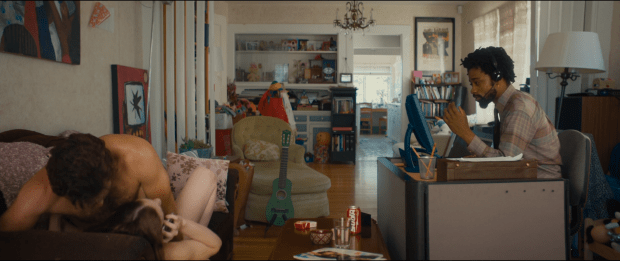
José falls in love with Widows, a portrait of life and survival in modern America in the skin of a heist film. Mike can see exactly why he should love it, but just doesn’t click with it.

Based on Lynda La Plante’s 1983 ITV series of the same name, Widows sees three women lose their criminal husbands in a heist gone wrong, and their attempt to complete their final job with the promise of a big payoff. The film draws parallels between urban gang violence and entrenched political dynasties, complicates the widows’ grief with sex and intimacy, and constructs the potential payoff not as a cause of celebration but as a way out of bad situations. José finds the film a visual marvel, layered and expressive, but to Mike it’s more a reminder of what he loved so deeply about You Were Never Really Here than great in its own right.

The podcast can be listened to in the players above or on iTunes.

With José Arroyo of First Impressions and Michael Glass of Writing About Film.

106 – Casablanca

One of us has seen it countless times. The other has never seen it. Fortunately for José, Mike instantly falls in love with Casablanca.

In a way, the pressure was on for Mike to enjoy it, as it’s considered one of the greatest films of all time, and its screenplay in particular held up as a shining example of the craft. And how effortless it is to enjoy it! José notes how rare it is in cinema to see a man suffer for love, as Rick does, and the film’s romance is intense and unapologetic. We swoon over the elegance of Michael Curtiz’s direction, the sheer beauty of the cinematography – nobody these days is shot like Ingrid Bergman is here – and the rich cast of characters, played by one of the all-time great supporting casts.

José considers how the refugee situation and politics depicted – that of a war-torn world relocating regular people to geographic and bureaucratic purgatory – haven’t gone away, and Mike picks up on Madeleine Lebeau’s Yvonne, a minor character whose story recapitulates Rick’s in microcosm. The Marseillaise scene in particular gives us a lot to talk about. And so does much, much more.

It’s a good film. Who knew?

The podcast can be listened to in the players above or on iTunes.

With José Arroyo of First Impressions and Michael Glass of Writing About Film.