Mike is in a tailspin of grief. José likes Matt Damon and little else. It’s Downsizing, a film that looked good in the trailers. Ostensibly a light satire on middle class life and aspiration, it leads us into discussions of its attempt to weave several themes together, its lack of humour, the way it constructs its worlds, whether its use of stereotypes drifts into offensiveness, and most importantly, how unbelievably tedious it is.
Mike reminisces about the few movies he saw at the cinema that inspired him enough to leave the film for a bit to play on his phone, or just leave. And Sideways is rubbish too.
The podcast can be listened to in the player above or on iTunes.
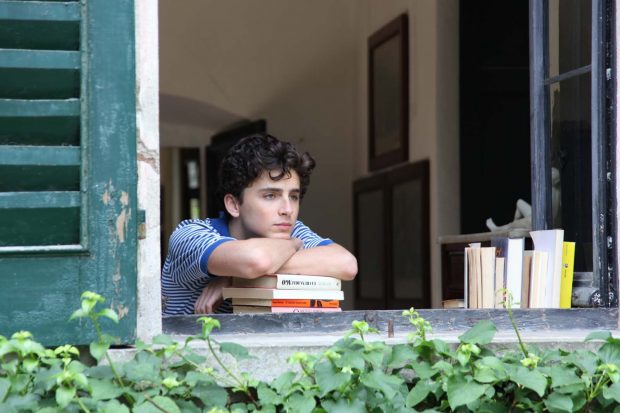
José revisits Call Me by Your Name, Luca Guadagnino’s romantic Bildungsroman, and re-evaluates it, both seeing some flaws where he initially hadn’t and also continuing to appreciate it in ways he had. It’s Mike’s first time seeing it, and he appreciates it from a distance but is primarily consumed with rage at his own lack of any type of this fun during his teenage years. And to make matters worse, José tests him on his knowledge of Judaism, revealing him to be a fraud of a Jew.
The podcast can be listened to in the player above or on iTunes.
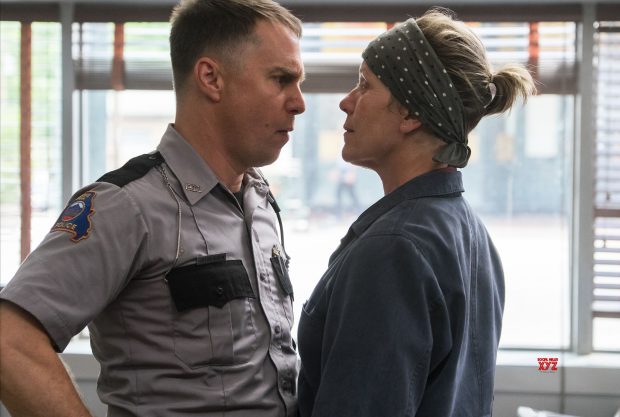
Feeling he gave it short shrift the first time, Mike’s keen to revisit Three Billboards, and drags José along for the ride. With the clumsy handling of race issues clouding the film less, we pick up on listener feedback that leads us into ruminations on Frances McDormand’s Mildred, particularly her defiance of the misogynist society in which she lives and zealous attitude towards collective responsibility, and whether the character arc of Sam Rockwell’s Dixon truly is a redemptive one.
We also double down on our criticism of the film’s use of derogatory terms, Mike’s been reading about Flannery O’Connor on Wikipedia, and we consider what would have been gained and lost had the film been written and directed by the Coens.
The podcast can be listened to in the player above or on iTunes.
(Mind out for spoilers, we don’t do a good job of warning of them here. After the plot synopsis at the beginning, expect spoilers throughout.)
Pixar’s extraordinarily vivid, rich Coco tells the story of a young Mexican boy who dreams of life as a musician, stranded in the Land of the Dead. Themes of sacrifice for family, liberation and expression through music, remembrance and commemoration of loved ones and more are explored, and a culture that is typically ignored or stereotyped – or walled off if a certain someone has his way – is allowed to explode onto the cinema screen. It’s as warm, funny, and imaginative as anything you’ll see all year, and we adore it.
José is reminded of his dear abuelita. Mike cries.
The podcast can be listened to in the player above or on iTunes.
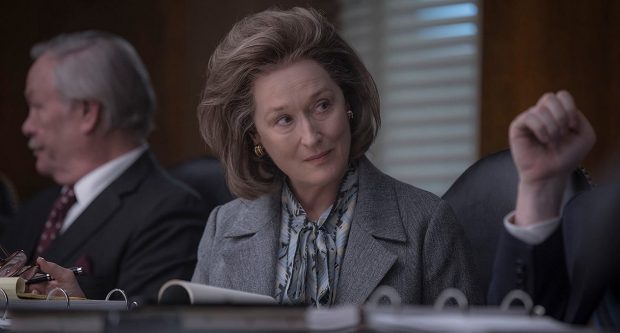
Spielberg. Streep. Hanks. Nixon. A political thriller that adopts some clichés and slightly sidesteps some expectations, The Post is a historical drama that follows the internal conflict at the Washington Post during the Pentagon Papers scandal. We find plenty to talk about in its parallels with the Trump White House and the current President’s attacks on the news media; its careful but stilted style; its relationship to the 70s cinema it evokes; its central figure of a woman out of place in a world of men; and the balance between its nationalistic boosterism of the US Constitution and American exceptionalism on the one hand, and on the other, its surprisingly direct denunciation of the powers that be in Washington. You can literally hear Mike learning about the Nixon era, live!
Also discussed: Mike loves Bridge of Spies, José doesn’t love Bridge of Spies, Mike thinks Spotlight is uniquely brilliant, José espouses his theory on Meryl Streep’s stardom, and old people are pricks.
The podcast can be listened to in the player above or at this link.
An extraordinary, near-Shakespearian meditation on misdirected rage, guilt and grief, deeply marred by clumsy lunging into a loud theme of racism and a strong sense that the film neither knows nor especially cares about the culture it’s portraying. Frances McDormand excels as the bullish, bellicose, foul-mouthed mother, but the film suffers as it shifts its focus to Sam Rockwell’s stereotypical racist hick. The central premise is brilliant; its treatment is ultimately uneven, and although there are elements we absolutely adore, we can’t get its lurches between tones out of our heads. Rewarding to watch, though, and it would benefit from a second viewing.
The podcast can be listened to in the player above or at this link.
A chamber piece about history which evokes a combination of Rembrandt and an old photograph. We discuss how Joe Wright might be getting short shrift as a director and the excellence of the performances: Gary Oldman, Kristin Scott Thomas, Ben Mendelsohn and Lily James are all marvellous. We discuss how the film is not the life of Churchill but a few defining weeks in his life, and how it depicts the political side of the chaos in Nolan’s Dunkirk.
Mike highlights how the cemeteries of Belgium and northern France tell a very different story from the official one in relation to Britain’s ‘going it alone’ in the two World Wars, and declares that one scene of clearly fabricated fantasy undermines any notion of historical verisimilitude. We discuss how the film’s emotional manipulations are cheap but how one finds oneself responding to the film’s jingoism. We are in agreement that Nigel Farage wants to be Oldman’s man-of-the-people Churchill – the entire film is rather Brexity.
José would really like to see a film that focuses on the relationship between Clemmie and Winston, played of course by Scott Thomas and Oldman, and there’s a wonderful volume of letters full of sketches of kitties and piggies called Speaking For Themselves that he wishes someone would draw on for a film. (He didn’t say that in the podcast but he wants to make it known here.)
The podcast can be listened to in the player above or at this link.
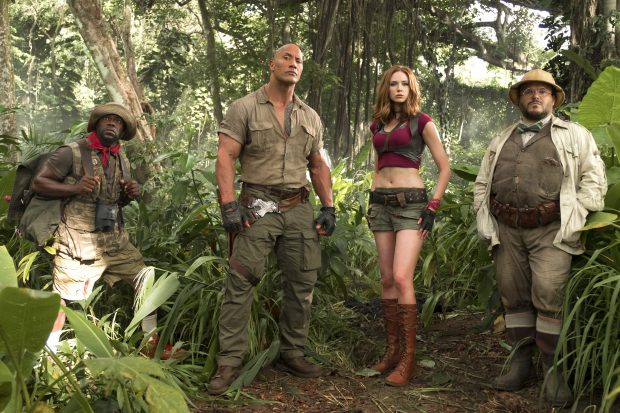
Boy oh boy, there’s a lot to talk about, and the word of the day is denial. Specifically, Mike’s unspoken, subcutaneous, existential denial that 1995’s Jumanji is crucially meaningful to him, because how else can you explain the tension in the air as he grapples with the simple question, “Do you recommend the new Jumanji?” Ironic, really. The new Jumanji depicts characters who are forced to confront harsh truths about themselves, and in doing so forces Mike to confront the fact that he can talk about Jumanji for an hour with very little prompting.
And that new Jumanji provides a surprising amount of food for thought. We discuss how the film uses and satirises videogames, how much it made us laugh, the Jonas Brothers, Mike being a sucker for a happy ending as usual and José rolling his eyes, the stereotypes from which the central characters are built, how the film has its sexist cake and eats it, the ways the stars play off each other and suit their roles, aspects of performance, the muddled nature of the world and fundamental change in the characters’ relationship to it, how much harder it is to play videogames than it is to watch films, moviegoers’ over-investment in films from decades past, and last year’s Power Rangers movie.
And it’s a name-heavy edition of the podcast, with José getting names wrong left, right, and centre, and a final, authoritative correction of our pronunciation of Jia Zhangke’s name. (Thanks to Sam and Jessy Stafford for their contributions.)
The podcast can be listened to in the player above or at this link.
We visit Z, a French-Algerian political thriller from 1969. It also happens to be a bona fide classic that won a ton of awards, enjoyed great popularity, and even succeeded in markets where it was subtitled or dubbed. Neither of us has seen it before; both of us are glad our first encounter with it is on a cinema screen.
We discuss its relevance to society today – the reason the mac is screening it, no doubt – the precision and economy of its editing and storytelling, its control of information, its title, its geographical setting, its surprising sense of humour, and indeed something we both found left rather a bad taste in the mouth. We also run down the eleven films from 1969 that outperformed it at the US box office, and José learns about The Stewardesses.
The podcast can be listened to in the player above or at this link.
Mike’s brother corrects our pronunciation of director Jia Zhangke’s name, helping us settle into a discussion of his ambitious, deeply moving tale of friendship and loss that spans two and a half decades. We talk about motifs of keys and coats, themes of capitalism and home, the changing aspect ratios and clarity of the image, the documentary feel to its portrayal of Fenyang and the way of life there, and much more besides. We admire almost everything and still can’t get Go West out of our heads.
The podcast can be listened to in the player above or at this link.






 Eavesdropping at the Movies