Tag Archives: Timothée Chalamet

423 – Dune: Part Two

Listen on the players above, Apple Podcasts, Audible, Google Podcasts, or Spotify.

Denis Villeneuve’s epic adaptation of Dune makes its first appearance on the podcast in the form of the second film in the series – we saw the first when it came out but never podcasted on it. With the lore in place, the scene set, and the characters established, Dune: Part Two is free to develop romance, engage in action, and tell the story of the construction of a messiah. It’s beautiful, exciting entertainment – as long as you can remember everyone’s names and what their magic powers are and what they’re up to and why.

José feels no such issues keeping track of Part Two‘s various story elements, but Mike hasn’t done the homework and finds that the film isn’t going out of its way to help him. But no matter! The imagery on offer is astonishingly pretty, reassuringly expensive, and tuned for maximum visual impact – though we wonder how poetic it is, and ask ourselves to what extent the imagery in Villeneuve’s other work lingers in the mind, despite its premium sheen. We also discuss the degree to which we feel Part Two really feels like it’s buying in to its more supernatural elements. It tells a story of prophecy, visions, and unlikely fates, but, Mike suggests, also offers mechanisms and plausible explanations for things we see, arguably favouring its scepticism to avoid putting off an audience unwilling to go along with the otherworldly.

Whether you care or not, whether you can follow the details or not, there’s no reason to not see Dune: Part Two on the biggest and best screen available. For the visual design and production alone, it’s value for money – that the rest is good is a lovely bonus.
With José Arroyo of First Impressions and Michael Glass of Writing About Film.
407 – Wonka

Listen on the players above, Apple Podcasts, Audible, Google Podcasts, or Spotify.

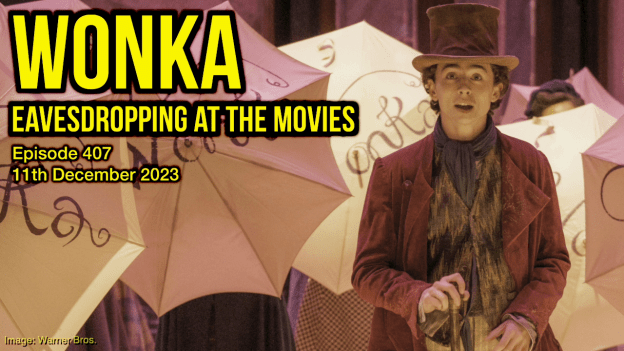
Paul King, the director of Paddington and Paddington 2, brings us Wonka, another reimagining of a British children’s classic. Roald Dahl’s beloved 1964 novel, Charlie and the Chocolate Factory, has been adapted twice: once in 2005 by Tim Burton, but most memorably in 1971 by Mel Stuart, with Gene Wilder as eccentric chocolatier Willy Wonka. It’s from the 1971 version that Wonka takes some of its cues (including musical ones), but in the service of that most 21st-century of cinematic artefacts: an origin story.

Within, discussions of: What we make of the world in which Wonka is set, one in which institutions purportedly in place for the public good are instead supportive only of corporate power; the reinterpretation of the Oompa-Loompas as a wronged people whose representative is out to retrieve what was stolen from them; Mike’s dissatisfaction with CGI and visual effects in British films and the production of the vocals in Wonka‘s songs; José’s opinion on Timothée Chalamet’s career and (apparently) uneven face; whether this film really benefits from its sentimental backstory and overtones; and how chocolate is best enjoyed.

With José Arroyo of First Impressions and Michael Glass of Writing About Film.
326 – The French Dispatch

Listen on the players above, Apple Podcasts, Audible, Google Podcasts, or Spotify.

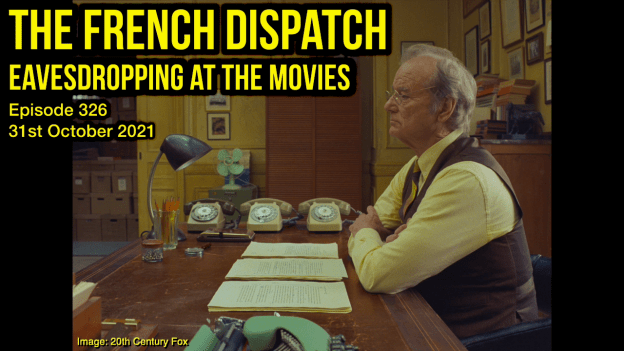
The French Dispatch, Wes Anderson’s love letter to The New Yorker, is, as you might expect, a charming way to pass a couple of hours – but not as funny or as tight as we might like, and certainly a disappointment in the light of his last two films, The Grand Budapest Hotel and Isle of Dogs (although, in fairness, reaching those heights even twice, let alone a third time consecutively, would be a big ask for anybody). Still, despite The French Dispatch‘s pleasures, some gorgeous imagery and a terrific, star-packed cast, we’re left asking what it’s all about, really – is it more than a vaguely diverting trifle based on Anderson’s favourite publication? And why can’t an ode to an icon of American sophistication be set in America?

With José Arroyo of First Impressions and Michael Glass of Writing About Film.

204 – Little Women (2019)

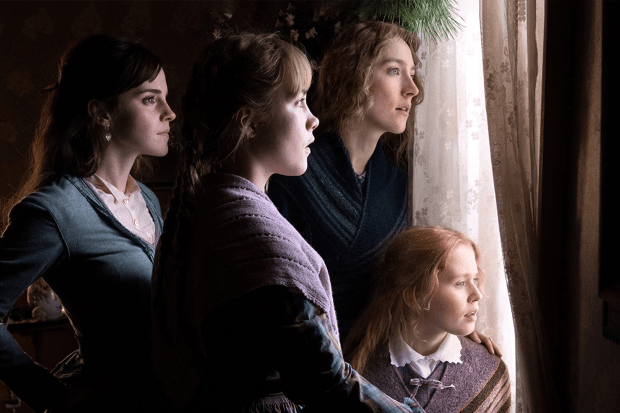
José has been brushing up, recently rewatching the 1933, 1959 and 1994 adaptations of Louisa May Alcott’s novel. Mike has neither seen any adaptations nor read the book, coming to the story entirely fresh. And so we get to grips with Greta Gerwig’s wonderful, open-hearted, energetic version of Little Women.

José finds much to contrast between the versions, picking up in particular on the unusual dimensionality given to the male supporting characters here, whose roles have previously been thankless. Timothée Chalamet and Chris Cooper particularly impress, the former capturing Laurie’s playful, generous spirit; the latter touchingly evoking Mr. Laurence’s grief. Less successful is Meryl Streep’s Aunt March, who slightly too mechanically reaches for the laughs for which she’s designed.

The girls, though, are a triumph of energetic wildness, ambitions and realism. The scenes they share in their childhood home are well observed, wisely mixing all-American sentimentality you might expect with a disarming sororal combativeness you might not. If there’s a bum note amongst them it’s Emma Watson as Meg, who Mike argues never truly embodies the roles she plays, but Saoirse Ronan is miraculously transparent as Jo, and Florence Pugh gives Amy a burning, vital sense of frustration and fury at always being second best to her sisters. Their relationships make the film the success it is, and, Mike suggests, even when the film begins to wrap their stories up in some fairly convenient ways, so fond are we of them that it’s hard not to be swept along.

Greta Gerwig has achieved magical things with Little Women, and you miss it at your peril.

The podcast can be listened to in the players above or on iTunes.

With José Arroyo of First Impressions and Michael Glass of Writing About Film.
50 – Lady Bird

We finally get around to seeing the one Best Picture nominee we were missing, Greta Gerwig’s Lady Bird. It’s been highly praised, but has the hype hurt it? We discuss its female-centric twists on coming-of-age teen movies, the mother-daughter relationship, its attitude to sex, and the Everyman Cinema in Birmingham, which we visit for the first time.

The podcast can be listened to in the player above or on iTunes.

With José Arroyo of First Impressions and Michael Glass of Writing About Film.

40 – Call Me by Your Name

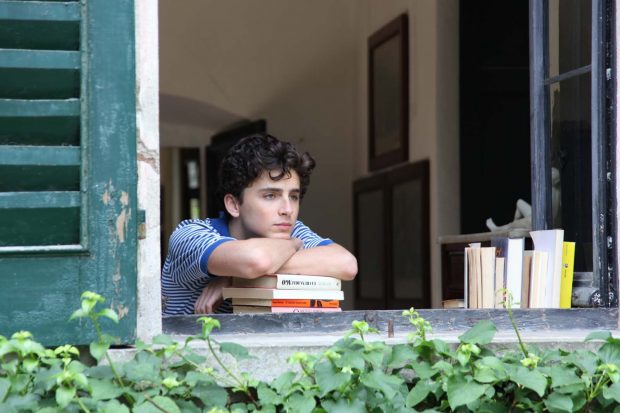
José revisits Call Me by Your Name, Luca Guadagnino’s romantic Bildungsroman, and re-evaluates it, both seeing some flaws where he initially hadn’t and also continuing to appreciate it in ways he had. It’s Mike’s first time seeing it, and he appreciates it from a distance but is primarily consumed with rage at his own lack of any type of this fun during his teenage years. And to make matters worse, José tests him on his knowledge of Judaism, revealing him to be a fraud of a Jew.

The podcast can be listened to in the player above or on iTunes.

With José Arroyo of First Impressions and Michael Glass of Writing About Film.