Tag Archives: comic book

447 – Superman (2025)

Listen on the players above, Apple Podcasts, Audible, Spotify, or YouTube Music.

DC, which for the best part of two decades has failed to put together a cinematic universe of comic book adaptations to rival Marvel’s MCU, regroups and goes again with director James Gunn in charge of what will be known as the DCU – and what better superhero to introduce the new brand than the original: Superman.

David Corenswet’s performance and physique are extremely appealing, recalling an era before steroids and dehydration were considered compulsory in order for a man to be thought of as sexy. We appreciate the film’s lightness of tone and sense of humour, although one of us argues that the whole experience is so audiovisually hyperactive and loud that the tone doesn’t support all the jokes, and it’s simply exhausting to endure. We also discuss wokeness, the right wing’s determination to have a culture war, and obvious parallels between Lex Luthor’s villainy and that of Donald Trump; destruction of cities and the concomitant human cost; what made the previous Lex Luthor interesting; and why putting on glasses is an effective method of disguise.

With José Arroyo of First Impressions and Michael Glass of Writing About Film.
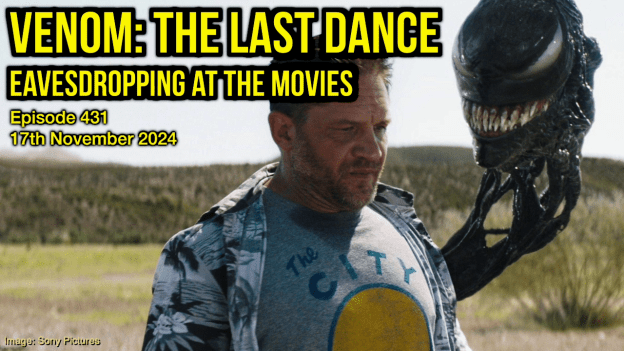
431 – Venom: The Last Dance

Listen on the players above, Apple Podcasts, Audible, Spotify, or YouTube Music.

We enjoyed the first. We didn’t care for the second. Does the third bring back the fun?

No, not really.

With José Arroyo of First Impressions and Michael Glass of Writing About Film.
429 – Joker: Folie à Deux

Listen on the players above, Apple Podcasts, Audible, Spotify, or YouTube Music.

2019’s Joker, which gave the iconic supervillain an all-purpose mental health disorder, a tragic origin story, and a name – Arthur Fleck – was never meant to have a sequel. But it made a billion dollars, so Joker: Folie à Deux is here. And, being a jukebox musical based primarily on show tunes from the mid-20th century canon, we ask who it’s for. The first film took risks in eschewing so many trappings of the comic book genre; did the filmmakers hope that their audience would respond similarly to further experimentation? Or is it a means of punishing an audience they attracted but loathe?

If the film hates its audience… well, so does Mike, which might explain why he got on with it. José, on the other hand, liked the first film, and is happy to see more of Joaquin Phoenix and hear those classic songs. Joker: Folie à Deux is far from a great film, not that close to a good film, and doesn’t have much of interest or intelligence to say about its themes – but it’s fascinating that it exists.

With José Arroyo of First Impressions and Michael Glass of Writing About Film.
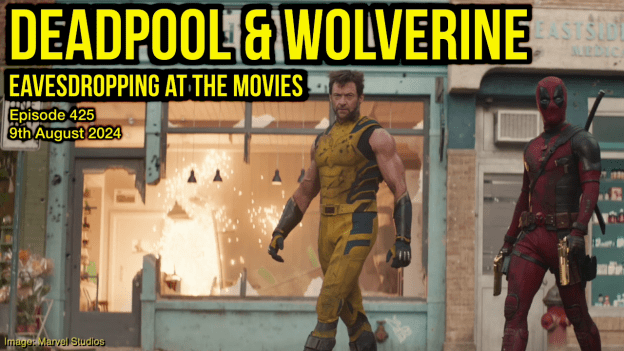
425 – Deadpool & Wolverine

Listen on the players above, Apple Podcasts, Audible, Spotify, or YouTube Music.

Deadpool 2 put us in such a foul mood when it came out in 2018 that we threw away our podcast on it. It was too toxic to publish. Fortunately, Deadpool & Wolverine, the third in the series, didn’t have such an effect on us – even José found some things to compliment about it.

Perhaps it’s the relative diminishment of Marvel since its peak in 2018, when it was reaching the climax of the story it had been building for a decade, that makes Deadpool & Wolverine work as it otherwise might not – its jokes about the X-Men joining the MCU at a low point really landed, for example. It’s far from perfect – Ryan Reynolds’ schtick remains smug, and the film tries to have it both ways, delivering snarky commentary on the sorts of things films like this do, then discarding the snark when it wants to do them itself. But it’s pacey, energetic, full of intense action with a delightfully cartoony attitude, filled with so many attempts to make you laugh that some of them are bound to work, and featuring a pair of enjoyable, charismatic villains: Matthew Macfadyen’s Mr. Paradox is a marvellously hammy presence, while Emma Corrin’s Cassandra Nova’s slight physique and genteel demeanour make her telepathic abilities all the more threatening.

With José Arroyo of First Impressions and Michael Glass of Writing About Film.

377 – Black Panther: Wakanda Forever

Listen on the players above, Apple Podcasts, Audible, Google Podcasts, or Spotify.

The sequel to the best Marvel film by far has to deal with tragic circumstances – the star of the first, Chadwick Boseman, died at the age of 43 in 2020. His role was not recast; instead, Black Panther: Wakanda Forever shows us the funeral of his character, T’Challa, and his sister, Shuri’s, difficulty in dealing with his death. Letitia Wright, playing Shuri, has primarily been a source of comic relief in the MCU until now – we discuss how she copes with the dramatic heavy lifting now required of her.

Despite the foregrounding of Shuri, Wakanda Forever is reliant on an ensemble, and quite a radical one, as José puts it: the story of a male superhero has been adapted to feature a group of women in his place, and what’s perhaps most remarkable is how the film does it without the feeling of overt messaging and tokenism that is often present in tentpole films that do something similar. And the villain, Namor, has been given an ethnic background José assures Mike was never present in the comics, his new Mayan origins and historical conflict with the conquistadores allowing for his underwater civilisation to mirror Wakanda.

While memorialising Chadwick Boseman, Wakanda Forever is able to see a future following the loss of his character. That it would deal with Boseman’s death with tact and sensitivity wasn’t in doubt, but that the world of Black Panther could thrive without him was, and this sequel shows that it’s certainly capable of doing so.

With José Arroyo of First Impressions and Michael Glass of Writing About Film.

366 – Thor: Love and Thunder

Listen on the players above, Apple Podcasts, Audible, Google Podcasts, or Spotify.

We’re into the land of diminishing returns with Marvel, it seems, with the novelty of a shared cinematic universe having worn off and the big storyline everything was building to for ten years now over. Of course, another big event is sure to be on its way in another decade, but will we care by then?

Not if Thor: Love and Thunder is anything to go by. Between the thinning appeal of Taika Waititi’s self-satisfied comedy and the uninvolving and lazy plot, characters, and imagery, it’s an unmemorable failure of Marvel’s action comedy formula. Admittedly, Christian Bale makes his Voldemort-esque villain, Gorr the God Butcher, more threatening than you might expect, given his simplicity and lack of screen time, and there’s some fairly charming comic business between Thor and his semi-sentient weaponry. Tough to recommend just for those, though.

With José Arroyo of First Impressions and Michael Glass of Writing About Film.

355 – Doctor Strange in the Multiverse of Madness

Listen on the players above, Apple Podcasts, Audible, Google Podcasts, or Spotify.

Marvel’s invasion of the multiverse is now well under way, and in Doctor Strange in the Multiverse of Madness this dense network of alternate realities sets the stage for a race to save – what else? – the world. Which world? Dunno. Our world, the most important one, at least, but maybe all the others too.

While director Sam Raimi has history with superhero movies, having helped to bring the genre to a new maturity with his Spider-Man trilogy, it’s his low-budget horror experience he brings to bear on the MCU – there’s more than a little Evil Dead in here. It’s surprising and invigorating, and the low-rent, rough and ready feel it conveys integrates well with the expensive computer-generated embellishments we’re used to from Marvel. Multiverse of Madness is visually dazzling.

Sadly, it’s not dazzling anywhere else, its plot overstuffed, its thematic through lines unsatisfying and problematic. It relies quite heavily on specific knowledge obtained from previous films and television programmes in the series; the less of that context you have, the less this story will mean to you. And magic and the multiverse are quickly becoming the cheap, mechanical get-out clauses they’ve always had the potential to be, rather than thought-through, coherently applied storytelling elements: write yourself into a corner? Make up anything you like! Magic and multiverse can paper over any cracks your plot might have. The result is a disappointingly joyless experience whose visual splendour can only fleetingly distract from some fundamental issues with the story and themes.

With José Arroyo of First Impressions and Michael Glass of Writing About Film.

351 – Morbius

Listen on the players above, Apple Podcasts, Audible, Google Podcasts, or Spotify.

Sony’s Spider-Man Universe has given us a charming Venom origin story, a rather less charming Venom sequel, and now another film about a well-intentioned man inadvertently possessed by something that demands he feed on humans. In Morbius, Jared Leto’s brilliant scientist finds a cure for the blood disease that has tormented him and his best friend throughout their lives – except that it comes with a side of vampirism.

In short, Morbius is not a success. José describes it as what people who claim to hate Marvel, which has produced some very good films, truly do hate. It’s as blunt, CGI-laden and uninvolving as that kind of criticism implies. Mike tries to be fair to it – the hallway bit isn’t too bad – and we agree that there’s one actor to like in it, although we disagree on which one that is. José accuses the film of failing to appreciate that one thing a star should deliver is physical appeal; Mike accuses José of shallowness.

But as fun as it is to tease José, Morbius is not a fun film to have to sit through in order to get to do that. One to avoid.

With José Arroyo of First Impressions and Michael Glass of Writing About Film.

346 – The Batman

Listen on the players above, Apple Podcasts, Audible, Google Podcasts, or Spotify.

The latest in a long line of Batman reboots, The Batman claims the definite article for itself – and deserves to. Richly shot, dark, romantic expressiveness spilling from every frame, The Batman leans in hard on bringing the noir of the source material to the screen with unabashed sincerity. It’s the best Batman film of them all.

With José Arroyo of First Impressions and Michael Glass of Writing About Film.

322 – Venom: Let There Be Carnage

Listen on the players above, Apple Podcasts, Audible, Google Podcasts, or Spotify.

Venom returns after his surprisingly enjoyable, if trashy, 2018 solo debut, but we don’t find much of a way to have fun with this sequel. Its cast is underserved by both the direction and screenplay, Tom Hardy appears to want to be seen as a slob, there’s not a memorable shot throughout, and most of the comedy, while promising in principle, falls flat. Mike asks where the real carnage even is, the film scared to show anything even cartoonishly gory, while José decries the carnage generally present in American cinema in general, this film, like so many, unable to conceive of a way to generate excitement without blowing things up and causing destruction.

With José Arroyo of First Impressions and Michael Glass of Writing About Film.