A tweeny sci-fi based on a manga, Alita: Battle Angel tells the story of a young cyborg found on a scrapheap and given a new lease of life by a kindly doctor. She doesn’t remember who is she or where she came from, but takes to the dystopian world around her, finding excitement and energy in it, quickly realising an aptitude for combat and inclination to explore, and developing a relationship with a young man who seeks escape to a floating city that promises a better life. Oh, and she’s completely CGI in a live-action world.
Neither of us is too enthusiastic about the film, though José is far less interested in it than Mike, who finds things worth praising, particularly how Alita’s attitude to her body can be read in terms of transgender experiences. But the world-building is weak, relying on simple tropes, and Mike decries the sequel set up, convinced that the story it’s likely to tell could and should have been a part of this film. We vaguely agree that the action is enjoyable, José holding the reservation that he felt no connection to the characters, and Mike picks up on a tonal imbalance, suggesting that a film so clearly aimed at tweens should be less comfortable with swearing (something he also notes about Marvel, though to a lesser extent).
Mike is at pains to point out that despite acknowledging flaw after flaw, he had a good time. José has no time for such nuance, finding almost nothing in it he liked.
The podcast can be listened to in the players above or on iTunes.
It’s taken ten years but Marvel has finally branched out into films about heroes who aren’t white guys. Following last year’s Black Panther, Captain Marvel introduces Marvel’s first female protagonist, Carol Danvers, a young woman caught up in conflicts between worlds and the mystery of who she is.
José is enraptured by the film’s visual beauty, Mike by its cat. Its mid-90s setting is mined for tons of laughs, as is Samuel L. Jackson’s lively, witty performance. Neither of us is too convinced by Brie Larson, sadly, who lacks the charisma to truly sell her role, but the cast and storytelling that surround her more than compensate. Quite apart from the very obvious gender dynamics at play, other intelligent, interesting themes are brilliantly interwoven into the plot, giving the film real substance and emotional punch. It’s occasionally a little too transparently right-on, some moments of sisterhood rather unsubtle and even cringeworthy, but other scenes intended to inspire female empowerment truly soar.
It’s an intelligent, spectacular film that we hugely enjoyed, and definitely recommend.
The podcast can be listened to in the players above or on iTunes.
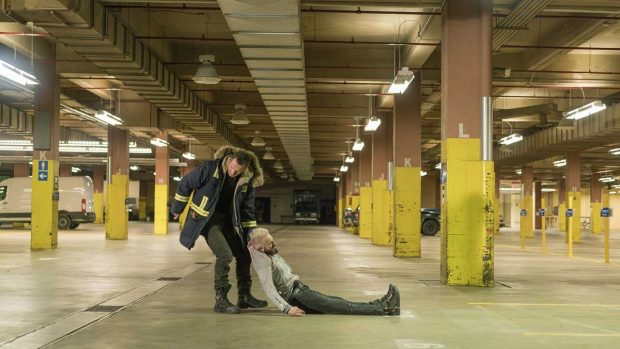
Remaking his own film, Hans Petter Moland brings us a revenge thriller, starring – who else? – Liam Neeson as a model citizen turned remorseless killer on the trail of those responsible for his son’s murder. Sounds like typical Neeson fare, but Cold Pursuit leaps between dramatic and blackly comic tones with verve, and offers something much more interesting and original than you’re likely to expect.
We find lots to like in it, including its magnificent lighting and compositions, interesting and welcome inclusion of a group of Native American characters, as well as a commentary on their relationship to the very whitest America there is (the film being set in a Colorado ski town), and some surprisingly tender moments between adults and children, and people in love.
We highly recommend it, it’s a huge amount of fun!
The podcast can be listened to in the players above or on iTunes.
In response to José’s excursion into the world of Michael Curtiz a few months ago, Mike has picked four films of his own to discuss, the first being writer-director Dennis Gansel’s 2008 high school drama Die Welle (The Wave). Based on the true story of a 1967 social experiment, Die Welle follows one week in a high school in which, as an exercise intended to teach his pupils about the methods and dangers of fascism, a teacher creates a fascist movement, named The Wave, that rapidly spirals out of control.
Die Welle is first and foremost remarkable for convincingly depicting the seductive aspects of fascist movements, such as the shared symbols that engender group unity and, indeed, simply the positivity of being a member of a like-minded group. Mike compares it to Starship Troopers, claiming that it doesn’t just argue its case but actually makes it work on its audience – rather than seeing why The Wave is appealing to the kids, you feel it too. José discusses what sets it apart from your typical high school movie and how an even greater focus on the kids, rather than the teacher, might have strengthened it.
The classroom scenes allow the film to develop its arguments about fascism through ersatz Socratic dialogues, the teacher’s seminar-style classes allowing pupils to make competing points in quick succession, clashing with each other as they do so. But Mike points out that perhaps all is not what it seems: one student, for instance, goes unchallenged when she claims that high unemployment and social injustice are social conditions that favour dictatorship, but the world in which these children live bears few markers of such sociopolitical problems, yet they enthusiastically join and build their movement. Indeed, one motivation behind the experiment is the students’ belief that Germany, having already experienced a fascist dictatorship, is immune from another. Perhaps, the film suggests, we aren’t quite as clever and protected as we’d like to congratulate ourselves on being.
Aside from the film’s central thesis, there are minor details in its world that pique our interest, José noticing the students’ access to and expertise in the use of image editing and web design software; Mike picking up on the educated, liberated attitude to sex the characters display (it’s hard to imagine an American high school movie treating sex with similar freedom and confidence). We remark upon how believable the characters are (with perhaps one exception) in their interactions and responses to the nascent movement.
Neither of us can claim that it’s a perfect film – there’s little in it that is visually expressive, and its mechanisms are too openly displayed, with some characters too clearly intended to represent ideas and serve plot functions. But Die Welle is an enormously engaging, intelligent, and rather bold exploration of the mechanisms and appeal of fascism that enthusiastically uses cinematic affect to convey its message that we may all be more susceptible to its dangers than we think.
The podcast can be listened to in the players above or on iTunes.
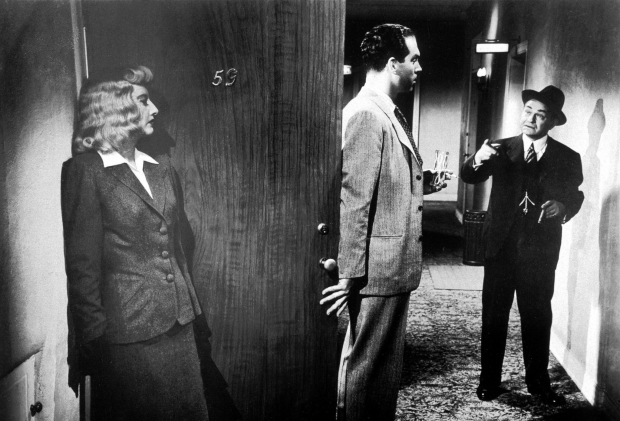
The film noir to end films noir, Billy Wilder’s classic crime drama Double Indemnity made its way to The Electric in Birmingham for a one-off screening, where a packed cinema ensured a great atmosphere. Mike, as usual, hadn’t seen it, while José is very familiar with it, even having taught it before.
Mike didn’t entirely click with it, though he’s able to appreciate much of what makes it a classic. Perhaps the stylistic and thematic elements that identify film noir are so perfectly employed by Double Indemnity that it leads to an ironic, detached mode of viewing – the genre, though it has existed since its inception, is strongly connected to its classical era of the Forties and Fifties, and has been parodied and pastiched more than most, burdening the film with unfair baggage to audiences not in that frame of mind. José, on the other hand, relishes the chance to see it with a paying, enthusiastic audience, finding that he notices different details and appreciates the film differently outside of an academic setting.
Unquestionable is the strength of Barbara Stanwyck’s seductive performance as the femme fatale, her Phyllis Dietrichson the archetype of the dangerous woman who bewitches her doomed victim, in this case a chump played with distracting self-importance by Fred MacMurray. And every time Edward G. Robinson appears on screen he lights it up, capturing the audience, whether with the array of witty retorts and bon mots with which the script furnishes him, or dialogue as ostensibly dull as a recitation of an actuarial table for types of suicide.
With all of this in mind, Mike is sure that a second run at the film would help him appreciate it more. There’s no doubting its place in cinema history, and that it continues to pack out cinemas with eager filmgoers is testament to that.
The podcast can be listened to in the players above or on iTunes.
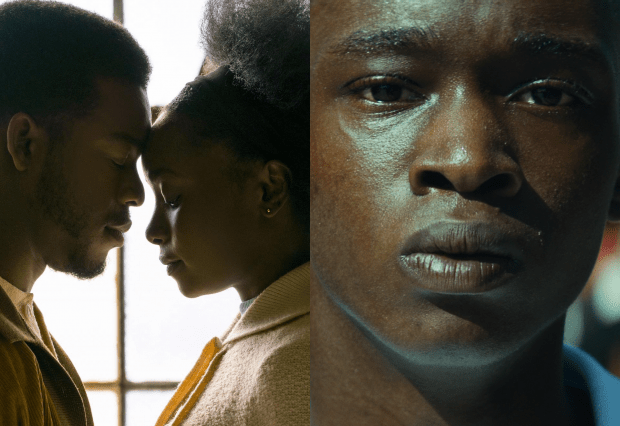
We return to Barry Jenkins’ If Beale Street Could Talk, his sumptuous romantic drama set in 1970s New York, for a deep dive, and take the opportunity to revisit his previous film, 2016’s Best Picture winner Moonlight. It’s an enriching conversation and we’re glad we took the time to engage in it. (The first podcast can be found here.)
We begin with Moonlight, working through our responses to what we experienced differently since having seen it previously (Mike last saw it during its cinema release, while José has seen it a few times on more recent occasions). The film’s final third is given serious thought, José in particular enjoying the opportunity to properly work through his longstanding problems with it, which amount to the film’s fear of the sex in homosexuality, its conscious refusal to openly and honestly depict two gay men being intimate – the film denies them even a kiss at the very end – and the critical establishment’s bad faith in refusing to engage with this particular point. It’s great to have finally discussed this topic, particularly paying close attention to the final few shots, where the problems are condensed and made perfectly clear; as José says, it’s an itch he’s wanted to scratch for a long time.
Moving on to Beale Street, we re-engage with some points we brought up in our first podcast, such as the dissonance between the opening intertitle’s invocation of drums and the soundtrack’s absence of them, and the relative richness of the characters that surround Tish and Fonny to the central couple. And we draw out new observations and thoughts, in particular returning on a few occasions to the conversation between Fonny and Daniel, discussing the lighting that drops them into deep shadow, picking up just the lightest outlines of their features as if to expose their souls instead, and how shot selection, editing and the use of a rack focus develop the drama and bring the characters together but simultaneously isolate Daniel within his own traumatic experiences. Mike picks up on a motif of redness in their eyes, acknowledging that the reading he offers is always going to be a stretch but finding it meaningful nonetheless.
We discuss the use of photo montages to reach for the universality of experience that the title implies and we felt was an issue the first time around, José describing how they thematically focus the film on black male incarceration and the lived experience of black masculinity in the United States. Mike feels that it’s a bit of a hangout movie, wanting to spend time with the characters and in their world, despite – perhaps because of? – the hardships they experience and discuss at times; certainly because of the romantic transparency, the care and love that characters show for each other, and the richness of their conversations. José finds fault with how the Latino characters are lit and generally visually portrayed to less than their best, arguing that they were excluded from the visual romance that bathes the rest of the film.
And we see direct comparisons between Beale Street and Moonlight. Beale Street‘s sex scene is an obvious point of discussion with respect to Moonlight‘s ending, but we also find parallels in the elements that depict or imply betrayal between friends, Moonlight‘s hazing scene and Daniel’s ostensible usefulness as an exculpatory witness for Fonny sharing complexities around whether the betrayals they depict are truly betrayals.
A hugely enriching discussion that we had great fun having, thanks to two intricate, beautiful, thought-provoking films.
The podcast can be listened to in the players above or on iTunes.
It’s Valentine’s weekend and we take a romantic trip to The Electric Cinema to see It Happened One Night, Frank Capra’s 1934 romantic comedy that is one of only three films to win all Big Five Oscars (Best Picture, Best Director, Best Actor, Best Actress, and Best Screenplay). As usual, Mike hasn’t seen it before, while José’s seen it plenty. Does it hold up?
José talks of its democratic appeal, set largely in the American South during the lowest point of the Great Depression and showing people coming together despite hardship, lack of work and even fainting from hunger. We discuss the development of the relationship between Clark Gable and Claudette Colbert, including the wisdom of sharing a motel room with a man you just met, the propriety depicted (such as forgoing a lucrative reward, instead only claiming your expenses), and of course, the madness of Alan Hale’s singing.
The podcast can be listened to in the players above or on iTunes.
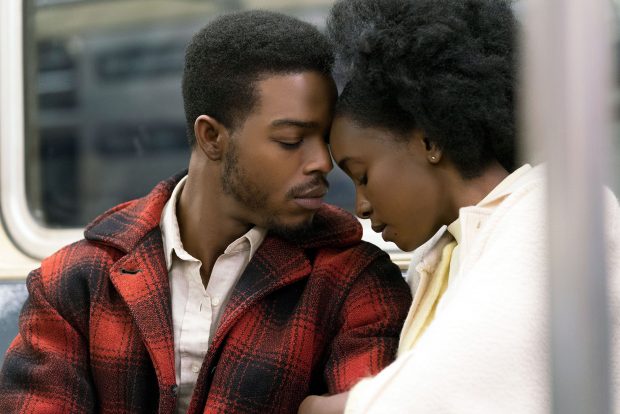
Achingly romantic and visually rapturous, If Beale Street Could Talk, Barry Jenkins’ adaptation of James Baldwin’s 1974 novel of the same name, utterly bowls Mike over, while José expresses some reservations about it, despite also finding it enormously impressive. A love story set in New York City in the late 60s/early 70s, the film follows Tish (KiKi Layne) and Fonny (Stephan James) as they fall in love, begin to build a life together, but are threatened with its destruction by a racist cop and a false accusation of rape.
The title refers to a street in New Orleans that Baldwin, and subsequently Jenkins, use as a metaphor for the black experience across America, and arguably this is overambitious (if not simply impossible). The universality implied by the title is dissonant with what the film offers, which is much more personal and idiosyncratic. José points out the lack of anger in the film, anger that would be absolutely justified to express given both the general institutional racism the characters face in their place and time, and the specific instance of racist behaviour to which they are subjected: the rape accusation. Instead of fury, we see coping, survival, sadness, resistance and love, all communicated with an extraordinary depth of feeling and a camera that finds the beauty and subtlety in everyone’s face. And ultimately this is wonderful, it’s just that the title and opening intertitle that explains it somehow don’t seem to quite understand their own story.
There’s a huge amount we discuss, including the narration; the film’s excursion to Puerto Rico and how its depiction of the experience of Latino people might or might not offer an interesting comparison to its central interest, the African-American community; how Brian Tyree Henry shows up for a scene and steals the entire film; how the film aims for visual poetry; how Jenkins conveys rich sense of different people’s lives and environments with just a few shots; and how the film chokes you up with its incredibly tactile depth of feeling that is sustained more or less throughout. We also bring up comparisons to Green Book, Get Out, and in particular, Moonlight, Jenkins’ previous film – José has issues with how he copped out of giving his story of a gay black boy’s difficulties growing up an honest ending, and takes issue with how viscerally one feels Tish’s desire for Fonny due to the way he’s shot, finding it even more disappointing than before that Jenkins didn’t do the same in Moonlight.
It’s a film we want to see again, infectious and emotionally rich, and if you don’t see it in a cinema you’re missing out. It’s great.
The podcast can be listened to in the players above or on iTunes.
It’s already being portrayed as the film that will undeservedly win Best Picture for its cuddly, comfortable, comedy-drama version of American racism in the Sixties, but do we dissent from that view? Green Book tells the true story of a road trip through the Deep South shared by jazz pianist Doctor Don Shirley (Mahershala Ali) and his Italian-American driver Tony (Viggo Mortensen).
Mike immediately seizes upon Tony’s inconsistent characterisation, the film using other characters to describe him as deeply racist, but his actual interactions with Shirley consisting of essentially polite microaggressions rather than real malevolence and anger. José also takes issue with the revelation that Shirley is gay, Tony having no problem with it, saying that in his regular job as a bouncer he sees it all the time – the film makes no attempt to explain how he can be entirely understanding and accepting of sexuality while intolerant of skin colour. Mortensen, though, is very characterful, imbuing Tony with entertaining irreverence, and the love Tony displays for his wife, writing her letters every day, is very sweet.
Ali doesn’t match Mortensen’s level of performance, though he is perhaps asked less of, largely remaining aloof throughout the film. Again, we find problems in Shirley’s characterisation. The film sets him up as a fish out of water, not just as a gay, black man in the Deep South, but also amongst other black people – it’s a quirk too far to believe that he’s never heard a Chubby Checker or Little Richard record. And the movements made in the film’s final minutes to engineer a classic happy ending (at Christmas, no less) are as predictable and obvious as they come, but Mike is moved by the ending nonetheless, leaving the cinema with a smile on his face.
Despite the character issues, lack of subtlety (every aspect of the issues it depicts is explained in dialogue), weak visual storytelling (this film doesn’t appear to actually know that it’s being shown in cinemas, so fully does it lack any sense of cinematic nous or style), and project of delivering an unchallenging, white man’s version of racism in which everyone can learn to get along without having to face any hard truths, we found things to like in Green Book, and recommend it as long as you keep your expectations low.
The podcast can be listened to in the players above or on iTunes.
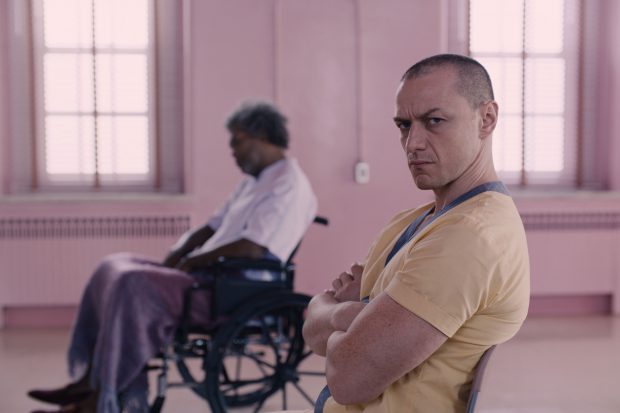
Concluding a trilogy two decades in the making, Glass brings together the characters of 2000’s Unbreakable and 2016’s Split in an unconventional superhero showdown. We both enjoyed it, though it’s a bit of a trifle, but it’s enjoyably oddball and features a particularly brilliant performance from James McAvoy. And we appreciate M. Night Shyamalan’s direction, staging and camerawork, which, while occasionally a little stilted and ‘filmmakery’, for want of a better word, is thoughtful and always strives to create interesting and meaningful imagery.
The film feels significantly affected by the Marvel Cinematic Universe’s influence on comic book movies and their public acceptance; there are things that Glass does, ways it behaves, that are difficult to imagine having made as much sense prior to that series. Indeed, this trilogy is a universe of sorts, with characters from different films being brought together in a shared world.
The podcast can be listened to in the players above or on iTunes.





 Eavesdropping at the Movies