Tag Archives: road movie

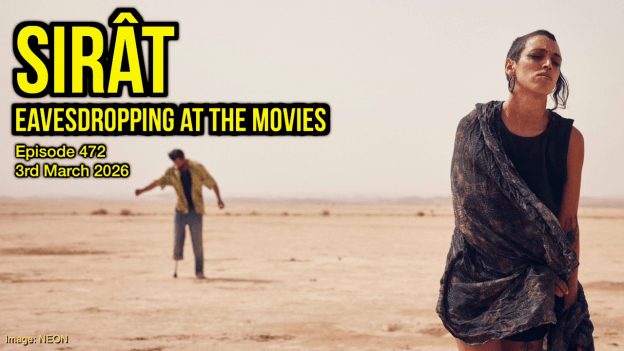
472 – Sirât

Listen on the players above, Apple Podcasts, Audible, Spotify, or YouTube Music.

Sirât is all about tone, and the time it takes to establish it. It begins with an array of massive speakers being set up in a desert, and over the next several minutes, we experience an outdoor rave, the music trance-inducing, the ravers moving freely and in their own worlds, as we gradually narrow our focus on an out-of-place father, Luis, and his young son, who we learn are searching for his daughter, last seen five months ago. Failing to find her there, Luis latches on to the mention of another, upcoming rave, and, while war breaks out in the background, uncertainly follows a group of ravers there.

It’s possible to spoil Sirât severely – some of what occurs is barely signposted and hard to believe, but just as we’re told about the music that underscores everything, this is a film for dancing to, not listening to. It would be all too easy to watch Sirât at a remove and find the events depicted ludicrous and laughable, but director Óliver Laxe demonstrates such control of tone that it’s easy to be lured into the emotional state he needs to shock us when he wants. The only thing you should be prepared to expect is a lack of easy answers. Sirât is a film about a world coming apart that leaves you wondering what it’s all for.

With José Arroyo of First Impressions and Michael Glass of Writing About Film.

133 – It Happened One Night

It’s Valentine’s weekend and we take a romantic trip to The Electric Cinema to see It Happened One Night, Frank Capra’s 1934 romantic comedy that is one of only three films to win all Big Five Oscars (Best Picture, Best Director, Best Actor, Best Actress, and Best Screenplay). As usual, Mike hasn’t seen it before, while José’s seen it plenty. Does it hold up?

José talks of its democratic appeal, set largely in the American South during the lowest point of the Great Depression and showing people coming together despite hardship, lack of work and even fainting from hunger. We discuss the development of the relationship between Clark Gable and Claudette Colbert, including the wisdom of sharing a motel room with a man you just met, the propriety depicted (such as forgoing a lucrative reward, instead only claiming your expenses), and of course, the madness of Alan Hale’s singing.

The podcast can be listened to in the players above or on iTunes.

With José Arroyo of First Impressions and Michael Glass of Writing About Film.

131 – Green Book

It’s already being portrayed as the film that will undeservedly win Best Picture for its cuddly, comfortable, comedy-drama version of American racism in the Sixties, but do we dissent from that view? Green Book tells the true story of a road trip through the Deep South shared by jazz pianist Doctor Don Shirley (Mahershala Ali) and his Italian-American driver Tony (Viggo Mortensen).

Mike immediately seizes upon Tony’s inconsistent characterisation, the film using other characters to describe him as deeply racist, but his actual interactions with Shirley consisting of essentially polite microaggressions rather than real malevolence and anger. José also takes issue with the revelation that Shirley is gay, Tony having no problem with it, saying that in his regular job as a bouncer he sees it all the time – the film makes no attempt to explain how he can be entirely understanding and accepting of sexuality while intolerant of skin colour. Mortensen, though, is very characterful, imbuing Tony with entertaining irreverence, and the love Tony displays for his wife, writing her letters every day, is very sweet.

Ali doesn’t match Mortensen’s level of performance, though he is perhaps asked less of, largely remaining aloof throughout the film. Again, we find problems in Shirley’s characterisation. The film sets him up as a fish out of water, not just as a gay, black man in the Deep South, but also amongst other black people – it’s a quirk too far to believe that he’s never heard a Chubby Checker or Little Richard record. And the movements made in the film’s final minutes to engineer a classic happy ending (at Christmas, no less) are as predictable and obvious as they come, but Mike is moved by the ending nonetheless, leaving the cinema with a smile on his face.

Despite the character issues, lack of subtlety (every aspect of the issues it depicts is explained in dialogue), weak visual storytelling (this film doesn’t appear to actually know that it’s being shown in cinemas, so fully does it lack any sense of cinematic nous or style), and project of delivering an unchallenging, white man’s version of racism in which everyone can learn to get along without having to face any hard truths, we found things to like in Green Book, and recommend it as long as you keep your expectations low.

The podcast can be listened to in the players above or on iTunes.

With José Arroyo of First Impressions and Michael Glass of Writing About Film.