Author Archives: michaeljglass

219 – Bacurau

Listen on the players above, on Apple Podcasts, or on Spotify.

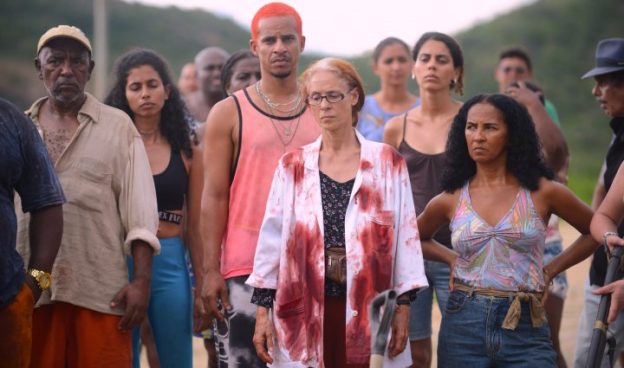
A political parable, satire, thriller, high-concept actioner, horror, and Western all at once, 2019 Cannes Jury Prize winner Bacurau is a wild experience and well worth your time. Set in a tiny, remote village in a near-future Brazil, we’re given a portrait of life within an open, tolerant community under the thumb of a distant but powerful mayor, and shortly after the funeral of one of the town’s elders, things start going awry.

To say more would be to spoil the surprises, and we encourage you to check the film out knowing as little as possible. As a fable, it’s a potent piece of work – themes of political abuses, the ownership and withholding of water conferring power, and the value of community and the knowledge of history are all made manifest as Bacurau straddles its genres and provides its thrills. It’s a film that’s as open to interpretation as it is clear about what it thinks – its clunkiness in this respect a positive for Mike while occasionally a little overegged for José. But quibbles here and there pale in significance to Bacurau‘s boldness and intelligence, and you should see it.

With José Arroyo of First Impressions and Michael Glass of Writing About Film.

218 – Contagion

Listen on the players above, on Apple Podcasts, or on Spotify.

We may be living under lockdown conditions, but no virus can stop us, and to prove it we’re taking on Steven Soderbergh’s 2011 thriller Contagion, about a virus that rips through every country on Earth, the scientific work to stop it, and the social decay that it leaves in its wake. Suggested as a podcast by an irony-seeking Mike, it backfires as it actually just frightens him.

At least, for a while. We think about the film in the context of the COVID-19 pandemic currently upon us, of course, praising what we recognise in the film’s imagined crisis, remarking upon the differences. Much of what it depicts feels very true to life, and it strongly evokes panic and a sense of uncertainty; on the other hand, the difference less than a decade makes is thrown into sharp relief with the film’s essentially competent and well-intentioned government response to the disease, a far cry from the lies and bluster being spouted by certain American presidents today – something that would have been not only unimaginable but laughable at the time of the film’s release. José notes that a high proportion of the public worry in our current outbreak comes down to its economic effects, which again, Contagion does not imagine as even a minor point.

It’s a well-made film, tightly plotted and paced, juggling several plots and sets of characters, understanding keenly how and when to jump between them, and its staging, editing and cinematography bring to life the paranoia of living in a society in which any surface innocently touched by any stranger’s hand could spread a deadly disease, and the fear and confusion engendered by a lack of trust in the government and loud countervailing voices. Contagion uses its characters and scenes as representative of ideas as much as, or more than, things in and of themselves, which Mike argues leaves it emotionally distant and overly simplistic – though there’s plenty of room for debate, particularly over Matt Damon’s performance.

All in all, Contagion is an impressive piece of thriller fiction whose successes and failures are both given oxygen in the light of very recent developments. If you watch it, be prepared to be made even more paranoid than you currently are… because the world we’re living in now is even more insane.

With José Arroyo of First Impressions and Michael Glass of Writing About Film.
217 – Portrait of a Lady on Fire

Listen on the players above, on Apple Podcasts, or on Spotify.

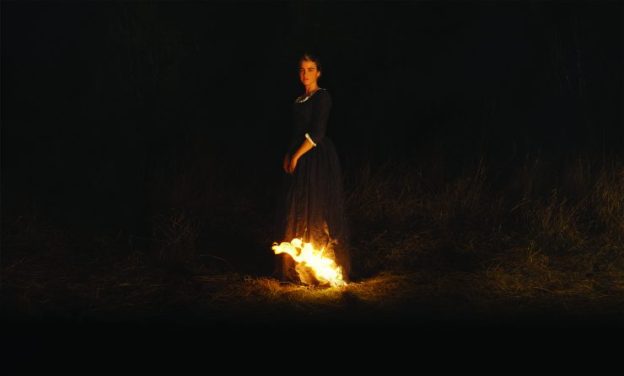
A delicate, intelligent love story, Céline Sciamma’s Portrait of a Lady on Fire undulates with complex, interlocking themes and emotions. It’s a film about looking: who looks, who is looked at, how one should be seen, for whom the gaze is intended and what the rules are. Héloïse, a young aristocrat, refuses to have her portrait painted for the approval of a Milanese nobleman; an artist named Marianne is commissioned to do just that, but in secret, forcing her to steal glances at her subject and, outwardly, act merely as her companion. The women’s relationship quickly develops, and soon they are collaborating on the portrait to which Héloïse had hitherto objected.

Sciamma demonstrates an eye for beautiful, sensitive composition, and with cinematographer Claire Mathon creates some simply stunning imagery, evoking 18th and 19th century Romantic art; truly, this film understands what it means to paint with light. We consider the differences between the characters: one formerly resident in a convent, brought home to take over her sister’s role to be betrothed; the other a skilled worker, whose life experience Héloïse is keen to probe – and this is to say nothing of Sophie, the maid, who forms friendships with both Héloïse and Marianne, and the drama of whose life experience surely outweighs theirs combined. We discuss how the boundaries between the three – particularly Héloïse and the two workers – are broken down; without the rule-keeping figure of Héloïse’s mother present, the young women are able, to an extent, to reshape the world in which they live. But patriarchy overhangs the entire film, even with men physically absent throughout; the painting into which Marianne and Héloïse are investing their love is the very thing, intended for the Milanese suitor as it is, that will seal their fate to live separate lives.

Portrait of a Lady on Fire is an ambitious, confident, complex and beautiful film whose imagery soars on the cinema screen. See it.

With José Arroyo of First Impressions and Michael Glass of Writing About Film.

216 – Dark Waters

Listen on the players above, on Apple Podcasts, or on Spotify.

A legal drama about the biggest corruption scandal you’ve never heard of, Dark Waters tells the story of lawyer Robert Bilott’s twenty year long fight to expose chemical manufacturer DuPont’s decades of knowing and unapologetic poisoning of a town, a country, and the entire world. Visited by a West Virginian farmer named Wilbur Tennant, whose livestock are falling prey to unusual medical conditions and dying, Bilott – a corporate lawyer who works to help chemical companies pollute within the law – files a lawsuit, and slowly begins to uncover the company’s secrets.

For José, it’s a film that fits neatly amongst director Todd Haynes’ previous work, which often focuses on power relations and the struggles of the oppressed, sidelined or disenfranchised. For Mike, it might be a new Spotlight, another film about the exposure of vast, historical, institutional wrongdoing. But don’t believe the trailer that makes it look all blood and thunder – Dark Waters, though compelling and dramatic, is a slow burner, methodical and careful, and with a scope that looks beyond the details of the law. The town of Parkersburg, WV is shown in portrait, with shots evocative of Depression-era photography, and Bilott is an interesting character, a man who appears uncomfortable within his own body, whose determination to uncover the truth grows alongside his paranoia that something bad will happen to him, and whose relationship with his wife is a constant that is reframed intriguingly in the film’s final movement.

Dark Waters is a fascinating, intelligent, complex thriller that gives its themes room to express themselves and is full of details and moments that speak to entire inner lives and ways of thinking. Make sure you see it.

(Mike would also like to apologise to Bucky Bailey, one of DuPont’s most unfortunate victims and perhaps the film’s central emotional tentpole, for referring to him as Bucky Barnes, who is the guy from the Avengers films who sports a prosthetic arm and does nothing interesting.)

With José Arroyo of First Impressions and Michael Glass of Writing About Film.
215 – Queen & Slim

Listen on the players above, on Apple Podcasts, or on Spotify.

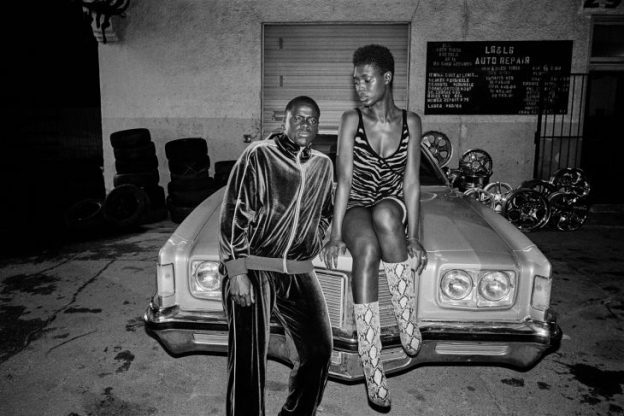
An assured debut feature from director Melina Matsoukas, Queen & Slim is a romantic, fugitive road movie with a state-of-the-nation feel. After an awkward first date, a traffic stop escalates out of hand, resulting in one dead police officer, shot in self defence, and two black civilians on the run. Their escape sees them take a tour through Ohio, Kentucky, Louisiana and Florida, their public profile growing, their actions inspiring both admiration and dismay amongst those they encounter.

It’s a confidently made film, evocative of a bygone era though set in the modern day, slow and tonally adept, with two wonderful performances from Daniel Kaluuya and Jodie Turner-Smith. We discuss whether it’s a noir and Turner-Smith’s unwitting femme fatale, the characters’ changes of costume, the way in which a variety of music expresses different elements of black culture with the effect of unifying them, the details and suggestions that build a holistic, believable world, what effect the reveal of the characters’ names has, and what significance faith might play.

Queen & Slim is a beautiful film that effortlessly expresses the struggles and oppressions of black Americans within a set of smoothly combined genres. It’s a true original, and a great experience.

With José Arroyo of First Impressions and Michael Glass of Writing About Film.

214 – American Factory

Listen on the players above, on Apple Podcasts, or on Spotify.

The latest winner of the Academy Award for Best Documentary Feature, Julia Reichert and Steven Bognar’s American Factory is a complex and brilliant examination of a clash of cultures and management styles and the diminishment of a class of workers having to grovel for jobs they cannot do without.

In 2014, the recently closed GM factory in Moraine, Ohio, was acquired and reopened by Fuyao Glass, a Chinese company; many of the former GM employees, often out of regular work since the closure in 2008, would occupy new jobs there. While the film depicts clashes between the Moraine locals and the Chinese employees flown in to supervise them, it also ensures that it doesn’t accept any indulgence in xenophobia, instead showing employees of both nationalities spending leisure time together and getting along. The film is less interested in moderating the clash between the Chinese and American supervisors – a trip to a Chinese plant, intended to show the Americans how things should be done, with robotic employees, militaristic roll calls and company songs, long hours, hardly any days off, non-existent safety standards and a focus on quantity of production over quality, is met with raised eyebrows by all but one conspicuously enthusiastic visitor. That those unconvinced bosses are eventually replaced by more Chinese overseers is no surprise – nor is it a surprise that a bubbling movement to unionise the Moraine workers is suppressed by an appeasing extra couple of dollars of pay – that still keeps salaries at half of what they’d been at GM – and an expensive propaganda campaign that successfully scares most of the employees into voting against unionisation.

There’s a vast amount going on in this concise and potent film, and Reichert and Bognar work magic to marshal a sprawling web of people, plots and themes, and to allow the workers to narrate their own story smoothly and with little outside help (just a few lines of superimposed text here and there). It’s available on Netflix, and you should not miss out on it.

With José Arroyo of First Impressions and Michael Glass of Writing About Film.
213 – The Lighthouse

Listen on the players above, on Apple Podcasts, or on Spotify.

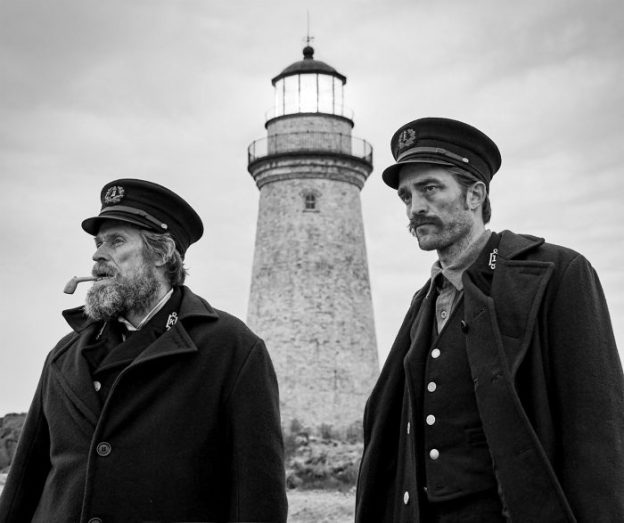
Robert Eggers’ The Lighthouse, a tale of two lighthouse keepers stranded during a storm, is a visual treat in black and white that stuns and engrosses us. A two-hander between Willem Dafoe’s irascible boss and Robert Pattinson’s secretive youngster, it invokes myth, gods, folk tales, the clash of male egos, compulsive psychosexuality, if not much, much more besides.

If its plot is simple, its story is complex, and we think our way through its characters’ personalities, wants, needs, and psychologies. José asks if the film is gothic, and we discuss the boss’s treatment of his assistant: is it just controlling, or abusive? Extraordinary imagery of mermaids, monsters, and gods suffuses the film with inescapable surreality and the turbulent minds of men overburdened with ego and sexual need. Eggers has an assured, confident sense of tone, layering the film with mood and atmosphere, making its remote island a pressure cooker.

The Lighthouse is a spectacular film, an audiovisual treat that you should not miss at the cinema. Its imagery is poetic, its characters complex – in its entirety, it is confusing but approachable, symbolic but not coded, allowing room for interpretation and emotional response. It’s brilliant.

With José Arroyo of First Impressions and Michael Glass of Writing About Film.

212 – Parasite

Listen on the players above, on Apple Podcasts, or on Spotify.

It’s one of José’s films of the year; it leaves Mike cold. Bong Joon-ho’s Parasite depicts social inequality in South Korea through a lower-class family that cons its way into working for an upper-class family. We pick our way through the film’s structure; its motif of staircases that delineate status and power relations; the way poverty carries with it an inescapable smell, intolerable to the upper class; the two families’ experiences of nature and the desire for sunshine.

It builds on some aspects of horror, but cannot at all be considered one, either in genre or affect – though the fact that its trailers sold it as such might have something to do with Mike’s frosty response. It’s an allegorical thriller, every character standing in place of a class or group of people, and its construction is intelligent, thoughtful and tight. For José, it works on a visceral level, the mood and tone emphasising and combining with the structure and metaphor; for Mike, it’s a flat experience, a clever essay with definite interpretations and little feeling.

But it’s clearly touched a nerve, connecting with worldwide audiences. It speaks not just to conditions in South Korea but a global system of oppression and inequality under capitalism. We may not agree on what it makes us feel, but it’s potent food for thought and offers much to discuss. Don’t miss it.

Also in this episode, we take a look at the upcoming Oscars, which eager cinephiles will be able to watch yesterday.

With José Arroyo of First Impressions and Michael Glass of Writing About Film.

211 – Birds of Prey

Listen on the players above, on Apple Podcasts, or on Spotify.

Trying to build a portrait of patriarchal power and subjugation that shapes the lives of five women, Birds of Prey takes a solid enough foundation and executes it abysmally, lacking visual style, coherent storytelling, and really any imagination. It’s the worst time José’s endured at the cinema in a year; Mike heroically offers a couple of examples of moments he enjoyed – the flying sandwich – but there’s no rescuing these damsels in distress.

With José Arroyo of First Impressions and Michael Glass of Writing About Film.
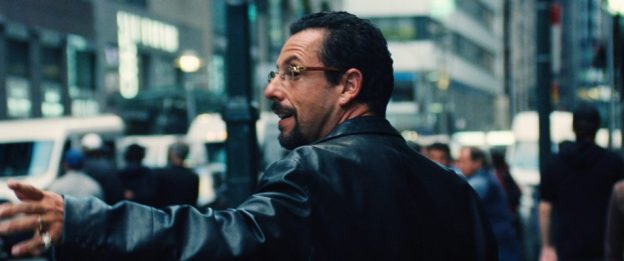
210 – Uncut Gems

Listen on the players above, on Apple Podcasts, or on Spotify.

Independent filmmakers Josh and Benny Safdie team up with Adam Sandler for Uncut Gems, an energetic, evolving crime thriller set in Manhattan’s Diamond District. By the time we meet Sandler’s Jewish jeweller, Howard, he’s already embedded within a web of competing interests, desires and debts, as well as a gambling addiction – and the tension only mounts as problems grow worse.

The Safdie brothers and Sandler are all Jewish New York natives, the writer-directors in particular growing up, in part, around the Diamond District, where their father worked. There’s a specificity to the location and culture that the film captures beautifully, a richness to Howard’s characterisation, and the world he inhabits, that feels authentically observed. Howard’s need to take risks never allows the tension to settle – he can’t help but invite further trouble upon himself, so neither does the film let us calm down for a second.

Uncut Gems is a complex, character-oriented, engrossing work of edge-of-your-seat genre entertainment, and a terrific follow-up to the Safdies’ 2017 thriller Good Time, which we discuss a little bit (but not too much because José hasn’t finished it yet). Both Good Time and Uncut Gems are available on Netflix, and well worth your time. The Safdie brothers might not just be good – they might be greats.

With José Arroyo of First Impressions and Michael Glass of Writing About Film.