Tag Archives: romance

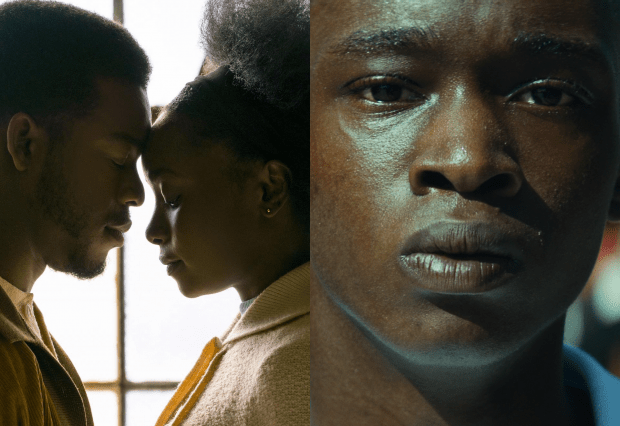
134 – If Beale Street Could Talk and Moonlight – Second Screening

We return to Barry Jenkins’ If Beale Street Could Talk, his sumptuous romantic drama set in 1970s New York, for a deep dive, and take the opportunity to revisit his previous film, 2016’s Best Picture winner Moonlight. It’s an enriching conversation and we’re glad we took the time to engage in it. (The first podcast can be found here.)

We begin with Moonlight, working through our responses to what we experienced differently since having seen it previously (Mike last saw it during its cinema release, while José has seen it a few times on more recent occasions). The film’s final third is given serious thought, José in particular enjoying the opportunity to properly work through his longstanding problems with it, which amount to the film’s fear of the sex in homosexuality, its conscious refusal to openly and honestly depict two gay men being intimate – the film denies them even a kiss at the very end – and the critical establishment’s bad faith in refusing to engage with this particular point. It’s great to have finally discussed this topic, particularly paying close attention to the final few shots, where the problems are condensed and made perfectly clear; as José says, it’s an itch he’s wanted to scratch for a long time.

Moving on to Beale Street, we re-engage with some points we brought up in our first podcast, such as the dissonance between the opening intertitle’s invocation of drums and the soundtrack’s absence of them, and the relative richness of the characters that surround Tish and Fonny to the central couple. And we draw out new observations and thoughts, in particular returning on a few occasions to the conversation between Fonny and Daniel, discussing the lighting that drops them into deep shadow, picking up just the lightest outlines of their features as if to expose their souls instead, and how shot selection, editing and the use of a rack focus develop the drama and bring the characters together but simultaneously isolate Daniel within his own traumatic experiences. Mike picks up on a motif of redness in their eyes, acknowledging that the reading he offers is always going to be a stretch but finding it meaningful nonetheless.

We discuss the use of photo montages to reach for the universality of experience that the title implies and we felt was an issue the first time around, José describing how they thematically focus the film on black male incarceration and the lived experience of black masculinity in the United States. Mike feels that it’s a bit of a hangout movie, wanting to spend time with the characters and in their world, despite – perhaps because of? – the hardships they experience and discuss at times; certainly because of the romantic transparency, the care and love that characters show for each other, and the richness of their conversations. José finds fault with how the Latino characters are lit and generally visually portrayed to less than their best, arguing that they were excluded from the visual romance that bathes the rest of the film.

And we see direct comparisons between Beale Street and Moonlight. Beale Street‘s sex scene is an obvious point of discussion with respect to Moonlight‘s ending, but we also find parallels in the elements that depict or imply betrayal between friends, Moonlight‘s hazing scene and Daniel’s ostensible usefulness as an exculpatory witness for Fonny sharing complexities around whether the betrayals they depict are truly betrayals.

A hugely enriching discussion that we had great fun having, thanks to two intricate, beautiful, thought-provoking films.

The podcast can be listened to in the players above or on iTunes.

With José Arroyo of First Impressions and Michael Glass of Writing About Film.
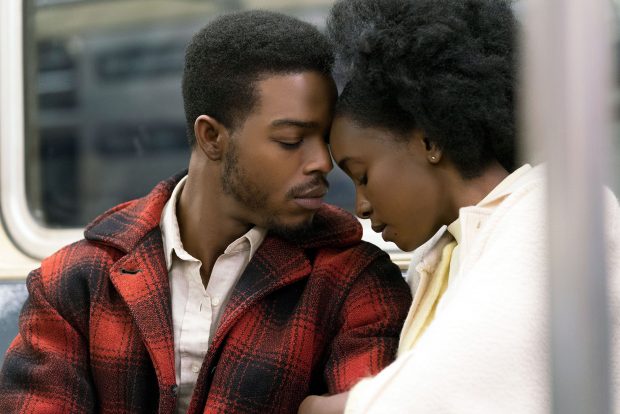
132 – If Beale Street Could Talk

Achingly romantic and visually rapturous, If Beale Street Could Talk, Barry Jenkins’ adaptation of James Baldwin’s 1974 novel of the same name, utterly bowls Mike over, while José expresses some reservations about it, despite also finding it enormously impressive. A love story set in New York City in the late 60s/early 70s, the film follows Tish (KiKi Layne) and Fonny (Stephan James) as they fall in love, begin to build a life together, but are threatened with its destruction by a racist cop and a false accusation of rape.

The title refers to a street in New Orleans that Baldwin, and subsequently Jenkins, use as a metaphor for the black experience across America, and arguably this is overambitious (if not simply impossible). The universality implied by the title is dissonant with what the film offers, which is much more personal and idiosyncratic. José points out the lack of anger in the film, anger that would be absolutely justified to express given both the general institutional racism the characters face in their place and time, and the specific instance of racist behaviour to which they are subjected: the rape accusation. Instead of fury, we see coping, survival, sadness, resistance and love, all communicated with an extraordinary depth of feeling and a camera that finds the beauty and subtlety in everyone’s face. And ultimately this is wonderful, it’s just that the title and opening intertitle that explains it somehow don’t seem to quite understand their own story.

There’s a huge amount we discuss, including the narration; the film’s excursion to Puerto Rico and how its depiction of the experience of Latino people might or might not offer an interesting comparison to its central interest, the African-American community; how Brian Tyree Henry shows up for a scene and steals the entire film; how the film aims for visual poetry; how Jenkins conveys rich sense of different people’s lives and environments with just a few shots; and how the film chokes you up with its incredibly tactile depth of feeling that is sustained more or less throughout. We also bring up comparisons to Green Book, Get Out, and in particular, Moonlight, Jenkins’ previous film – José has issues with how he copped out of giving his story of a gay black boy’s difficulties growing up an honest ending, and takes issue with how viscerally one feels Tish’s desire for Fonny due to the way he’s shot, finding it even more disappointing than before that Jenkins didn’t do the same in Moonlight.

It’s a film we want to see again, infectious and emotionally rich, and if you don’t see it in a cinema you’re missing out. It’s great.

The podcast can be listened to in the players above or on iTunes.

With José Arroyo of First Impressions and Michael Glass of Writing About Film.
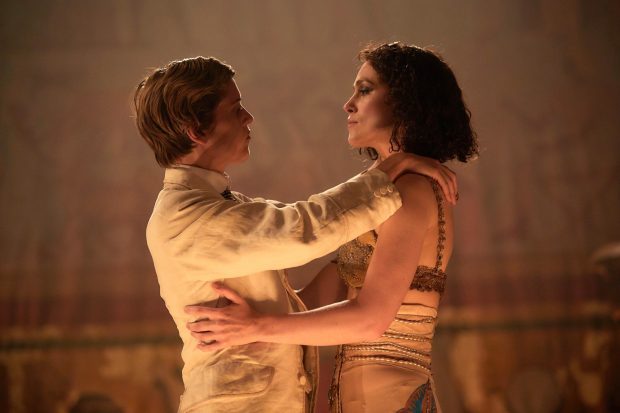
128 – Colette

Gender-bending in turn-of-the-century France, with the true story of Colette, probably the most famous female writer in French history and author, although they were published under her husband’s name, of the Claudine stories. With representational interests that give voice and presence to people and lifestyles one might not expect in a period film, and two very good central performances, one sensitive and complex, from Keira Knightley, and the other fabulously charming, Dominic West’s, there are things we like. But our overall response is disappointed, the positives dulled by a poor script, some badly developed characters, and direction that allows no metaphor to pass unvocalised.

Mike considers it a potentially smart film destroyed by a pointless fear of its audience not getting it; José sees it as the middle-of-the-road cinema it is, for better and worse. It’s worth a look in some respects, but we can’t claim it’s a good film.

The podcast can be listened to in the players above or on iTunes.

With José Arroyo of First Impressions and Michael Glass of Writing About Film.

119 – Disobedience

Rachels Weisz and McAdams soar in this delicate, passionate, complex drama of social pressures and forbidden love. Set in the North London Jewish community, Disobedience tells the story of two women whose love for each other is reignited when one returns home following her father’s death.

Everything is rendered complex, nothing is simple. Weisz’s anger at having been cast out of the community, McAdams’ subjugation and repression into a way of life she doesn’t desire, and Nivola’s denial and ambition are all expressed deeply and combine in intelligent and subtle ways. José is spellbound by the depth of feeling from the very beginning; Mike feels the lack of context early on is disappointing, seeing the film’s clichés rather than its originalities. And we share a certain reservation as to the film’s visual qualities, Mike suggesting the Jewishness of the story is reflected in its understatement, but again there is complexity present in its aesthetic and we appreciate its coherence.

We also like the seriousness with which the film treats its setting, the lack of condescension with which it depicts Jewish ceremonies and customs, Mike in particular finding it exciting to see authentically represented all manner of occasions and nuances of English Judaism. And the synagogue’s choir sings beautifully.

Though we don’t agree on everything, we are deeply moved and find it an enriching film. It’s very much worth your time.

The podcast can be listened to in the players above or on iTunes.

With José Arroyo of First Impressions and Michael Glass of Writing About Film.
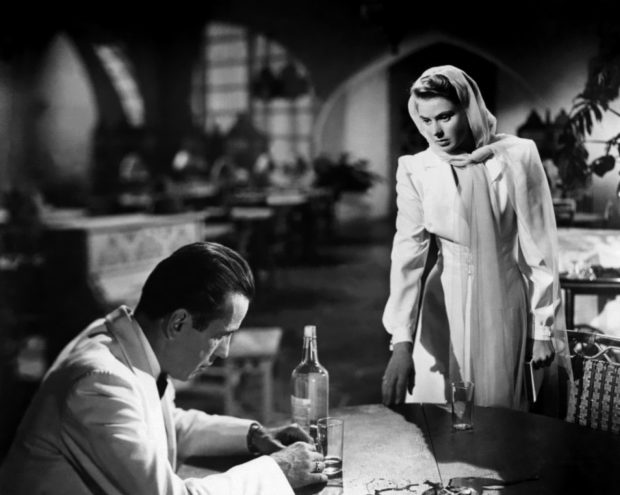
106 – Casablanca

One of us has seen it countless times. The other has never seen it. Fortunately for José, Mike instantly falls in love with Casablanca.

In a way, the pressure was on for Mike to enjoy it, as it’s considered one of the greatest films of all time, and its screenplay in particular held up as a shining example of the craft. And how effortless it is to enjoy it! José notes how rare it is in cinema to see a man suffer for love, as Rick does, and the film’s romance is intense and unapologetic. We swoon over the elegance of Michael Curtiz’s direction, the sheer beauty of the cinematography – nobody these days is shot like Ingrid Bergman is here – and the rich cast of characters, played by one of the all-time great supporting casts.

José considers how the refugee situation and politics depicted – that of a war-torn world relocating regular people to geographic and bureaucratic purgatory – haven’t gone away, and Mike picks up on Madeleine Lebeau’s Yvonne, a minor character whose story recapitulates Rick’s in microcosm. The Marseillaise scene in particular gives us a lot to talk about. And so does much, much more.

It’s a good film. Who knew?

The podcast can be listened to in the players above or on iTunes.

With José Arroyo of First Impressions and Michael Glass of Writing About Film.

93 – Cold War

Cold War is Paweł Pawlikowski’s follow up to the Academy Award winning Ida. We delighted in the Midlands Arts Centre’s fabulous projection system, which Mike says makes these beautifully lit and composed images “sing”, allowing their poetry to resonate. The film is unashamedly a love story, framed in a 4:3 ratio that best frames faces and sharpens the focus on the feelings they express, in glistening black and white.

Cold War begins unusually in that the love each of the protagonists has for the other is never in doubt. The problem, the threat, the barrier, is how the geopolitics of the post-war period interrupt that love – the whole world is against them! We discuss the resonances of the film’s setting, the period 1949-1964, and the significance of the film moving back and forth from Paris and several Eastern Bloc countries; with settings in the Polish countryside, Warsaw, Berlin Yugoslavia, Zagreb and then back to Poland. Is part of the theme that in the Eastern Bloc they’re forced to prostitute their art whilst capitalist countries encourage the prostitution of the self?

José swoons over the sadness, sexiness and romance of the film. Mike draws attention to a certain sketchiness and notes that Tomasz Kot looks like he belongs in a Stella Artois ad whilst admiring his performance and that of Joanna Kulig as Zula. José loves it so much he wants to see it again to further explore the patterning of images and sounds. Mike feels he’s seen enough but is willing to go along, particularly since the film is unexpectedly short at only 85 minutes. It’s certainly good, but precisely how good is Cold War is the question that overhangs the podcast.

The podcast can be listened to in the players above or on iTunes.

With José Arroyo of First Impressions and Michael Glass of Writing About Film.

83 – Mamma Mia! Here We Go Again

It’s been out for four weeks and finally we decide to grapple with Mamma Mia! Here We Go Again. Mike has just recently caught up with the first film, a jukebox musical that José disliked, and both are disappointed with the sequel’s lack of instinct as to what makes a musical actually work. Mike points out some elements of story structure he found original, and Jose is impressed with how the film juggles its vast cast of characters, but they disagree on Cher. (Spoiler: José really loves Cher.)

Neither comes away really having enjoyed the film, though neither is really the target audience either. But there’s fun to be had in critiquing it!

The podcast can be listened to in the players above or on iTunes.

With José Arroyo of First Impressions and Michael Glass of Writing About Film.

82 – The Darkest Minds

José finds a lot to remark upon in The Darkest Minds that Mike didn’t see, helping him appreciate it more. It’s a story of a society broken down by fear of children and a group of young survivors negotiating their own development and making their way towards liberation. It is representationally interesting, the central character a young black girl through whose eyes the film is filtered.

Depictions of children being rounded up into concentration camps disturbingly echoes the actions of ICE under the Trump administration, not to mention countless other examples of segregation and incarceration of peoples throughout history. The central theme of a young woman making herself invisible in order to satisfy others and smooth her path through life is worked through intelligently and tragically.

It’s visually uninspiring, and lacks charm and flair, but The Darkest Minds is an interesting and heartfelt teen movie for an increasingly enlightened young audience.

The podcast can be listened to in the players above or on iTunes.

With José Arroyo of First Impressions and Michael Glass of Writing About Film.

62 – 120 BPM

José has been obsessed with 120 BPM and was very keen to hear what Mike, who is much younger and not gay, thought of it. Is his obsession due to purely personal reasons – the film seems to reflect a part of his youth – or is the film actually as good as he thinks it is? Is it a niche film or does it have meanings and feelings to communicate to a broader audience? Is the movie really great or is it just something José’s particularly vulnerable to weeping at the mere thought of?

We talk about it in relation to Matthew Lopez’s The Inheritance, currently on at the Young Vic in London. We also discuss the film as ‘director-as-editor’ filmmaking. We agree that despite the film’s length – almost the same as Infinity War! – there’s not a moment we’d cut. We discuss the opening sequences, all meetings, political actions, and introductions of characters; we agree that the sex scene in the hospital is one of the best ever filmed. Sex and desire in the film is always on the table and we discuss how it takes on different meanings. We also touch on film form but always only as a way of understanding what the film shows in a historical context.

Luckily for José, Mike liked it and was not sorry he’d bullied him into seeing it.

The podcast can be listened to in the player above or on iTunes.

With José Arroyo of First Impressions and Michael Glass of Writing About Film.

58 – Love, Simon

A young adult romance with a twist, Love, Simon gives gay teens a high school movie with a decent budget and aimed at a wide audience. We both have mixed feelings on it, but find it well-meaning and substantially positive. We discuss some shortcuts it takes – the use of a queeny character to render Simon more acceptable, the setting in upper middle class suburbia making Simon’s sexuality the only issue in his life, a certain generic formulaicity – and ideas the film depicts as simple that could and should be more complex, including conversations we’d like to have seen Simon have with his best friend and the aforementioned queen. Not to mention the rather flat aesthetics.

It’s a discussion that does almost nothing but pick out flaws but nonetheless finds that the breadth of the film’s intended audience mitigates them and its goodness of heart shines through. Worth a watch!

The podcast can be listened to in the player above or on iTunes.

With José Arroyo of First Impressions and Michael Glass of Writing About Film.