Tag Archives: Paweł Pawlikowski

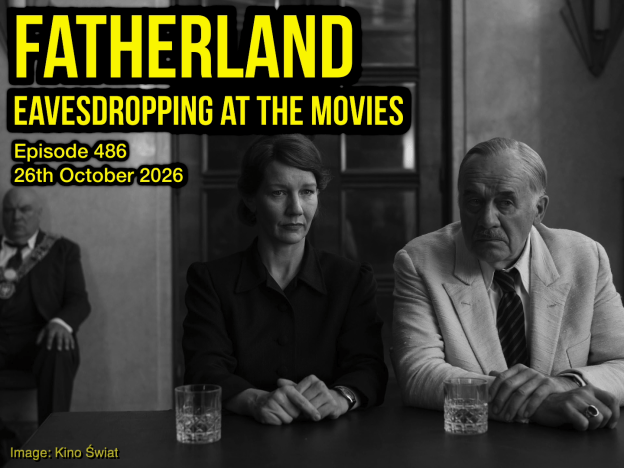
486 – Fatherland

Listen on the players above, Apple Podcasts, Audible, Spotify, or YouTube Music.

The third film in Paweł Pawlikowski’s historical trilogy, after Ida (2013) and Cold War (2018), Fatherland follows one of the defining authors of the twentieth century, Thomas Mann, as he returns to Germany in 1949 with his daughter, Erika, after sixteen years away, finding his country effectively under occupation by the two new superpowers: the USA controlling the west, the Soviet Union controlling the east. The Manns encounter former Nazis (and continuing Nazi ideologues) forming the new polite society on one side, enthusiastic adherents to Communism and an alternative type of totalitarianism on the other, all while dealing with an intensely personal tragedy – the suicide of their son and brother, Klaus.

Pawlikowski’s direction is austere, delicate and engrossing, and the film both benefits and suffers from its economical storytelling. Aspects of the characters and societies that are just barely dramatised with hints and ellipses might be better approached head-on, particularly the sexualities of some characters (Erika and Klaus were both gay, Klaus openly so, but the film builds in ambiguity to that, arguably doing their characters a disservice in the process); on the other hand, we’re given room to interpret what we’re shown, and the film’s stylistic simplicity and brevity is a pleasure.

Fatherland is an interesting, intelligent and moving film, and, as José says, a fitting companion to Ida and Cold War: at least their equal, perhaps their superior. We recommend it.

With José Arroyo of First Impressions and Michael Glass of Writing About Film.

93 – Cold War

Cold War is Paweł Pawlikowski’s follow up to the Academy Award winning Ida. We delighted in the Midlands Arts Centre’s fabulous projection system, which Mike says makes these beautifully lit and composed images “sing”, allowing their poetry to resonate. The film is unashamedly a love story, framed in a 4:3 ratio that best frames faces and sharpens the focus on the feelings they express, in glistening black and white.

Cold War begins unusually in that the love each of the protagonists has for the other is never in doubt. The problem, the threat, the barrier, is how the geopolitics of the post-war period interrupt that love – the whole world is against them! We discuss the resonances of the film’s setting, the period 1949-1964, and the significance of the film moving back and forth from Paris and several Eastern Bloc countries; with settings in the Polish countryside, Warsaw, Berlin Yugoslavia, Zagreb and then back to Poland. Is part of the theme that in the Eastern Bloc they’re forced to prostitute their art whilst capitalist countries encourage the prostitution of the self?

José swoons over the sadness, sexiness and romance of the film. Mike draws attention to a certain sketchiness and notes that Tomasz Kot looks like he belongs in a Stella Artois ad whilst admiring his performance and that of Joanna Kulig as Zula. José loves it so much he wants to see it again to further explore the patterning of images and sounds. Mike feels he’s seen enough but is willing to go along, particularly since the film is unexpectedly short at only 85 minutes. It’s certainly good, but precisely how good is Cold War is the question that overhangs the podcast.

The podcast can be listened to in the players above or on iTunes.

With José Arroyo of First Impressions and Michael Glass of Writing About Film.