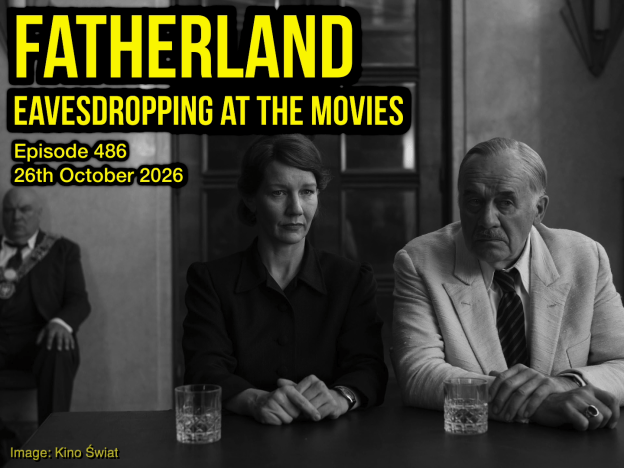
Listen on the players above, Apple Podcasts, Audible, Spotify, or YouTube Music.
The third film in Paweł Pawlikowski’s historical trilogy, after Ida (2013) and Cold War (2018), Fatherland follows one of the defining authors of the twentieth century, Thomas Mann, as he returns to Germany in 1949 with his daughter, Erika, after sixteen years away, finding his country effectively under occupation by the two new superpowers: the USA controlling the west, the Soviet Union controlling the east. The Manns encounter former Nazis (and continuing Nazi ideologues) forming the new polite society on one side, enthusiastic adherents to Communism and an alternative type of totalitarianism on the other, all while dealing with an intensely personal tragedy – the suicide of their son and brother, Klaus.
Pawlikowski’s direction is austere, delicate and engrossing, and the film both benefits and suffers from its economical storytelling. Aspects of the characters and societies that are just barely dramatised with hints and ellipses might be better approached head-on, particularly the sexualities of some characters (Erika and Klaus were both gay, Klaus openly so, but the film builds in ambiguity to that, arguably doing their characters a disservice in the process); on the other hand, we’re given room to interpret what we’re shown, and the film’s stylistic simplicity and brevity is a pleasure.
Fatherland is an interesting, intelligent and moving film, and, as José says, a fitting companion to Ida and Cold War: at least their equal, perhaps their superior. We recommend it.
With José Arroyo of First Impressions and Michael Glass of Writing About Film.


