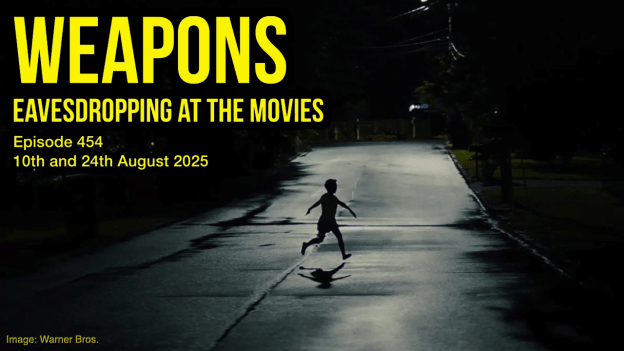
One of the most hotly-anticipated horror films in recent memory, Weapons begins with seventeen third-grade children in a Pennsylvania town mysteriously waking up at 2:17am one Wednesday and running from their homes into the darkness. The shocking, unexplained disappearance and imagery of an empty classroom alone suggest an allegory of school shootings, and we ask what else can be read into the film, and discuss the depth with which it handles its themes. We have our issues with Weapons but enjoy it very much all the same, and find a lot to like. It’s probably just a little overpraised.
Two weeks later, with the film still on his mind, Mike opens up further discussion and proposes that maybe there’s more to it than he gave it credit for – or that you have to be American to properly get it.
You wait for ages for a film about a group of people sequestered in a room, questioning each other, keeping secrets, and repeatedly voting, and two come along at once. But while Juror #2‘s protagonist wrestled with his conscience, Conclave‘s Cardinal Lawrence, played by Ralph Fiennes, has little trouble consistently acting out of principle – sadly, many of his colleagues vying for the Catholic Church’s vacant papacy don’t share his clarity.
Conclave is a marvellously entertaining mystery and thriller, a chamber play in which Fiennes’ performance is a complex and deeply felt standout amongst a number of engaging, if less rich, star turns from Stanley Tucci, John Lithgow and Isabella Rossellini. We discuss whether the film is an advert for the Church, how it engages with religion, the striking visual design, liberalism vs. conservatism, representations of gender and nationality… and that magnificent twist. Spoilers within!
Kenneth Branagh continues to direct himself as Hercule Poirot in his ongoing project to make Agatha Christie’s classic whodunnits all about him. A Haunting in Venice has less focus on the process and nuances of investigation than its predecessors, Murder on the Orient Express and Death on the Nile – and those already felt the need to punctuate the procedural with action, lest the audience get bored – but shows just as much interest in Poirot’s story, at the expense of the suspects’ and victims’. It’s safe to say that these adaptations are not what they could, or should, be.
Branagh enthusiastically uses dramatic angles and camera movement; wonderful to see but for the fact that he does so with little motivation, failing to create with them the effects and mood that he could. The casting disappoints José, who looks to these sorts of films for the stars of yesteryear who fill the ensemble, bringing their histories and personas to their portrayals of the snooty dowagers, nervous accountants and so on; here, no such stars are present. A few current names pepper the cast list, but most of the players that this whodunnit hosts form a who’s who of “who’s that?”
We’re already into diminishing returns with Branagh’s Poirot series, the films increasingly missing the point of their genre – how can the audience play along with the mystery and marvel at the intricacy of its solution when we’re rushed past the details in favour of hearing about the detective’s inner life yet again? Mike found an element of that to like back in Murder on the Orient Express, but even a heart as large and generous as his can find no room for it any more. It’s simply not good enough.
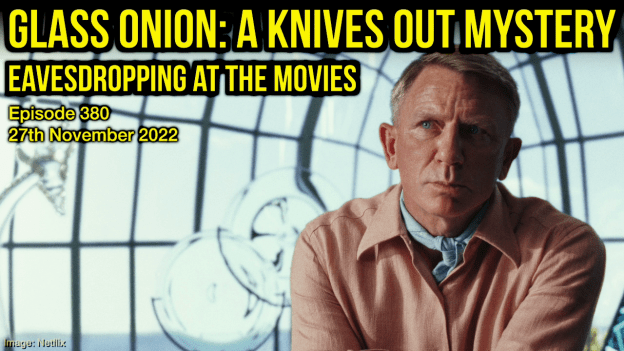
There’s an unwelcome element of particularly American and ill-fitting barbarism in Glass Onion: A Knives Out Mystery, a film that we hoped would be cleverer and more charming than it is. It’s also more of a straightforward thriller than a whodunnit, with one particular alteration to the murder mystery formula meaning that so much is kept from the audience that it stops being fun to play along. There’s still enough here to enjoy, but we’d like the third film to be more like the first, please.
The latest in a long line of star-studded adaptations of Agatha Christie’s murder mysteries, Death on the Nile sinks without trace under the weight of Kenneth Branagh’s all-consuming ego. Failing to understand that one of the pleasures of such films is the attention given to the impressive cast, he instead gives his focus entirely to his own performance as Poirot, engaging in mythmaking and heroics at the expense of everybody else. In its limited capacity, the focus on Poirot in Murder on the Orient Express worked for Mike – here, there’s no defending it.
Billy Wilder directs this adaptation of Agatha Christie’s Witness for the Prosecution, a courtroom drama concerning a man on trial for the murder of an old woman – did he do it? What’s up with his wife? Will his lawyer’s nurse catch him smoking? As with Christie’s stageplay, The Mousetrap, upon the film’s conclusion, the audience is kindly asked to refrain from revealing its twists and revelations, but we at Eavesdropping at the Movies respect no such requests. Spoilers within.
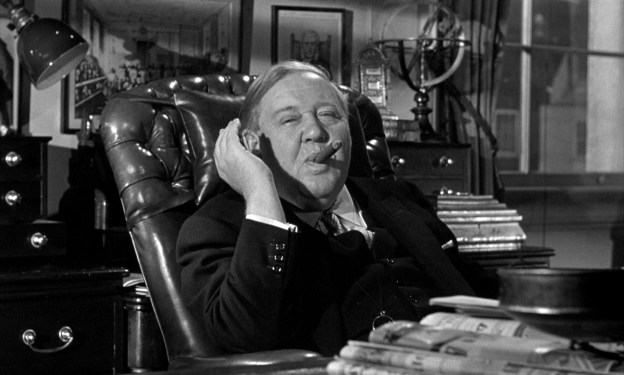
Charles Laughton is pleasingly hammy, Marlene Dietrich composed, and Tyrone Power a loud, sweaty, stressed out mess – and somehow mostly in the background, despite his central role as the accused murderer. We discuss their performances and characters, the pleasures and methods of Agatha Christie’s mysteries, and Wilder’s direction, which hopes, in that classic Hollywood style, to render technique invisible. Witness for the Prosecution is an engrossing mystery filled with interesting bits of business that enrich its characters, and a classic.
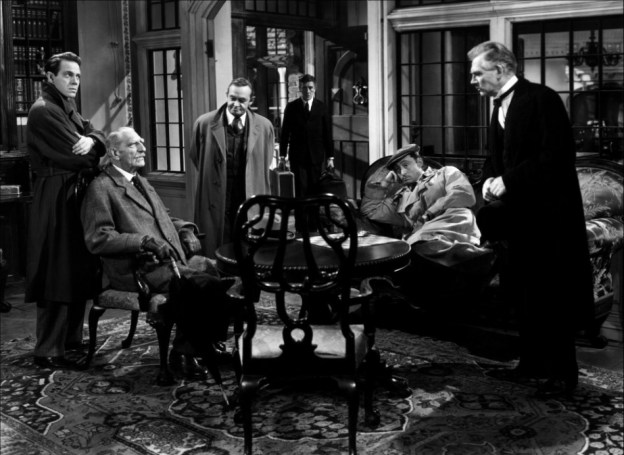
We explore René Clair’s adaptation of Agatha Christie’s novel of – in the US – the same name, And Then There Were None. In terms of quality, it’s nothing to write home about, sadly, but is interesting nonetheless.
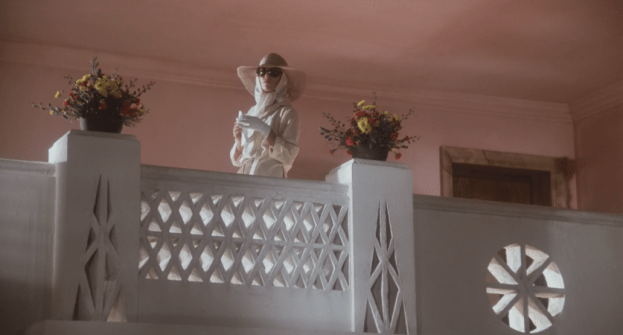
Stardom, beauty, the machinery of Hollywood, madness, age – 1978’s Fedora sees Billy Wilder occupying much of the same thematic territory of his 1950 classic, Sunset Boulevard. William Holden’s has-been film producer attends the funeral of Fedora, a reclusive former film star, and thinks back on the recent trip he took to Corfu, attempting to track her down and coax her out of retirement. What unravels is a mystery, a conspiracy, a twisted mother-daughter relationship, and another in Mubi’s strand of “perfect failures”.
Wilder’s struggle to finance Fedora is apparent, José suggesting that in every part one can imagine a superior actor. Though that’s perhaps scant defence of the tedious visual design – Dutch angles don’t cost money, and the film is crying out for more visual expression than it offers. Mike explains his problem with the plot structure and particularly his dislike of “two weeks earlier” hooks, and we consider the way in which we’re asked to believe in Fedora’s incredible stardom while not really having it explained to us satisfactorily. And José takes particular issue with the casting of Michael York as himself, finding him a blank, while Mike is more content with it, but perhaps that’s largely because whenever someone says “Michael York” it makes him laugh.
Despite the film’s many problems, it remains an intriguing exploration of stardom, identity, the lengths to which people will go to support their own delusions. Mike suggests that Fedora and Sunset Boulevard share a low opinion of women, that their themes of self-obsession, fame and beauty are particularly aligned with their stars’ gender. José describes Fedora‘s relationship to reality, in particular the ways in which it echoes Marlene Dietrich’s extraordinary fame and subsequent withdrawal from the public eye, and how Wilder’s experience and understanding of this and other inside stories informs the film.
And finally, Mike takes a moment to bring up two things he doesn’t like about Sunset Boulevard, because he wouldn’t be doing his job if he didn’t take one look at a great masterpiece of cinema and explain what’s rubbish about it.
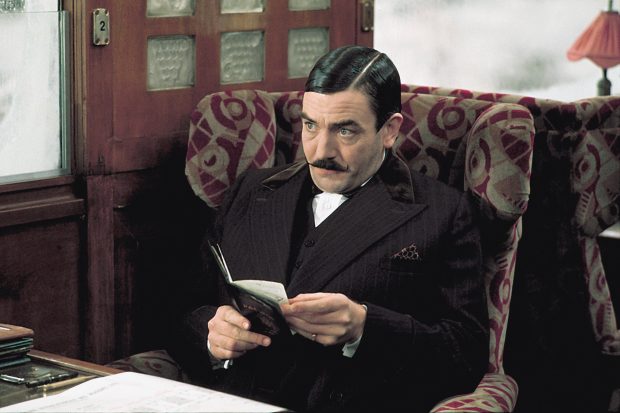
We visit Sidney Lumet’s classic version of Murder on the Orient Express to compare and contrast with Kenneth Branagh’s. Which performances do we prefer, what do we make of the differences in style and tone? José, with Poirot-esque precision, interrogates Mike, because it’s his first time seeing the 1974 film, and indeed it turns out that Mike is the real murderer.
The podcast can be listened to in the player above or at this link.
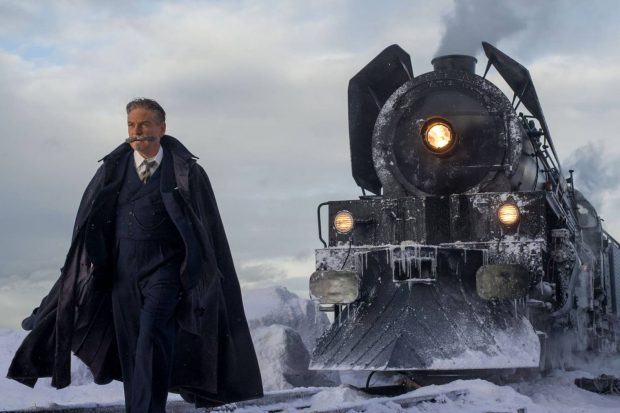
Innocence meets experience. Mike doesn’t know whodunnit; José remembers the 1974 adaptation fondly. Mike wants to talk plot; José wants to talk cast. Mike’s enthusiastic about the film’s Poirot-centric approach; José is less keen. Although we approach it from different angles and don’t always see eye-to-eye, we find a great deal of food for thought in Kenneth Branagh’s film of Agatha Christie’s classic novel.
The podcast can be listened to in the player above or at this link.



 Eavesdropping at the Movies