Tag Archives: Italy

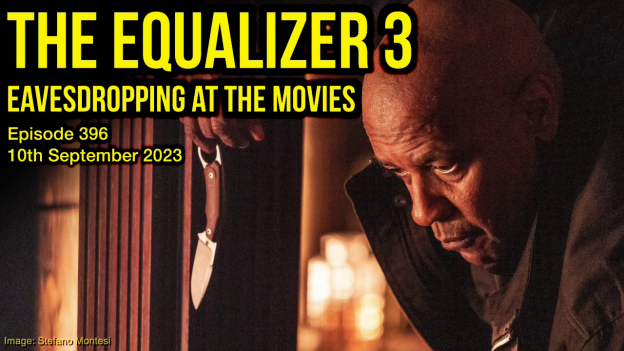
396 – The Equalizer 3

Listen on the players above, Apple Podcasts, Audible, Google Podcasts, or Spotify.

Listen to our podcast on The Equalizer 2 here.

Denzel Washington returns for the third and final instalment of the Equalizer trilogy, in which former government assassin Robert McCall devotes his time and skills to avenging for the little guy. This time, he finds himself in Mediterranean Europe, embroiled in a fight to protect a coastal town from terrorisation by the Camorra, the Mafia of southern Italy.

The Equalizer 3 shares the contemplative tone and pervasive sense of loss of its predecessors. Here, there’s a focus on physical infirmity and vulnerability, a gunshot McCall receives early on forcing a long recuperation, slow, careful approaches to walking down stairs, and the use of a cane. Action erupts quickly and violently, emphasised by director Antoine Fuqua’s camera and editing – McCall is wounded, but maintains his ruthlessness and murderous efficiency.

We compare the action and Washington to Rambo: Last Blood and its star, Sylvester Stallone, which took a similarly staccato approach to its action, clearly informed by Stallone’s age and inability to move as gracefully as he used to – this film is doing something similar, but less thuggishly, if no less violently. We question the ease with which moral decisions are made in this world, in which right and wrong are easily distinguished and the involvement of a vigilante is sold as an obvious necessity and benefit; the film’s look, which fails to show off its spectacular location; and some of its writing and contrivances, particularly concerning Dakota Fanning’s character, a CIA analyst contacted by Robert, and the Camorra. And we discuss McCall as a neurodivergent superhero.

The Equalizer 3 is a flawed film with a fair bit of dumbness to overlook, but it is easy to do so when the portrait it paints of local life and close community is so absorbing and inviting, and its star has such presence, warmth, and intelligence. It’s an easy film to recommend, bearing in mind that it’s a work of vigilante fantasy. After all, if Batman’s allowed to take the law into his own hands when the institutions around him fail, why shouldn’t Denzel be? At least he doesn’t pretend not to kill people.

With José Arroyo of First Impressions and Michael Glass of Writing About Film.

155 – Diego Maradona

Following his critically acclaimed documentaries about Formula One legend Aryton Senna and troubled jazz singer Amy Winehouse, Asif Kapadia turns his inquisitive lens to Diego Maradona, arguably the greatest footballer of all time, and a man who moved rapidly from the slums of Buenos Aires to worldwide fame, winning the World Cup with Argentina and leading declining Italian club Napoli to two league championships. Kapadia’s film beautifully and economically tells his story, making understandable and human the dark side that accompanies the success, including an illegitimate son, his infamous addiction to cocaine, and perhaps less well-known, his association with the Camorra, the Neapolitan crime syndicate.

Mike has never really “got” these kinds of documentaries, and José is more than happy to oblige him with his impressions of what they do, and in particular what this one does so well. It is not just about the man but about the times, places, people and cultures that were the environment of his life. Maradona is rendered deeply human as the film details the grip that not only the Camorra held on him but also his football team, Napoli’s president refusing to sell him at his request, a capitalist demand for the value he holds, and then, when he is used up, this once-idolised, deified icon of Napoli is unceremoniously discarded, left to quietly slink away as his former worshippers turn on him – and all the while, the human cost to Maradona is incalculable, his extraordinary level of fame extraordinarily difficult to cope with, his descent into deeper drug dependence tragic and his punishment for beating Italy at the World Cup brutal. The film draws an important and poetic distinction between Diego and Maradona, as described by Fernando Signorini, his former fitness coach at Napoli: Diego is the youngster from the slum who loves to play, has insecurities and worries, and is, as Signorini says, “a wonderful boy”; Maradona is the star, the mask that cannot show any weakness, and an unpleasant counterpart to Diego – but without Maradona, Diego would still be in those slums. What the world has always seen is Maradona. What Kapadia shows us is Diego, hidden away, a victim of his own success, further and further buried but, nonetheless, always present.

We also talk a little about Amy, Kapadia’s 2015 documentary, which Mike has watched recently as José’s suggestion and truly loathed, finding it as exploitative and demon-feeding as the media frenzy it depicts and decries. José believes that Mike is too moralistic, but Mike disagrees, and that’s where we leave it.

But! Diego Maradona. It’s a truly great documentary, complex and rich, subtle and tragic, beautifully, smoothly edited, and featuring plenty of thrilling footage of one of the greatest footballers of all time doing the things that gave him that reputation. It’s fantastic. Don’t miss it.

The podcast can be listened to in the players above or on iTunes.

With José Arroyo of First Impressions and Michael Glass of Writing About Film.
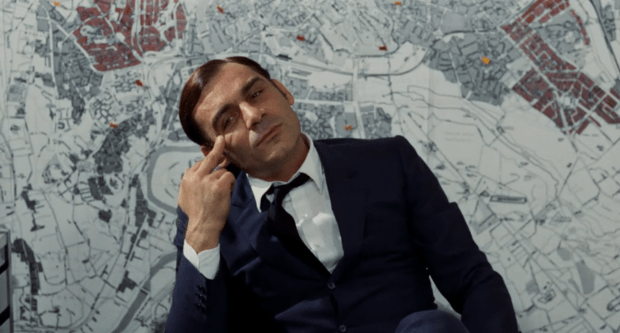
49 – Investigation of a Citizen Above Suspicion

We try out Mubi, a curated streaming service that gives you 30 films at any one time, and only 30 days in which to watch them. Our choice is Investigation of a Citizen Above Suspicion, a 1970s Italian satire on police corruption and the politics of power. It leads to discussions on its expressive imagery, its topsy-turvy plot, sexual kinks, peccadillos, and lifestyles, the performance of power and authority, and male jealousy and rage.

The podcast can be listened to in the player above or on iTunes.

With José Arroyo of First Impressions and Michael Glass of Writing About Film.
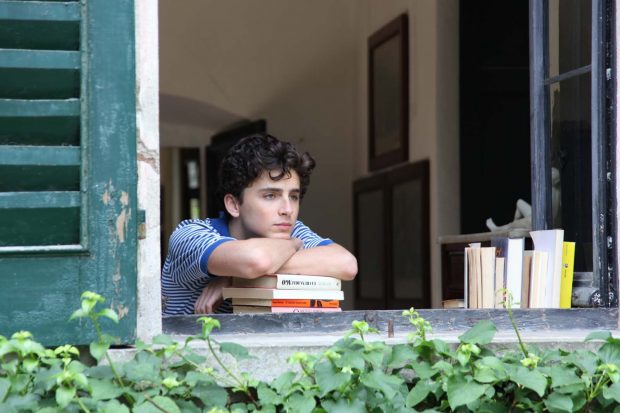
40 – Call Me by Your Name

José revisits Call Me by Your Name, Luca Guadagnino’s romantic Bildungsroman, and re-evaluates it, both seeing some flaws where he initially hadn’t and also continuing to appreciate it in ways he had. It’s Mike’s first time seeing it, and he appreciates it from a distance but is primarily consumed with rage at his own lack of any type of this fun during his teenage years. And to make matters worse, José tests him on his knowledge of Judaism, revealing him to be a fraud of a Jew.

The podcast can be listened to in the player above or on iTunes.

With José Arroyo of First Impressions and Michael Glass of Writing About Film.