146 – Todos somos marineros

Todos somos marineros (in English, We’re All Sailors) was partly inspired by a workshop in which a group of students spent eight hours discussing the opening line of The Merchant of Venice, and a news story about three Russian sailors left stranded in a Peruvian port due to the sudden bankruptcy of the company they worked for. Writer-director Miguel Ángel Moulet developed a story about just that predicament, a story in which two of the sailors are brothers attempting to find their place in the world, stranded in the coastal city of Chimbote, able neither to go home nor to establish a stable life in Peru, living in limbo, tentatively making connections with the locals.

Moulet is a graduate of EICTV, the Cuban film school, where José visits and spends a few days teaching every year, and this is how we come to bring this podcast to you, José having been screened Moulet’s debut feature recently and keen to share it with us. We’re far from the first to see it, the film being on the festival circuit and already having picked up a number of nominations and awards, including the prestigious FIPRESCI Prize at the Toulouse Latin America Film Festival. A screener was made available for us to watch, and we’re so grateful that it was, as it’s a beautiful, sensitive film.

That line from The Merchant of Venice reads: “In sooth, I know not why I am so sad”, and that simple thought informs the tone and themes of Moulet’s entire film. Todos somos marineros is a story about isolation, displacement, loneliness, and a kind of all-encompassing, ethereal sadness. The central four characters pair up throughout the film – the two brothers, Tolya, the elder, who feels a degree of paternal responsibility towards his younger brother Vitya; the cafe owner and her delivery boy, Sonia and Tito, who function as a kind of surrogate mother and son; Tolya and Sonia, who are in a loving relationship, and Vitya and Tito, who grow close and whose relationship leads to the film’s climax and quiet cliffhanger ending. These pairings are developed and expressed subtly, intelligently, and with heart.

The film makes significant use of long takes, both moving and still, and doesn’t exactly discriminate between when they should and shouldn’t be used. At their best, these shots allow the performances space to breathe, contribute to a delicate, slow pace, or help to convey a rich sense of the characters’ environment; at their worst, they distract from or even obscure what the film is showing us. There’s also use of a trope in which the film opens on a flashforward we’ll return to later, one that effectively establishes a strong mood and mystery but which Mike argues is not purposefully used, and which detracts from the film’s later scenes. (At least, that’s his argument for why he didn’t grasp what was going on in the film’s final third.) On the other hand, there is simply gorgeous cinematography by Camilo Soratti, his camera capturing dense, diffuse natural light infusing the air over Chimbote with extraordinarily beautiful colour and texture. And, overall, Moulet’s direction exhibits a strong control of tone, the film surging with the sense of sadness and loneliness so crucial to it.

There’s more besides all of this to discuss, and we take our time to do so. Todos somos marineros is an imaginative, rich debut feature that is deservedly earning praise and winning prizes. There’s no predicting if and when it will come to a cinema near you, but if you do get the opportunity to see it, we urge you to jump at it.

José spoke to Miguel Ángel Moulet recently, and their conversation (in Spanish) can be heard here.

The podcast can be listened to in the players above or on iTunes.

With José Arroyo of First Impressions and Michael Glass of Writing About Film.

145 – Dumbo (2019)

The latest of Disney’s CGI-driven remakes of its classic hand-drawn films, Dumbo features a rather cute elephant with too little screen time and two abysmal child actors with far too much. Tim Burton is on paper the ideal director to mine the circus setting for visual and situational surreality, splendour, and threat, and to a degree he does, but in comparison to the work that gave him his signature – Beetlejuice, the Batman films and Edward ScissorhandsDumbo is milquetoast to say the least. It’s a film of rote sentimentality and far too little humour, clumsily treading that weird Disney line of plagiarising its own classics in the name of reimagining them, and despite a flourish here and there, and the best efforts of Michael Keaton and Danny DeVito to inject their scenes with life – and the considerable cuteness of the cute little cute elephant – its emotional sterility and lack of imagination are summed up in the way it concludes by setting Keaton’s mad futuristic circus entirely ablaze, a pointless climax, full of sound and fury, signifying nothing.

But the elephant is quite cute.

The podcast can be listened to in the players above or on iTunes.

With José Arroyo of First Impressions and Michael Glass of Writing About Film.
144 – Us

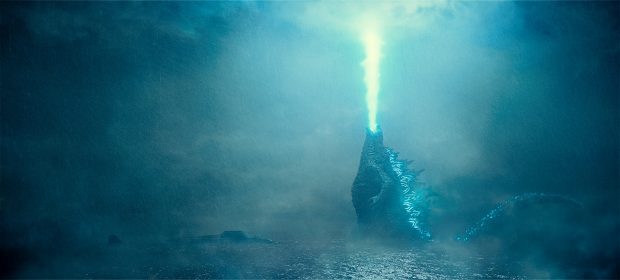
Mirrors and doppelgangers and dual meanings and symmetries abound in Jordan Peele’s Us, in which a family of four is terrorised one evening by a family of four identical copies. Like Get Out, Peele’s 2017 debut, Us is hyper-aware of its genre’s ability to make use of bold metaphor to offer coded commentary on social issues.

We find more room for a variety of interpretations in Us than in Get Out, and our conversation ranges from talk of race and its importance or lack thereof, consumer culture and materialism, cultural items and icons, including and especially Michael Jackson, someone who embodies duality better than perhaps anybody, the 1986 charity event Hands Across America and the competing ideas conveyed by its imagery, and far more. We also find the time to discuss and praise Lupita Nyong’o’s incredible pair of central performances, creating two fully embodied characters, the technicality of her physical acting always perfectly evident but never distracting. She’s extraordinary.

We have our problems with it, including its structure, lack of scares, and some imagery that we find lacking in meaning or clarity, and it’s a less tight and cogent film than Get Out, which we ultimately agree is superior. But it’s ambitious, intelligent, witty, original and rewarding. See it.

The podcast can be listened to in the players above or on iTunes.

With José Arroyo of First Impressions and Michael Glass of Writing About Film.

143 – mid90s

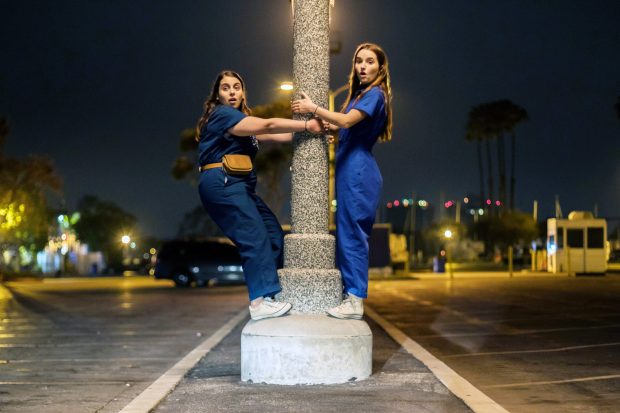
Jonah Hill’s directorial debut is a small, charming hangout movie about LA skater culture in, as the title suggests, the mid-90s. For Mike – who sees comparisons with This is England and Skate Kitchen – it’s somewhat unoriginal, if entertaining and engrossing, but José completely falls in love with it. It’s certainly worth your time.

Links to things mentioned in the podcast:

The podcast can be listened to in the players above or on iTunes.

With José Arroyo of First Impressions and Michael Glass of Writing About Film.
142 – Shazam!

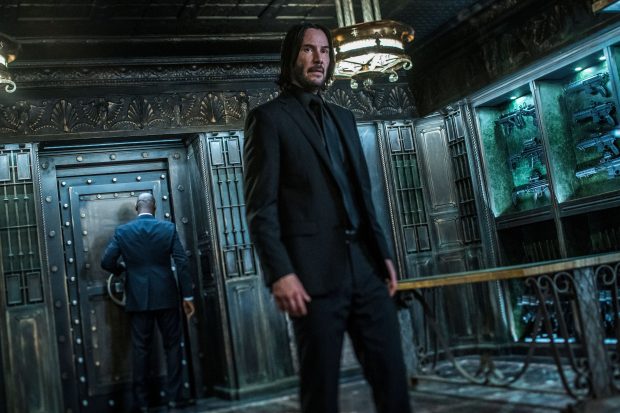
José’s enjoyed three weeks in Cuba and the Dominican Republic and wants to return with a nice easy watch. Shazam! obliges. The latest DC movie follows a teenage orphan given the ability to transform into a thirty-something Action Man at the shout of a single word. It’s light, colourful, a little corporate but what can you do? It’s just what a jetlagged man needs.

The podcast can be listened to in the players above or on iTunes.

With José Arroyo of First Impressions and Michael Glass of Writing About Film.
141 – The Passionate Friends

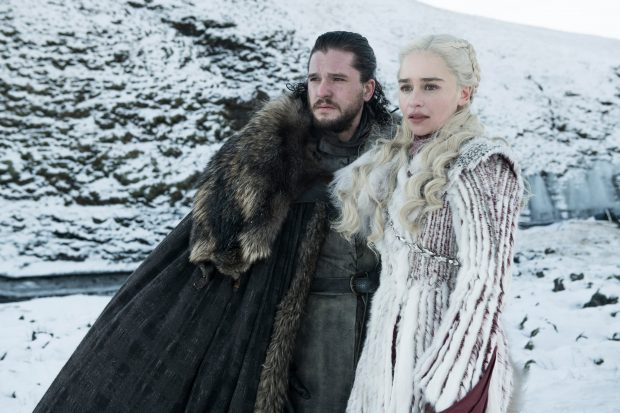
We visit 1949’s romantic drama The Passionate Friends, a favourite of previous podcast guest Celia, who describes it as “what would have happened if they’d had the affair in Brief Encounter“. It offers a complex story of love and relationships, characters who want different things from their relationships and a love triangle that gradually shifts and changes over many years. Mary (Ann Todd) loves Steven (Trevor Howard), but refuses to marry him, wanting to belong only to herself, as she puts it; instead, she marries Howard (Claude Rains), a successful banker who gives her security, stability, social status and affection. Dramatic irony, shifting affections and a sensitivity to the subtleties of love and relationships create a fascinating and beautiful film.

There’s a lot to discuss, including and especially the unconventional Howard – in any other film he would be an obstacle to the romantic couple’s true love, but here, although he has villainous aspects, he is revealed to be as three dimensional a character and as deserving of respect and a happy ending as anybody else. It’s the part he plays in the film’s conclusion that makes Mike cry. We also talk about David Lean’s direction, his use of visual layering, considered staging and occasional flourishes of editing emphasising the characters’ emotional states and calmly and smartly conveying to the audience the right information at the right time.

It’s not held in the esteem that Brief Encounter, a film with obvious parallels in many ways, is, and that’s unfortunate, as it is deeply felt and quite beautiful. It appears to only be available on Blu-Ray in France (that’s where Mike’s copy had to come from, at any rate), but its loving restoration is worth seeking out.

The podcast can be listened to in the players above or on iTunes.

With José Arroyo of First Impressions and Michael Glass of Writing About Film.
140 – Fighting with My Family

A young girl from a tight-knit family in Norwich gets a shot at her dream, joining the WWE, the glamorous home of professional wrestling. Parental pride, sibling rivalry, and a lot of hard work ensues, as do great performances generating a lot of laughs. We’re not that keen on some of the clichés – very little happens that you wouldn’t expect, and some of the scenes take a long time to get there – but we like the male-female rivalry, the way Vince Vaughn and Nick Frost light up the screen, and of course, the fact that a big promotional corporate movie for Americans starts off in a tiny living room in Norwich.

The podcast can be listened to in the players above or on iTunes.

With José Arroyo of First Impressions and Michael Glass of Writing About Film.

139 – Alita: Battle Angel

A tweeny sci-fi based on a manga, Alita: Battle Angel tells the story of a young cyborg found on a scrapheap and given a new lease of life by a kindly doctor. She doesn’t remember who is she or where she came from, but takes to the dystopian world around her, finding excitement and energy in it, quickly realising an aptitude for combat and inclination to explore, and developing a relationship with a young man who seeks escape to a floating city that promises a better life. Oh, and she’s completely CGI in a live-action world.

Neither of us is too enthusiastic about the film, though José is far less interested in it than Mike, who finds things worth praising, particularly how Alita’s attitude to her body can be read in terms of transgender experiences. But the world-building is weak, relying on simple tropes, and Mike decries the sequel set up, convinced that the story it’s likely to tell could and should have been a part of this film. We vaguely agree that the action is enjoyable, José holding the reservation that he felt no connection to the characters, and Mike picks up on a tonal imbalance, suggesting that a film so clearly aimed at tweens should be less comfortable with swearing (something he also notes about Marvel, though to a lesser extent).

Mike is at pains to point out that despite acknowledging flaw after flaw, he had a good time. José has no time for such nuance, finding almost nothing in it he liked.

The podcast can be listened to in the players above or on iTunes.

With José Arroyo of First Impressions and Michael Glass of Writing About Film.

138 – Captain Marvel

It’s taken ten years but Marvel has finally branched out into films about heroes who aren’t white guys. Following last year’s Black Panther, Captain Marvel introduces Marvel’s first female protagonist, Carol Danvers, a young woman caught up in conflicts between worlds and the mystery of who she is.

José is enraptured by the film’s visual beauty, Mike by its cat. Its mid-90s setting is mined for tons of laughs, as is Samuel L. Jackson’s lively, witty performance. Neither of us is too convinced by Brie Larson, sadly, who lacks the charisma to truly sell her role, but the cast and storytelling that surround her more than compensate. Quite apart from the very obvious gender dynamics at play, other intelligent, interesting themes are brilliantly interwoven into the plot, giving the film real substance and emotional punch. It’s occasionally a little too transparently right-on, some moments of sisterhood rather unsubtle and even cringeworthy, but other scenes intended to inspire female empowerment truly soar.

It’s an intelligent, spectacular film that we hugely enjoyed, and definitely recommend.

The podcast can be listened to in the players above or on iTunes.

With José Arroyo of First Impressions and Michael Glass of Writing About Film.

137 – Cold Pursuit

Remaking his own film, Hans Petter Moland brings us a revenge thriller, starring – who else? – Liam Neeson as a model citizen turned remorseless killer on the trail of those responsible for his son’s murder. Sounds like typical Neeson fare, but Cold Pursuit leaps between dramatic and blackly comic tones with verve, and offers something much more interesting and original than you’re likely to expect.

We find lots to like in it, including its magnificent lighting and compositions, interesting and welcome inclusion of a group of Native American characters, as well as a commentary on their relationship to the very whitest America there is (the film being set in a Colorado ski town), and some surprisingly tender moments between adults and children, and people in love.

We highly recommend it, it’s a huge amount of fun!

The podcast can be listened to in the players above or on iTunes.

With José Arroyo of First Impressions and Michael Glass of Writing About Film.