155 – Diego Maradona

Following his critically acclaimed documentaries about Formula One legend Aryton Senna and troubled jazz singer Amy Winehouse, Asif Kapadia turns his inquisitive lens to Diego Maradona, arguably the greatest footballer of all time, and a man who moved rapidly from the slums of Buenos Aires to worldwide fame, winning the World Cup with Argentina and leading declining Italian club Napoli to two league championships. Kapadia’s film beautifully and economically tells his story, making understandable and human the dark side that accompanies the success, including an illegitimate son, his infamous addiction to cocaine, and perhaps less well-known, his association with the Camorra, the Neapolitan crime syndicate.

Mike has never really “got” these kinds of documentaries, and José is more than happy to oblige him with his impressions of what they do, and in particular what this one does so well. It is not just about the man but about the times, places, people and cultures that were the environment of his life. Maradona is rendered deeply human as the film details the grip that not only the Camorra held on him but also his football team, Napoli’s president refusing to sell him at his request, a capitalist demand for the value he holds, and then, when he is used up, this once-idolised, deified icon of Napoli is unceremoniously discarded, left to quietly slink away as his former worshippers turn on him – and all the while, the human cost to Maradona is incalculable, his extraordinary level of fame extraordinarily difficult to cope with, his descent into deeper drug dependence tragic and his punishment for beating Italy at the World Cup brutal. The film draws an important and poetic distinction between Diego and Maradona, as described by Fernando Signorini, his former fitness coach at Napoli: Diego is the youngster from the slum who loves to play, has insecurities and worries, and is, as Signorini says, “a wonderful boy”; Maradona is the star, the mask that cannot show any weakness, and an unpleasant counterpart to Diego – but without Maradona, Diego would still be in those slums. What the world has always seen is Maradona. What Kapadia shows us is Diego, hidden away, a victim of his own success, further and further buried but, nonetheless, always present.

We also talk a little about Amy, Kapadia’s 2015 documentary, which Mike has watched recently as José’s suggestion and truly loathed, finding it as exploitative and demon-feeding as the media frenzy it depicts and decries. José believes that Mike is too moralistic, but Mike disagrees, and that’s where we leave it.

But! Diego Maradona. It’s a truly great documentary, complex and rich, subtle and tragic, beautifully, smoothly edited, and featuring plenty of thrilling footage of one of the greatest footballers of all time doing the things that gave him that reputation. It’s fantastic. Don’t miss it.

The podcast can be listened to in the players above or on iTunes.

With José Arroyo of First Impressions and Michael Glass of Writing About Film.
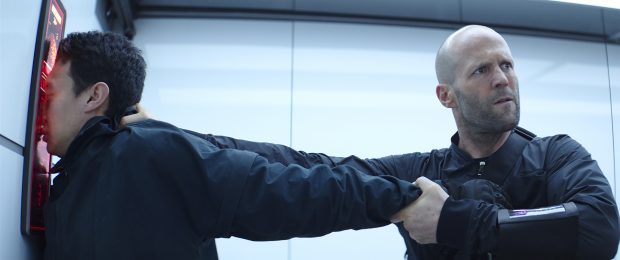
154 – Ma

A horror movie that cleverly inverts one or two tropes of the genre, we ultimately feel Ma is less than the sum of its parts, but worth a look nonetheless.

Director Tate Taylor is clearly very good with actors, and every performance here is pitched well, but he doesn’t have such an aptitude for building tension or developing psychological creepiness. The writing doesn’t help him – while Mike insists that the film’s premise is full of potential, it’s not built upon very successfully. But Octavia Spencer is brilliant as the central villain, eliciting laughs and jumps at will, and her Ma is an engrossing character, if a bit reliant on cliché.

José points out the film’s concentration on women, male characters being secondary, and its interesting inversions of gender tropes, in particular a very male gaze: the objects of desire, men are disrobed and splayed out for Ma’s pleasure, and the camera doesn’t shy away from displaying them. Unfortunately, the film seems to have aimed for its 15 rating, sometimes appearing to edit around gore and explicit imagery rather than indulge in it, resulting in a somewhat disappointing feeling that it wants to be more graphic than it’s willing to be, to its detriment. One can’t shake the feeling that, for all Ma‘s boldness, there’s still a more visually expressive, confident film in here, itching to get out.

So it’s worth a look for the interesting way it deploys gender representation, and some wonderfully entertaining performances. Just don’t be disappointed if you’re a bit disappointed.

The podcast can be listened to in the players above or on iTunes.

With José Arroyo of First Impressions and Michael Glass of Writing About Film.

153 – Godzilla: King of the Monsters

But for its astonishing visuals, we don’t have much time for Godzilla: King of the Monsters, a rather boring, incoherent film with an aspect that is at best lazy and at worst offensive. But it does look pretty! Wait, as Mike says, for its home media release, and capture yourself some lovely screenshots.

Mike’s review of 2014’s Godzilla

José’s review of 2014’s Godzilla

The podcast can be listened to in the players above or on iTunes.

With José Arroyo of First Impressions and Michael Glass of Writing About Film.

152 – Rocketman

A musical biopic that understands its own music, that uses its songs not necessarily when they’re chronologically appropriate but when they fit emotionally and thematically, Rocketman beautifully and energetically tells the story of Elton John’s rise to and struggles with fame. Taron Egerton is notable for his work in the Kingsman films, but here he is given a true star role, imbuing his Elton with attitude, presence, and a bolshy walk. And, for the two of us in particular, it does us the great favour of giving us a new appreciation for the music, helping us realise that each of us has always taken both it and Elton’s cultural importance for granted.

The film is produced by Elton, functioning as a sort of autobiography, and although this justifiably raises questions of authenticity, honesty, filtering and bias, the film and man are so likeable, and the way in which it depicts his lowest points so open, the film completely sells its story and depiction of Elton’s character and those around him. (Though, as José describes, the coda in which we’re shown a modern, married, parental Elton, who is nothing like the one whose story we’ve just been told, does suggest that for all the authenticity we feel during the film, the message we’re left with is a somewhat disappointing, “anyway, that was a different Elton, I’m not him any more”.) Similarly, certain tropes common to gay stories, such as pining for a straight friend, being isolated emotionally, and being preyed upon by another, more confident, gay character – something for which we criticised Freddie Mercury biopic Bohemian Rhapsody – are here rendered convincing and understandable.

We fall in love with its style and storytelling strategy, the risks it takes in building slightly cheesy set-pieces, set-pieces that indeed reflect a certain amount of cheesiness present in Elton himself. The film impressively and confidently narrativises its music, flowing into songs, turning emotionally-charged conversations smoothly into musical numbers, liberal new arrangements allowing Elton’s entire family to share their loneliness in I Want Love and making Elton’s decision to enter therapy a moment of trumpet-worthy triumph in Goodbye Yellow Brick Road. José doesn’t go for the climactic moment with Elton’s childhood self, but Mike is with it completely, tearing up – before Elton could heal, before he could love, before he could fight all his addictions and fears and pain, he first needed to learn to love himself!

Rocketman is simply wonderful. It deeply understands its own music and freely reworks it to give it new life, teaching us to love and appreciate it anew. It’s lively, funny, imaginative, bold and entirely engrossing. Don’t miss it.

The podcast can be listened to in the players above or on iTunes.

With José Arroyo of First Impressions and Michael Glass of Writing About Film.

151 – Booksmart

Ridiculously, relentlessly, laugh-out-loud funny, we had a brilliant time in Booksmart. It’s a last-day-before-graduation high school comedy about two girls determined to finally have some fun having been bookworms their entire lives. José loves the central relationship between the straight and lesbian best friends, Mike loves the empathy and openness the film shows towards every one of its characters, deliberately constructing them at first as high school archetypes so that it can go on to reveal their hidden depths.

Booksmart is a simply brilliant comedy with tons of heart and you will have a fantastic time. Don’t miss it.

The podcast can be listened to in the players above or on iTunes.

With José Arroyo of First Impressions and Michael Glass of Writing About Film.

150 – John Wick: Chapter 3 – Parabellum

First they killed Keanu Reeves’ dog, and in revenge, he killed everyone, and it was brilliant. Then they had to make two sequels, and they couldn’t come up with a very interesting story. But the action was still world class. Or was it?

The podcast can be listened to in the players above or on iTunes.

With José Arroyo of First Impressions and Michael Glass of Writing About Film.
149 – Game of Thrones

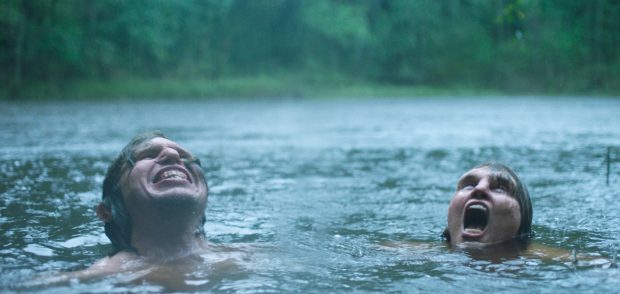
For the first time, Eavesdropping at the Movies is talking about television… or is it? Game of Thrones spent eight years and countless millions of dollars in pursuit of cinematic production values, visual spectacle, and the world’s unquestioning fealty and attention. Is it television? Is it film? Is it something in between? How can we even talk about it if we can’t define our terms?

Well, after 73 episodes, HBO’s epic, brutal, violent, sexy, melodramatic fantasy has finally reached its conclusion, and everybody’s been watching. José’s been watching it since it started. Mike’s been watching it since last month. Did it end well? What made it interesting to watch? How did it change over the years? What of Podrick? All these questions and more might be answered in this spoilerific conversation.

The podcast can be listened to in the players above or on iTunes.

With José Arroyo of First Impressions and Michael Glass of Writing About Film.
148 – Avengers: Endgame

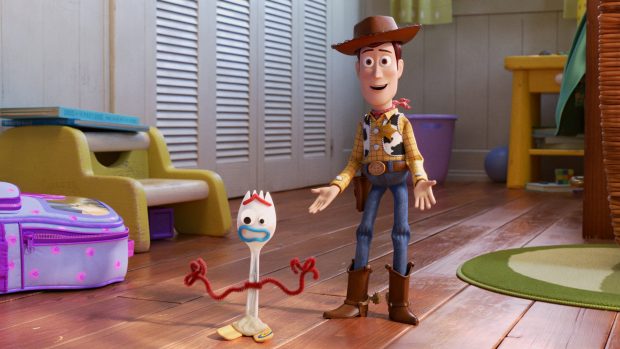
A big one. The Marvel Cinematic Universe closes a chapter – kind of – with Endgame, a three-hour behemoth that concludes stories that have been told over 21 films in 11 years. It’s elegiac, both of its characters’ fates following the end of Infinity War, and of itself, offering a good deal of fan service to its vast, devoted audience, some members of which have grown up knowing nothing other than the MCU as the dominant mode of cinema. We take our time to discuss it in a two-part podcast.

The first part is, as usual, recorded upon our return from the cinema, the film still ringing in our ears. We saw it in a packed screening, the room filled with excited fans from whom the film elicited exactly the vocal and rich emotional responses that bring such occasions to life. Though three hours is a demanding duration by anyone’s standards, and could certainly be seen to speak to a certain self-importance, the film makes very good use of its time, particularly in the opening hour, in which we are given copious time to understand the ways in which the world has changed following Thanos’ fatal snap, and the remaining Avengers’ responses to it all. We discuss whether the Russo brothers, the film’s directors, offer much by way of creative visuals – to Mike, the film’s visual core is simply about scale, while José remarks that some of the compositions appealingly evoke comic book panels. Mike brings up the way the MCU overall has to some degree always been about competition between Iron Man and Captain America, and how Endgame concludes that both in the story and metatextually, giving Robert Downey Jr. and Chris Evans respectively their own emotional moments.

The second half, recorded three days later, largely builds on a roundtable article in the New York Times, in which five of their pop culture writers discuss both Endgame itself and the MCU’s impact on cinema culture over the last decade. It brings up a number of interesting subjects, particularly those that consider the MCU as a cinematic phenomenon rather than the specific content of the stories themselves.

So. It’s a big film and a big podcast to go with it. We found it worthwhile to take our time to think over some of the cultural issues the MCU raises, and as for arguing about this character or that scene, well, sometimes it’s fun to indulge.

The podcast can be listened to in the players above or on iTunes.

With José Arroyo of First Impressions and Michael Glass of Writing About Film.
147 – At Eternity’s Gate

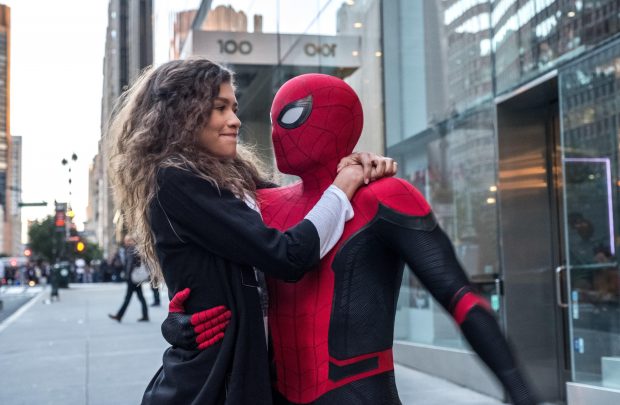
Despite a wonderful central performance from Willem Dafoe as Vincent van Gogh, one that earned him an Oscar nomination, and some beautiful imagery, At Eternity’s Gate leaves a sour taste in the mouth. It’s a film with a contemptible view of the rural folk it depicts, some overly distracting visual design (particularly an effect that renders the bottom third of the frame out of focus for long periods of the film), banal talk of personal philosophy, and ultimately, no interesting perspective to offer on van Gogh.

The podcast can be listened to in the players above or on iTunes.

With José Arroyo of First Impressions and Michael Glass of Writing About Film.

146 – Todos somos marineros

Todos somos marineros (in English, We’re All Sailors) was partly inspired by a workshop in which a group of students spent eight hours discussing the opening line of The Merchant of Venice, and a news story about three Russian sailors left stranded in a Peruvian port due to the sudden bankruptcy of the company they worked for. Writer-director Miguel Ángel Moulet developed a story about just that predicament, a story in which two of the sailors are brothers attempting to find their place in the world, stranded in the coastal city of Chimbote, able neither to go home nor to establish a stable life in Peru, living in limbo, tentatively making connections with the locals.

Moulet is a graduate of EICTV, the Cuban film school, where José visits and spends a few days teaching every year, and this is how we come to bring this podcast to you, José having been screened Moulet’s debut feature recently and keen to share it with us. We’re far from the first to see it, the film being on the festival circuit and already having picked up a number of nominations and awards, including the prestigious FIPRESCI Prize at the Toulouse Latin America Film Festival. A screener was made available for us to watch, and we’re so grateful that it was, as it’s a beautiful, sensitive film.

That line from The Merchant of Venice reads: “In sooth, I know not why I am so sad”, and that simple thought informs the tone and themes of Moulet’s entire film. Todos somos marineros is a story about isolation, displacement, loneliness, and a kind of all-encompassing, ethereal sadness. The central four characters pair up throughout the film – the two brothers, Tolya, the elder, who feels a degree of paternal responsibility towards his younger brother Vitya; the cafe owner and her delivery boy, Sonia and Tito, who function as a kind of surrogate mother and son; Tolya and Sonia, who are in a loving relationship, and Vitya and Tito, who grow close and whose relationship leads to the film’s climax and quiet cliffhanger ending. These pairings are developed and expressed subtly, intelligently, and with heart.

The film makes significant use of long takes, both moving and still, and doesn’t exactly discriminate between when they should and shouldn’t be used. At their best, these shots allow the performances space to breathe, contribute to a delicate, slow pace, or help to convey a rich sense of the characters’ environment; at their worst, they distract from or even obscure what the film is showing us. There’s also use of a trope in which the film opens on a flashforward we’ll return to later, one that effectively establishes a strong mood and mystery but which Mike argues is not purposefully used, and which detracts from the film’s later scenes. (At least, that’s his argument for why he didn’t grasp what was going on in the film’s final third.) On the other hand, there is simply gorgeous cinematography by Camilo Soratti, his camera capturing dense, diffuse natural light infusing the air over Chimbote with extraordinarily beautiful colour and texture. And, overall, Moulet’s direction exhibits a strong control of tone, the film surging with the sense of sadness and loneliness so crucial to it.

There’s more besides all of this to discuss, and we take our time to do so. Todos somos marineros is an imaginative, rich debut feature that is deservedly earning praise and winning prizes. There’s no predicting if and when it will come to a cinema near you, but if you do get the opportunity to see it, we urge you to jump at it.

José spoke to Miguel Ángel Moulet recently, and their conversation (in Spanish) can be heard here.

The podcast can be listened to in the players above or on iTunes.

With José Arroyo of First Impressions and Michael Glass of Writing About Film.