213 – The Lighthouse

Listen on the players above, on Apple Podcasts, or on Spotify.

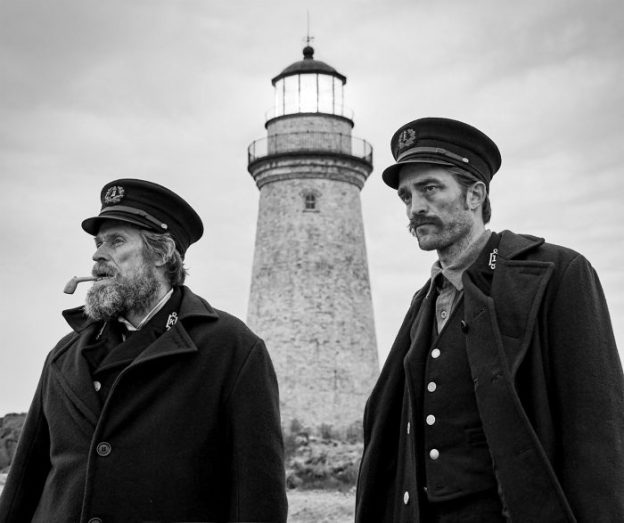
Robert Eggers’ The Lighthouse, a tale of two lighthouse keepers stranded during a storm, is a visual treat in black and white that stuns and engrosses us. A two-hander between Willem Dafoe’s irascible boss and Robert Pattinson’s secretive youngster, it invokes myth, gods, folk tales, the clash of male egos, compulsive psychosexuality, if not much, much more besides.

If its plot is simple, its story is complex, and we think our way through its characters’ personalities, wants, needs, and psychologies. José asks if the film is gothic, and we discuss the boss’s treatment of his assistant: is it just controlling, or abusive? Extraordinary imagery of mermaids, monsters, and gods suffuses the film with inescapable surreality and the turbulent minds of men overburdened with ego and sexual need. Eggers has an assured, confident sense of tone, layering the film with mood and atmosphere, making its remote island a pressure cooker.

The Lighthouse is a spectacular film, an audiovisual treat that you should not miss at the cinema. Its imagery is poetic, its characters complex – in its entirety, it is confusing but approachable, symbolic but not coded, allowing room for interpretation and emotional response. It’s brilliant.

With José Arroyo of First Impressions and Michael Glass of Writing About Film.
212 – Parasite

Listen on the players above, on Apple Podcasts, or on Spotify.

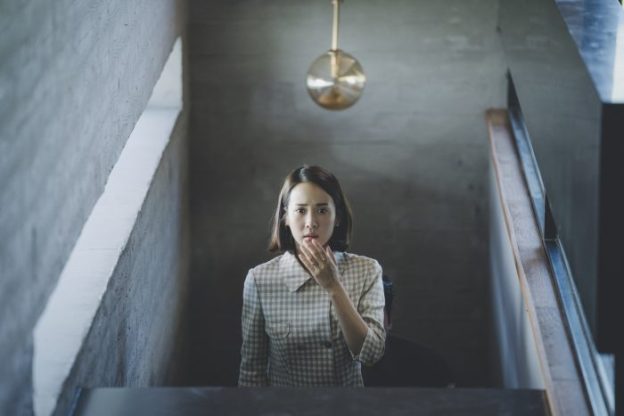
It’s one of José’s films of the year; it leaves Mike cold. Bong Joon-ho’s Parasite depicts social inequality in South Korea through a lower-class family that cons its way into working for an upper-class family. We pick our way through the film’s structure; its motif of staircases that delineate status and power relations; the way poverty carries with it an inescapable smell, intolerable to the upper class; the two families’ experiences of nature and the desire for sunshine.

It builds on some aspects of horror, but cannot at all be considered one, either in genre or affect – though the fact that its trailers sold it as such might have something to do with Mike’s frosty response. It’s an allegorical thriller, every character standing in place of a class or group of people, and its construction is intelligent, thoughtful and tight. For José, it works on a visceral level, the mood and tone emphasising and combining with the structure and metaphor; for Mike, it’s a flat experience, a clever essay with definite interpretations and little feeling.

But it’s clearly touched a nerve, connecting with worldwide audiences. It speaks not just to conditions in South Korea but a global system of oppression and inequality under capitalism. We may not agree on what it makes us feel, but it’s potent food for thought and offers much to discuss. Don’t miss it.

Also in this episode, we take a look at the upcoming Oscars, which eager cinephiles will be able to watch yesterday.

With José Arroyo of First Impressions and Michael Glass of Writing About Film.

211 – Birds of Prey

Listen on the players above, on Apple Podcasts, or on Spotify.

Trying to build a portrait of patriarchal power and subjugation that shapes the lives of five women, Birds of Prey takes a solid enough foundation and executes it abysmally, lacking visual style, coherent storytelling, and really any imagination. It’s the worst time José’s endured at the cinema in a year; Mike heroically offers a couple of examples of moments he enjoyed – the flying sandwich – but there’s no rescuing these damsels in distress.

With José Arroyo of First Impressions and Michael Glass of Writing About Film.
210 – Uncut Gems

Listen on the players above, on Apple Podcasts, or on Spotify.

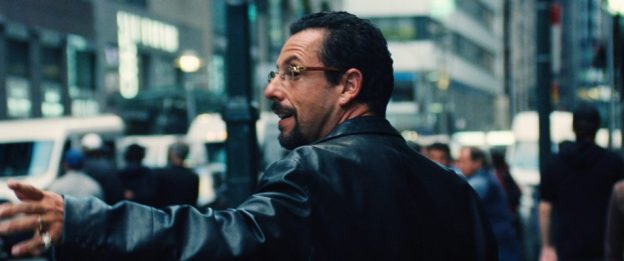
Independent filmmakers Josh and Benny Safdie team up with Adam Sandler for Uncut Gems, an energetic, evolving crime thriller set in Manhattan’s Diamond District. By the time we meet Sandler’s Jewish jeweller, Howard, he’s already embedded within a web of competing interests, desires and debts, as well as a gambling addiction – and the tension only mounts as problems grow worse.

The Safdie brothers and Sandler are all Jewish New York natives, the writer-directors in particular growing up, in part, around the Diamond District, where their father worked. There’s a specificity to the location and culture that the film captures beautifully, a richness to Howard’s characterisation, and the world he inhabits, that feels authentically observed. Howard’s need to take risks never allows the tension to settle – he can’t help but invite further trouble upon himself, so neither does the film let us calm down for a second.

Uncut Gems is a complex, character-oriented, engrossing work of edge-of-your-seat genre entertainment, and a terrific follow-up to the Safdies’ 2017 thriller Good Time, which we discuss a little bit (but not too much because José hasn’t finished it yet). Both Good Time and Uncut Gems are available on Netflix, and well worth your time. The Safdie brothers might not just be good – they might be greats.

With José Arroyo of First Impressions and Michael Glass of Writing About Film.
209 – Bombshell

Listen on the players above, on Apple Podcasts, or on Spotify.

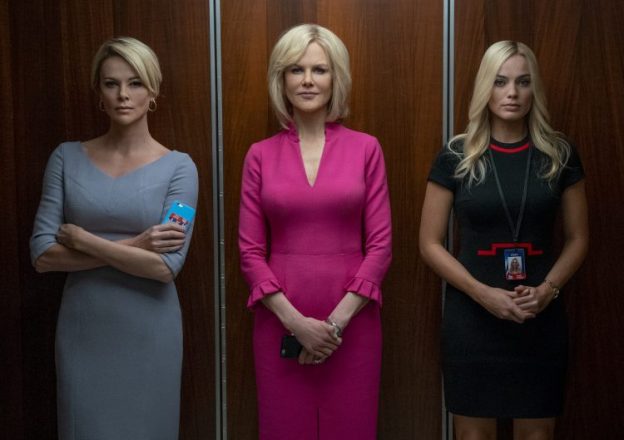
The film that wants to make us feel bad for people who worked at Fox News, Bombshell casts former stars Megyn Kelly and Gretchen Carlson as heroines fighting the revolting, crude, institutional sexism of their former place of work. It refuses to do so with any complexity, any suggestion that they were anything but victims – that they had all the opportunity to say no to the hideous deal they were offered, and that they were, too, key players in a propaganda machine, pumping poison into the world. It’s a view of the world that, at best, has been simplified for popular consumption, relegating criticism of Fox News’ politics, operations, and output to a laughably basic subplot involving a lesbian Democrat employee who explains the machinery of Fox’s messaging.

Mike suggests that it sits alongside the work of Adam McKay, who, like Bombshell director Jay Roach, made his name in comedy, offering the term “satire-adjacent” in an attempt to understand this breed of film – McKay’s Vice and The Big Short have a similar tone and basis in reality. Where we decried the lack of satire these days when discussing Jojo Rabbit, perhaps we’ve found where it’s been relocated. And there are things about it he likes, this kind of sociopolitical talkie being up his street, though our highest praise is reserved for the performances, John Lithgow’s explosive, sinister Roger Ailes, and Charlize Theron’s unbelievable transformation into Megyn Kelly, in particular.

With José Arroyo of First Impressions and Michael Glass of Writing About Film.

208 – 1917

Listen on the players above, on Apple Podcasts, or on Spotify.

An event movie sold as much on its behind-the-scenes technical challenges as its story and genre, 1917 uses invisibly stitched long takes to convey the experiential fluidity of an overnight mission in World War I France, wherein two soldiers must hand deliver a message to the British front line to call off an offensive that will play into a German ambush. Mike is suspicious of films that market their filmmaking; José dislikes the work of director Sam Mendes.

So it’s with some relief that 1917 really rather impresses us. It’s a beautiful film, evocative of both the human cost of war and pastoral serenity of the landscape in which it takes place. Its symbolism, something José derides as overly simple and obvious in Mendes’ work, here functions quite well (if similarly unsubtly); its supporting cast of British and Irish stars is used well, Mark Strong and Richard Madden in particular shining during their brief scenes. And we consider the film’s similarities to Christopher Nolan’s Dunkirk, a similarly expensive war epic about avoiding disaster, rather than boasting of success.

With José Arroyo of First Impressions and Michael Glass of Writing About Film.
207 – Long Day’s Journey into Night

Listen on the players above, on Apple Podcasts, or on Spotify

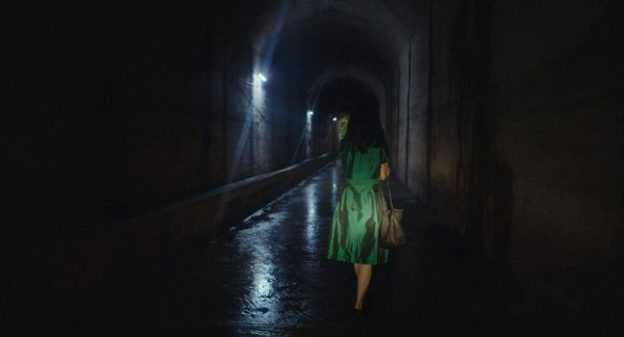
José’s seen it once and returns to its depths for a second time, alongside Mike, who knows nothing about it. Chinese writer-director Bi Gan’s Long Day’s Journey into Night, unrelated to Eugene O’Neill’s play, tells a story that flashes between memories of a love lost long ago and present day reality, culminating in an hour-long single take that moves through an entire mining village.

It’s a film that oozes feelings of loss and nostalgia, the protagonist’s return to his hometown seeing him wander through dereliction and abandonment, where his life was once vital and exciting. The noirish flashbacks are sumptuously composed and lit, romantic and evocative; one sinks into those gorgeous images.

The long take that comprises the film’s second half is less successful, an exercise in form that leaves longueurs and attracts too much attention to itself. But its relationship to the first half is intriguing, its symbolism readily apparent if difficult to interpret, and its technical accomplishment unquestioned. (We didn’t see this version of it, but it’s entirely in 3D, which we can only imagine heightens its fluid, magical tone.)

Despite José’s criticisms, it’s one of his films of the year, though for Mike its qualities don’t offer enough to counterbalance a second half with which he really struggled. But it’s certainly worth your time, and if it’s showing near you, you should catch it.

With José Arroyo of First Impressions and Michael Glass of Writing About Film.

206 – The Gentlemen

206 – The Gentlemen on Apple Podcasts

Guy Ritchie returns to the guns ‘n’ geezers mine with The Gentlemen, a caper with a beautifully dressed and enjoyably playful cast. We discuss his stylish direction, ability to work with actors, the audiences that adore his work, how the film functions as fantasy, and its issues with being casually offensive.

The podcast can be listened to in the players above or on iTunes.

With José Arroyo of First Impressions and Michael Glass of Writing About Film.

205 – Jojo Rabbit

Its intentions are good, but we have trouble with Jojo Rabbit, Taika Waititi’s comedy about a young boy in Nazi Germany, a fanatical member of the Hitler Youth, who discovers a Jewish girl being given safe harbour by his mother. Our reservations stem from the state of the world and culture in which the film has been made, in which fascism is resurgent and increasingly worth taking seriously.

We discuss comedy’s ability to puncture that at which it takes aim, Mike arguing that we like to overstate its power, José lamenting cinema’s unwillingness to take today’s fascist figureheads on directly – by comparison, satirising Hitler and the Nazis is a safe choice. Mike criticises the film’s superficiality, finding that its depiction of the Nazi regime is skin deep, merely built on signifiers with which we’re familiar – there’s no attempt here to explore Jojo’s psychology, or how and why he’s been taught what he has. José argues that the film makes its Nazis too likeable, too goofy; the film wants to offer us a message that people are ultimately good, and in so doing gives its villains the opportunity of redemption, which they tend to take. It’s partially contextualised by the 1944 setting, the dying German war machine making sense of the cynicism in Sam Rockwell’s Nazi officer; setting the film during the Nazi regime’s strongest years would have been more interesting, and braver.

Despite all of this, Jojo Rabbit gets lots of laughs, and Waititi manages the tone well, the film making moves into some unexpectedly dark areas at times. But its successes never distract from the overall ideological problems we feel it has.

The podcast can be listened to in the players above or on iTunes.

With José Arroyo of First Impressions and Michael Glass of Writing About Film.
204 – Little Women (2019)

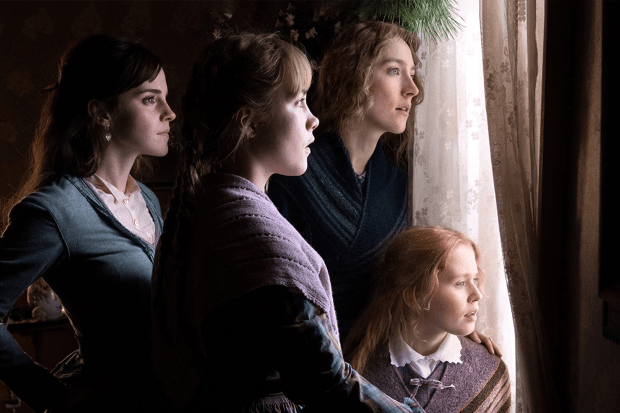
José has been brushing up, recently rewatching the 1933, 1959 and 1994 adaptations of Louisa May Alcott’s novel. Mike has neither seen any adaptations nor read the book, coming to the story entirely fresh. And so we get to grips with Greta Gerwig’s wonderful, open-hearted, energetic version of Little Women.

José finds much to contrast between the versions, picking up in particular on the unusual dimensionality given to the male supporting characters here, whose roles have previously been thankless. Timothée Chalamet and Chris Cooper particularly impress, the former capturing Laurie’s playful, generous spirit; the latter touchingly evoking Mr. Laurence’s grief. Less successful is Meryl Streep’s Aunt March, who slightly too mechanically reaches for the laughs for which she’s designed.

The girls, though, are a triumph of energetic wildness, ambitions and realism. The scenes they share in their childhood home are well observed, wisely mixing all-American sentimentality you might expect with a disarming sororal combativeness you might not. If there’s a bum note amongst them it’s Emma Watson as Meg, who Mike argues never truly embodies the roles she plays, but Saoirse Ronan is miraculously transparent as Jo, and Florence Pugh gives Amy a burning, vital sense of frustration and fury at always being second best to her sisters. Their relationships make the film the success it is, and, Mike suggests, even when the film begins to wrap their stories up in some fairly convenient ways, so fond are we of them that it’s hard not to be swept along.

Greta Gerwig has achieved magical things with Little Women, and you miss it at your peril.

The podcast can be listened to in the players above or on iTunes.

With José Arroyo of First Impressions and Michael Glass of Writing About Film.