Author Archives: michaeljglass

396 – The Equalizer 3

Listen on the players above, Apple Podcasts, Audible, Google Podcasts, or Spotify.

Listen to our podcast on The Equalizer 2 here.

Denzel Washington returns for the third and final instalment of the Equalizer trilogy, in which former government assassin Robert McCall devotes his time and skills to avenging for the little guy. This time, he finds himself in Mediterranean Europe, embroiled in a fight to protect a coastal town from terrorisation by the Camorra, the Mafia of southern Italy.

The Equalizer 3 shares the contemplative tone and pervasive sense of loss of its predecessors. Here, there’s a focus on physical infirmity and vulnerability, a gunshot McCall receives early on forcing a long recuperation, slow, careful approaches to walking down stairs, and the use of a cane. Action erupts quickly and violently, emphasised by director Antoine Fuqua’s camera and editing – McCall is wounded, but maintains his ruthlessness and murderous efficiency.

We compare the action and Washington to Rambo: Last Blood and its star, Sylvester Stallone, which took a similarly staccato approach to its action, clearly informed by Stallone’s age and inability to move as gracefully as he used to – this film is doing something similar, but less thuggishly, if no less violently. We question the ease with which moral decisions are made in this world, in which right and wrong are easily distinguished and the involvement of a vigilante is sold as an obvious necessity and benefit; the film’s look, which fails to show off its spectacular location; and some of its writing and contrivances, particularly concerning Dakota Fanning’s character, a CIA analyst contacted by Robert, and the Camorra. And we discuss McCall as a neurodivergent superhero.

The Equalizer 3 is a flawed film with a fair bit of dumbness to overlook, but it is easy to do so when the portrait it paints of local life and close community is so absorbing and inviting, and its star has such presence, warmth, and intelligence. It’s an easy film to recommend, bearing in mind that it’s a work of vigilante fantasy. After all, if Batman’s allowed to take the law into his own hands when the institutions around him fail, why shouldn’t Denzel be? At least he doesn’t pretend not to kill people.

With José Arroyo of First Impressions and Michael Glass of Writing About Film.

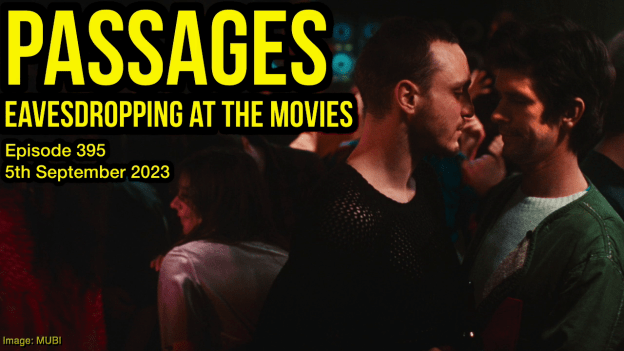
395 – Passages

Listen on the players above, Apple Podcasts, Audible, Google Podcasts, or Spotify.

José enjoys the examination of contemporary relationships in Ira Sachs’ Passages, a Paris-set romantic drama in which a marriage is disrupted when one partner begins an affair with a friend. Mike thinks that the characters’ problems aren’t real problems and that if the unfaithful partner just grew up then everything would be fine.

With José Arroyo of First Impressions and Michael Glass of Writing About Film.

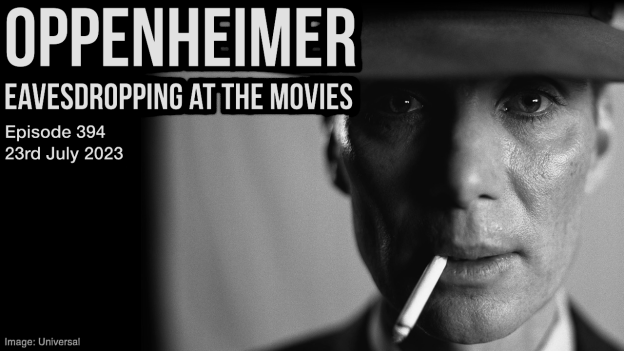
394 – Oppenheimer

Listen on the players above, Apple Podcasts, Audible, Google Podcasts, or Spotify.

The second half of our Barbenheimer double bill takes us to the BFI IMAX in London to see Oppenheimer, the complex story of J. Robert Oppenheimer’s infamous role in the development of the atomic bomb during World War II, the creation and use of which changed history. Writer-director Christopher Nolan, as he has done increasingly over his career, makes extensive use of IMAX 70mm film to tell the story, but as well the spectacle and landscape we’re used to it showing off, here it’s devoted to the intimate.

We’re joined by Mike’s brother and previous guest Stephen to discuss the film, and consider the use of IMAX for close-ups and portraiture, as well as the story’s structure and how the editing and music create pace, the film’s implicit attitude towards Communism, whether Florence Pugh is treated unfairly, the way in which black-and-white footage is used to convey a shift in perspective, how the attacks on Hiroshima and Nagasaki are handled, the Stan Brakhage-esque imagery that conveys the radical sense that all matter is energy waiting to be unleashed, and much more. For José, it’s Nolan’s best film. It certainly deserves to be seen on an IMAX screen.

With José Arroyo of First Impressions and Michael Glass of Writing About Film.

393 – Barbie

Listen on the players above, Apple Podcasts, Audible, Google Podcasts, or Spotify.

After a few months off, during which Mike has forgotten how to record podcasts – sorry about the audio early on – we’re back for Barbenheimer weekend. Never mind your Infinity Wars, this is the crossover they said would never happen, and the clash of tone between joy-of-pink Barbie and sin-of-man Oppenheimer, coincidentally released during the same weekend, has unexpectedly and charmingly reignited the public’s interest in going to the pictures. The question isn’t, “which one will you see?”, it’s, “which one will you see first?”

And we picked Barbie. Our screening was packed with young girls typically unaddressed by the biggest releases, and this film does a great job of correcting that. José describes its treatment of patriarchy as a fact as one of the most radical things he’s seen, and it’s a sign of where we are culturally that it can be, and that every joke and piece of commentary the film builds upon it is implicitly understood by an audience the film treats as intelligent.

Yes, Barbie‘s a toy advert. Yes, you’re always aware that every joke at the expense of Mattel and Barbie’s cultural footprint has the company’s stamp of approval. Yes, Mike brings up Jean Baudrillard. (He’s such a Ken at times.) But it’s also witty, ironic, self-knowing, and really good fun.

With José Arroyo of First Impressions and Michael Glass of Writing About Film.
392 – Rye Lane

Listen on the players above, Apple Podcasts, Audible, Google Podcasts, or Spotify.

Rye Lane follows two new friends, both reeling from breakups, as they spend a day together walking the streets of London and getting into scrapes. It’s a well-intentioned romcom with some things to like, but it suffers from the implausible writing and poor performance of the male half of its romantic pairing, and a lack of cinematic nous.

With José Arroyo of First Impressions and Michael Glass of Writing About Film.
391 – Creed III

Listen on the players above, Apple Podcasts, Audible, Google Podcasts, or Spotify.

Listen to our podcasts on the original Rocky and the Rocky series here.

Michael B. Jordan makes his first feature as director in his third Creed film as star. Creed III sees a retired Adonis Creed living comfortably with his wife and daughter, the walls of their mansion coated with trophies achieved during successful careers… until a figure from Adonis’ past comes back to haunt him.

If that language sounds clichéd, then good, because the film is nothing but. 2015’s Creed was a powerful reinvigoration of the Rocky series, so perhaps it’s fitting that this third instalment is reminiscent of those Roman numeralled sequels, all soap opera and surface. What could have been rich and dramatic is instead thin and uninterested in complexity. But the fights are nice and punchy and Jonathan Majors’ Damian is a bright spark, so there’s that.

Creed III isn’t a dreadful film, but it falls terribly short of its obvious potential and of the standard set by its predecessor.
With José Arroyo of First Impressions and Michael Glass of Writing About Film.
390 – Knock at the Cabin

Listen on the players above, Apple Podcasts, Audible, Google Podcasts, or Spotify.

Like his previous film, Old, M. Night Shyamalan’s Knock at the Cabin is an intriguing, self-contained, efficient thriller – although not nearly as satisfying as it could be. The setup: A family staying at that classic American horror location, the cabin in the woods, is taken hostage by four invaders who’ve had visions of the apocalypse.

To say more would rob the film of some of its surprise, and its ability to keep you questioning what will happen is one of its pleasures – so think twice about listening to the podcast before you see it, because we spoil everything! There’s a lot to like, including its portrayal of a same-sex couple so unremarkable that the characters’ sexuality barely needs addressing (although more affection shown between them would have been welcome) and Dave Bautista’s calm but imposing presence as the leader of the intruders. But it’s so keen to have its sceptical protagonists arguing with what their opponents tell them that it doesn’t explore the dramatic and moral questions it has the opportunity to, and it’s too eager to be tasteful. When even José’s asking for gruesomeness you know you’ve shown too much restraint.

Knock at the Cabin is an interesting and engaging film but rather thin and could do with showing more bravery and style. Worth a look, though.

With José Arroyo of First Impressions and Michael Glass of Writing About Film.
389 – Empire of Light

Listen on the players above, Apple Podcasts, Audible, Google Podcasts, or Spotify.

We look at another supposed love letter to cinema, Empire of Light, which stars the beautiful Dreamland Cinema in Margate as the titular Empire, the best-developed character in an otherwise lacklustre film. Its themes of racism, patriarchy, mental illness and cinema as escapism form more of a patchwork quilt than a tapestry, and the film is thin throughout. Still, it did the job of activating our memories of cinemagoing and working in cinemas, which we discuss, and despite his knowing it shouldn’t have, the story worked emotionally on Mike. It’s really not good though.

With José Arroyo of First Impressions and Michael Glass of Writing About Film.
388 – The Fabelmans

Listen on the players above, Apple Podcasts, Audible, Google Podcasts, or Spotify.

Steven Spielberg’s long-awaited semi-autobiographical reminiscence of his childhood is here, and it’s perfect. Too perfect. José swoons over the way The Fabelmans transports him to its place and time and shows love and understanding to everybody it depicts, but has to admit that a few rougher edges here and there would have done it a favour. There’s only so much drama in the life of Spielberg’s young avatar, Sammy Fabelman, and that which there is is on the tame side. But Spielberg’s love for his parents is obvious and appealing, as is his love for cinema, which he’s unafraid to get specific about – the sequences that show Sammy making and screening films convey an interest in the aesthetics, technicalities, and effects of film, rather than giving it the far vaguer “magic of the movies” treatment such “love letters to cinema” often offer.

The Fabelmans is as unwilling to explore the dark side of humanity as we’re used to Spielberg being, but it avoids his proclivity for schmaltz, and José loved it. So there.

With José Arroyo of First Impressions and Michael Glass of Writing About Film.
387 – Babylon

Listen on the players above, Apple Podcasts, Audible, Google Podcasts, or Spotify.

A film Mike was doing his damndest to avoid seeing but eventually agreed to, Babylon is an epic period comedy-drama about the excess and industrialisation of Hollywood in the ’20s and ’30s, and an epic bomb at the box office. Its aesthetics, characterisations, use of race and class, vulgarity, set pieces, bizarre ending and more are up for discussion. Did Mike have as terrible a time as he anticipated?

With José Arroyo of First Impressions and Michael Glass of Writing About Film.