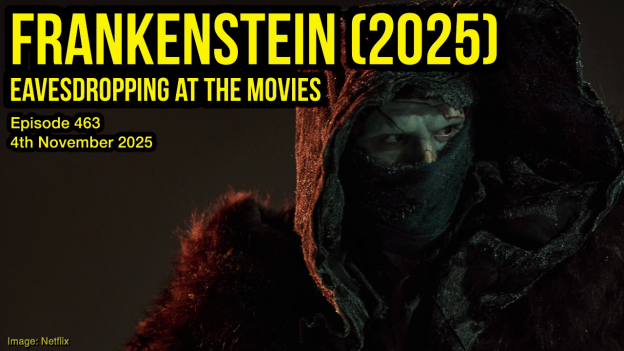
Another classic Gothic horror is remade for the modern age: first we saw Robert Eggers’ Nosferatu, and now Guillermo del Toro brings us his adaptation of Frankenstein. Like Nosferatu, Frankenstein is astonishing to look at, and, like Nosferatu, also written by its director, it probably would have benefitted from the attention of a professional screenwriter. Still, it’s a pleasure to spend time in the word del Toro envisions, and we talk wide angle lenses, the range of performances – Oscar Isaac’s busy, Jacob Elordi’s brooding, Mia Goth’s underwhelming – the difficulty of understanding dialogue in screen two at the Mockingbird, and what this Frankenstein thematically shares with One Battle After Another.
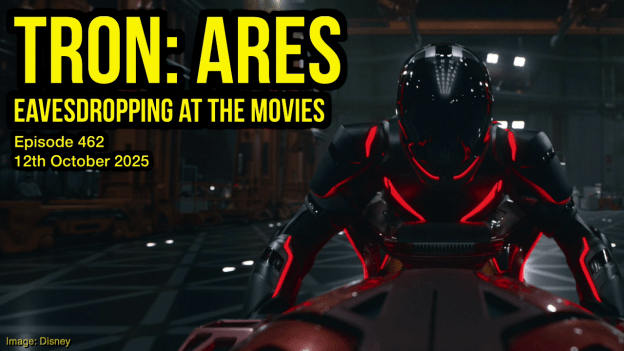
Far from an outstanding film, but amazing to look at and too much fun not to recommend, we had a great time in Tron: Ares, which reverses the reality-computer interface that brought humans into the digital world in the previous two films; it’s now the virtual that becomes real. An evil company searches for the code that will give its 3D printed computer assets longevity in the real world – so far, they crumble into dust after about twenty minutes – but the AI tasked with doing so goes rogue, hoping to use the code to bring itself to life. It’s Pinocchio and Frankenstein with neon-oozing motorbikes, and as entertaining as that sounds. (We think that sounds entertaining.)
The seventh instalment in the Jurassic Park (now Jurassic World) series, Jurassic World Rebirth might be the first of the sequels to really come close to capturing the kind of wonder, excitement and horror that the 1993 original offered. That might be in part because it cribs liberally from it, with both moments and entire sequences closely evocative of their 32-year-old counterparts. But there’s plenty else that’s new here, and Rebirth is a characterful expansion to the Jurassic Park story.
Thoughts of containment have finally been totally discarded – dinosaurs have now been roaming the Earth for some time, to the point that they’re dying out everywhere other than a narrow band around the equator, which is illegal for human travel. So that’s where we’re headed, of course, as a pharmecutical exec seeking to make a fortune from dino-sourced drugs hires a team of mercenaries to extract blood from three creatures: one that swims, one that walks, and one that flies. It’s a decent structure that tells you what to expect and allows for a variety of settings and action, into which are placed such charismatic stars as Scarlett Johansson, Mahershala Ali, Jonathan Bailey and Rupert Friend. Director Gareth Edwards builds the world beautifully, exploiting it for that sense of scale that so defines his aesthetic, and reminding Mike in particular of his feature debut Monsters; and although in simple terms – this is, ultimately, a blockbuster sequel – the film has a moral message worth expressing.
Jurassic World Rebirth is easily the best of the Jurassic sequels and equally easy to recommend. Just try not to focus too much on how it reminds you of a better film from 1993.
After a little time off, we’re back at the cinema to see Bong Joon Ho’s sci-fi comedy, Mickey 17, in which Robert Pattinson dies. Repeatedly. Leaving Earth on a spaceship seeking to colonise an icy planet, Pattinson’s Mickey is an “Expendable”: a disposable worker given lethal assignments, regenerated by a biological printer, and sent out to die again. But when the 17th version of Mickey fails to die at the mandibles of the local fauna, he finds his way back to the colony, only to find that he’s already been reprinted as Mickey 18 – and clone coexistence is strictly prohibited.
We’re disappointed by what looked like a marvellously energetic, knockabout comedy and social satire from the trailer. Even considering the film’s very broad tone, there’s too little in the characterisation to really buy in to, a severe lack of pace, and an ending that betrays it. Nonetheless, as failures go, it’s an interesting one, playing with plenty of ideas, and featuring more than enough good jokes to support it. Our recommendation of Mickey 17 is far from whole-hearted, but you ought to give it a whirl.
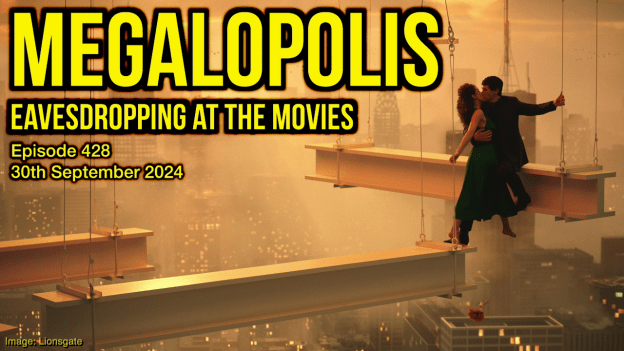
Francis Ford Coppola’s long-awaited passion project, Megalopolis, self-funded to the tune of $120m, has finally arrived. We love it. It’s wild, imaginative, earnest, and beautiful. We discuss and decry some of the criticisms of it we’ve already seen while coming up with some of our own – how could we have known that an octogenarian might hold rather traditional views? – in between breathlessly enthusing about what captivated us.
Megalopolis is hardly a perfect film but it’s a visual treat and a fantastic cinematic experience. Don’t let the naysayers’ sniping turn you off. Indulge!
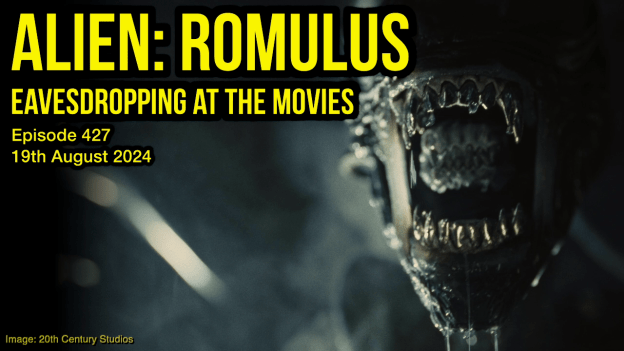
A welcome new instalment in the Alien franchise, which has moved between genres and directors, remained popular for over four decades, and offered fascinating expansions of its internal mythos, Alien: Romulus moves with the times to give Generation Z the opportunity to die in space. It goes like the clappers, orchestrates loads of entertaining, tactile action, and is unbelievably good-looking. It’s also underwritten, arguably overstuffed with reference to previous films in the series, and features one of those entirely uncontroversial and ethically pure reanimations of a deceased actor through CGI and other technologies. Perhaps after seeing the muted responses to the ideas on offer in Prometheus and Alien: Covenant, the series has decided to seek refuge in the cloying bosom of nostalgia – but we differ on how excessive it is, while enthusiastically agreeing that Romulus is great fun, and easy to recommend.
Denis Villeneuve’s epic adaptation of Dune makes its first appearance on the podcast in the form of the second film in the series – we saw the first when it came out but never podcasted on it. With the lore in place, the scene set, and the characters established, Dune: Part Two is free to develop romance, engage in action, and tell the story of the construction of a messiah. It’s beautiful, exciting entertainment – as long as you can remember everyone’s names and what their magic powers are and what they’re up to and why.
José feels no such issues keeping track of Part Two‘s various story elements, but Mike hasn’t done the homework and finds that the film isn’t going out of its way to help him. But no matter! The imagery on offer is astonishingly pretty, reassuringly expensive, and tuned for maximum visual impact – though we wonder how poetic it is, and ask ourselves to what extent the imagery in Villeneuve’s other work lingers in the mind, despite its premium sheen. We also discuss the degree to which we feel Part Two really feels like it’s buying in to its more supernatural elements. It tells a story of prophecy, visions, and unlikely fates, but, Mike suggests, also offers mechanisms and plausible explanations for things we see, arguably favouring its scepticism to avoid putting off an audience unwilling to go along with the otherworldly.
Whether you care or not, whether you can follow the details or not, there’s no reason to not see Dune: Part Two on the biggest and best screen available. For the visual design and production alone, it’s value for money – that the rest is good is a lovely bonus. With José Arroyo of First Impressions and Michael Glass of Writing About Film.
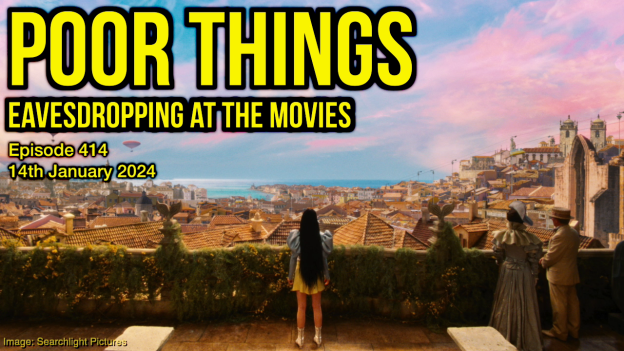
Yorgos Lanthimos’ latest absurd comedy, Poor Things, creates a wonderful confluence of themes, all through the lens of Bella, a grown woman with a child’s brain, experiencing the world anew and detached from emotion. We discuss Bella’s attitude to the world she encounters, the men who try to control and cage her, Lanthimos’ idiosyncratic visual style and comedic sensibility, the examination of the nuances of sex, what Mike finds lacking in the brothel scenes, and more.
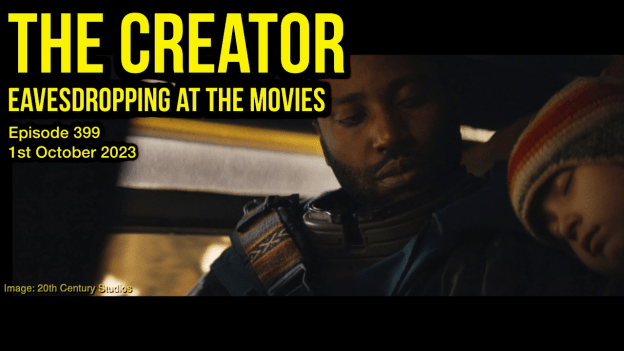
We heartily disagree on The Creator, a sci-fi film directed and co-written by Gareth Edwards, who made his name with Monsters in 2010, which he made largely by himself for half a million dollars, and quickly graduated to tentpole cinema with Godzilla and Rogue One. José had a wonderful time, finding it marvellous to look at and emotionally effective, though leaving room to criticise cinema’s continued insistence that John David Washington is a star. Mike finds it dull, brim-full of clichés, and even a little ugly at times, although Edwards’ sense of how to convey scale, already shown off in his monster movies, remains intact here.
Also featured: ChatGPT and how AI will kill us all.
We take a trip to London to see Avatar: The Way of Water again, this time on the biggest screen in the country at the BFI IMAX, in high frame rate and 3D. We discuss the difference in experience between seeing it here and at the IMAX Digital cinema at Cineworld Broad Street, where we saw it previously. Mike questions why the film switches between 24fps and 48fps, rather than sticking with the high frame rate throughout – director James Cameron describes how HFR assists in making 3D imagery less difficult to resolve, and implies that he limits its use to avoid the so-called “soap opera effect” that made the Hobbit films and Gemini Man look so cheap, but Mike doesn’t buy that it’s necessary to keep returning to 24fps, and thinks Cameron’s a big scaredy-cat. José, on the other hand, can’t seem to tell the difference between the frame rates at all.
We also discuss what a second viewing of the film brings into focus that we hadn’t put our finger on before, Mike comparing it to the nature documentaries that IMAX have produced for years, and José implores the film community to drop its snootiness and embrace the opportunity to see such a marvellous spectacle while it’s still in cinemas. It’s really special.




 Eavesdropping at the Movies