Tag Archives: Native America

403 – Killers of the Flower Moon

Listen on the players above, Apple Podcasts, Audible, Google Podcasts, or Spotify.

Based on true events, Killers of the Flower Moon tells a story that invokes the foundational genocide upon which the USA was built, but has its own peculiarities. The Osage Nation, a Native American tribe and unusually the owners of their reservation in Oklahoma, became extraordinarily wealthy in the early 20th century upon finding their land gushing oil – but in pursuit of their riches, the white population in the region devised a plan to rob them of their individual land rights, which were only allowed to be inherited. In telling this story, Killers of the Flower Moon justifies its three and a half hours of runtime – though there’s no reason not to include an intermission! – and Leonardo DiCaprio, in particular, has never been better.

We discuss the specific events depicted and the wider history to which they relate and that they evoke in microcosm; the complexities in DiCaprio’s character, who participates knowingly in hideous crimes but truly loves his wife, whose community and family he’s devastating, all the while not quite having the mental acuity to understand the full extent of what he’s involved in; the quality and qualities of the performances and characterisations; the visual design, effects of lighting, and evocation of the feeling of so many mid-20th century Westerns through subtle and specific elements of the cinematography; and the idiosyncratic ending and what it has to say to its audience.

With José Arroyo of First Impressions and Michael Glass of Writing About Film.
186 – Neither Wolf Nor Dog

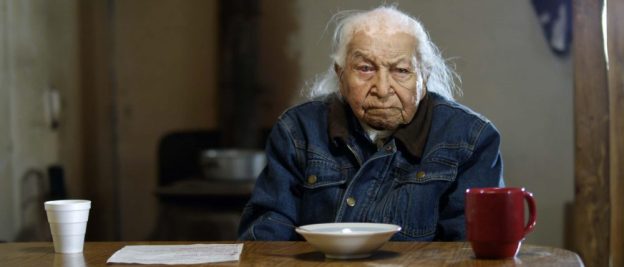
It’s enormously disappointing that Neither Wolf Nor Dog is as bad as it is, because its subject – Native American life in a society built upon a land that was taken from them, and the pain, grievances and stories that the displaced people carry with them – is massively, conspicuously underrepresented in US cinema and demands to be explored. Unfortunately, although the story on which it is based is true, the hackneyed device of a white man, Kent, who learns about someone different and with whom we’re supposed to emotionally identify falls on its face, and the filmmaking is awful. When the film visits Wounded Knee and we hear Dan, the Lakota elder, expose his history of pain and loss, Kent’s unearned tears destroy the scene.

Mike argues for the film’s first act, suggesting that it sets up promising questions and themes, and has a slowness that invites the audience to contemplate these. Dan’s interactions with Kent, knowingly using him to tell his stories, conflicts with his friend Grover’s reaction, suspicious but willing to put his feelings aside to do what Dan wants, and his granddaughter Wenonah, hostile and concerned that her granddad might be taken advantage of. This is all inextricably tied to the history of white invaders to America and the treatment to which the natives have been subjected for generations… but the promise of how the film could develop is far preferable to how it does develop, uncritically, unimaginatively using tropes that illuminate nothing and relying on undramatised oral storytelling to express its themes.

José, on the other hand, hated the film from the start and wanted to leave long before the end. He argues that there’s a self-importance to the filmmaker, Steven Lewis Simpson, on display, and Mike argues (with no proof of course) that Simpson edits his own Wikipedia page.

It’s a shame to have to declare that Neither Wolf Nor Dog is terrible but there it is. For people on nodding terms at best with Native American history to emerge from it having learned nothing, having gleaned no insight into the life it depicts, is a fundamental failure on the film’s part. A huge missed opportunity.

The podcast can be listened to in the players above or on iTunes.

With José Arroyo of First Impressions and Michael Glass of Writing About Film.
137 – Cold Pursuit

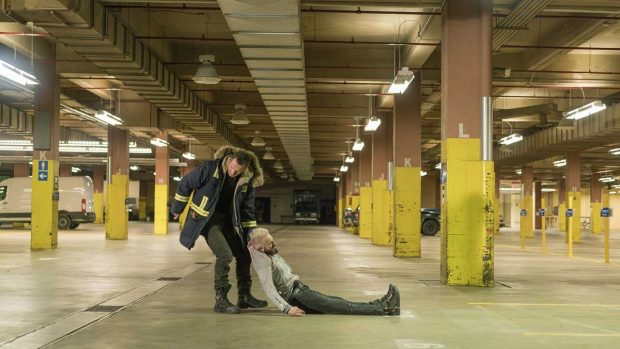
Remaking his own film, Hans Petter Moland brings us a revenge thriller, starring – who else? – Liam Neeson as a model citizen turned remorseless killer on the trail of those responsible for his son’s murder. Sounds like typical Neeson fare, but Cold Pursuit leaps between dramatic and blackly comic tones with verve, and offers something much more interesting and original than you’re likely to expect.

We find lots to like in it, including its magnificent lighting and compositions, interesting and welcome inclusion of a group of Native American characters, as well as a commentary on their relationship to the very whitest America there is (the film being set in a Colorado ski town), and some surprisingly tender moments between adults and children, and people in love.

We highly recommend it, it’s a huge amount of fun!

The podcast can be listened to in the players above or on iTunes.

With José Arroyo of First Impressions and Michael Glass of Writing About Film.