The seventh instalment in the Jurassic Park (now Jurassic World) series, Jurassic World Rebirth might be the first of the sequels to really come close to capturing the kind of wonder, excitement and horror that the 1993 original offered. That might be in part because it cribs liberally from it, with both moments and entire sequences closely evocative of their 32-year-old counterparts. But there’s plenty else that’s new here, and Rebirth is a characterful expansion to the Jurassic Park story.
Thoughts of containment have finally been totally discarded – dinosaurs have now been roaming the Earth for some time, to the point that they’re dying out everywhere other than a narrow band around the equator, which is illegal for human travel. So that’s where we’re headed, of course, as a pharmecutical exec seeking to make a fortune from dino-sourced drugs hires a team of mercenaries to extract blood from three creatures: one that swims, one that walks, and one that flies. It’s a decent structure that tells you what to expect and allows for a variety of settings and action, into which are placed such charismatic stars as Scarlett Johansson, Mahershala Ali, Jonathan Bailey and Rupert Friend. Director Gareth Edwards builds the world beautifully, exploiting it for that sense of scale that so defines his aesthetic, and reminding Mike in particular of his feature debut Monsters; and although in simple terms – this is, ultimately, a blockbuster sequel – the film has a moral message worth expressing.
Jurassic World Rebirth is easily the best of the Jurassic sequels and equally easy to recommend. Just try not to focus too much on how it reminds you of a better film from 1993.
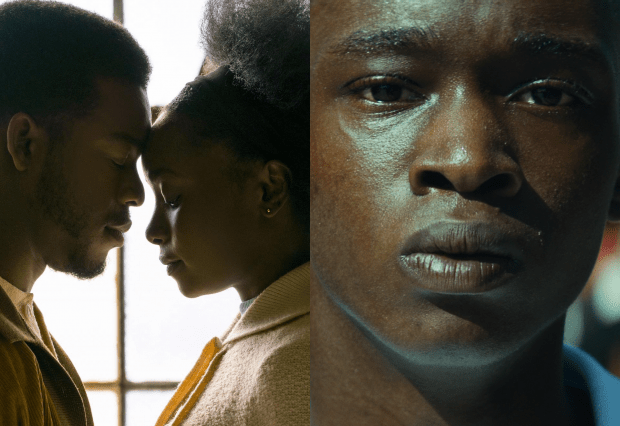
We return to Barry Jenkins’ If Beale Street Could Talk, his sumptuous romantic drama set in 1970s New York, for a deep dive, and take the opportunity to revisit his previous film, 2016’s Best Picture winner Moonlight. It’s an enriching conversation and we’re glad we took the time to engage in it. (The first podcast can be found here.)
We begin with Moonlight, working through our responses to what we experienced differently since having seen it previously (Mike last saw it during its cinema release, while José has seen it a few times on more recent occasions). The film’s final third is given serious thought, José in particular enjoying the opportunity to properly work through his longstanding problems with it, which amount to the film’s fear of the sex in homosexuality, its conscious refusal to openly and honestly depict two gay men being intimate – the film denies them even a kiss at the very end – and the critical establishment’s bad faith in refusing to engage with this particular point. It’s great to have finally discussed this topic, particularly paying close attention to the final few shots, where the problems are condensed and made perfectly clear; as José says, it’s an itch he’s wanted to scratch for a long time.
Moving on to Beale Street, we re-engage with some points we brought up in our first podcast, such as the dissonance between the opening intertitle’s invocation of drums and the soundtrack’s absence of them, and the relative richness of the characters that surround Tish and Fonny to the central couple. And we draw out new observations and thoughts, in particular returning on a few occasions to the conversation between Fonny and Daniel, discussing the lighting that drops them into deep shadow, picking up just the lightest outlines of their features as if to expose their souls instead, and how shot selection, editing and the use of a rack focus develop the drama and bring the characters together but simultaneously isolate Daniel within his own traumatic experiences. Mike picks up on a motif of redness in their eyes, acknowledging that the reading he offers is always going to be a stretch but finding it meaningful nonetheless.
We discuss the use of photo montages to reach for the universality of experience that the title implies and we felt was an issue the first time around, José describing how they thematically focus the film on black male incarceration and the lived experience of black masculinity in the United States. Mike feels that it’s a bit of a hangout movie, wanting to spend time with the characters and in their world, despite – perhaps because of? – the hardships they experience and discuss at times; certainly because of the romantic transparency, the care and love that characters show for each other, and the richness of their conversations. José finds fault with how the Latino characters are lit and generally visually portrayed to less than their best, arguing that they were excluded from the visual romance that bathes the rest of the film.
And we see direct comparisons between Beale Street and Moonlight. Beale Street‘s sex scene is an obvious point of discussion with respect to Moonlight‘s ending, but we also find parallels in the elements that depict or imply betrayal between friends, Moonlight‘s hazing scene and Daniel’s ostensible usefulness as an exculpatory witness for Fonny sharing complexities around whether the betrayals they depict are truly betrayals.
A hugely enriching discussion that we had great fun having, thanks to two intricate, beautiful, thought-provoking films.
The podcast can be listened to in the players above or on iTunes.
It’s already being portrayed as the film that will undeservedly win Best Picture for its cuddly, comfortable, comedy-drama version of American racism in the Sixties, but do we dissent from that view? Green Book tells the true story of a road trip through the Deep South shared by jazz pianist Doctor Don Shirley (Mahershala Ali) and his Italian-American driver Tony (Viggo Mortensen).
Mike immediately seizes upon Tony’s inconsistent characterisation, the film using other characters to describe him as deeply racist, but his actual interactions with Shirley consisting of essentially polite microaggressions rather than real malevolence and anger. José also takes issue with the revelation that Shirley is gay, Tony having no problem with it, saying that in his regular job as a bouncer he sees it all the time – the film makes no attempt to explain how he can be entirely understanding and accepting of sexuality while intolerant of skin colour. Mortensen, though, is very characterful, imbuing Tony with entertaining irreverence, and the love Tony displays for his wife, writing her letters every day, is very sweet.
Ali doesn’t match Mortensen’s level of performance, though he is perhaps asked less of, largely remaining aloof throughout the film. Again, we find problems in Shirley’s characterisation. The film sets him up as a fish out of water, not just as a gay, black man in the Deep South, but also amongst other black people – it’s a quirk too far to believe that he’s never heard a Chubby Checker or Little Richard record. And the movements made in the film’s final minutes to engineer a classic happy ending (at Christmas, no less) are as predictable and obvious as they come, but Mike is moved by the ending nonetheless, leaving the cinema with a smile on his face.
Despite the character issues, lack of subtlety (every aspect of the issues it depicts is explained in dialogue), weak visual storytelling (this film doesn’t appear to actually know that it’s being shown in cinemas, so fully does it lack any sense of cinematic nous or style), and project of delivering an unchallenging, white man’s version of racism in which everyone can learn to get along without having to face any hard truths, we found things to like in Green Book, and recommend it as long as you keep your expectations low.
The podcast can be listened to in the players above or on iTunes.
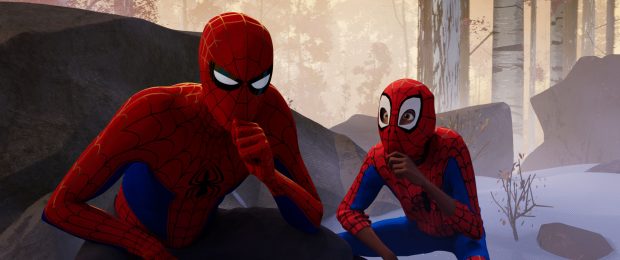
It’s colourful, friendly, packed full of visual energy and wit. It’s also light and just a little forgettable, like a straight-to-video movie that’s made it onto the big screen. But we had a good time and find lots to praise about Spider-Man: Into the Spider-Verse.
The podcast can be listened to in the players above or on iTunes.


 Eavesdropping at the Movies