Tag Archives: horror

81 – Unfriended: Dark Web

Designed entirely to simulate the desktop interface of a Macbook, Unfriended: Dark Web enthusiastically adapts modern fears of surveillance and digital stalking to the horror genre (drawing on the style of 2014’s Unfriended, to which this is a sequel). It’s a stylistic achievement that never once feels unconvincing, even if the route the plot takes is far from unpredictable.

We discuss the way the film hides its most graphic elements and is able to create tension and horror from the very opposite, and the wonderful evocation of distracted attention, with the main character jumping between Skype, Spotify, Facebook and more, that remarkably never becomes overwhelming or incomprehensible. Some of the performances aren’t the best, and we each found the film uninvolving at different points and for different reasons, but generally speaking we enjoyed the film’s experiment and found it interesting.

We also discuss the two producers, each of whose names caught our eyes, and how Dark Web fits in to the current cinema programme.

The podcast can be listened to in the players above or on iTunes.

With José Arroyo of First Impressions and Michael Glass of Writing About Film.

80 – The Meg

Big shark, big Cockney, big fun. We dive into The Meg, a film we can all agree should have been called Chomp. It’s definitely trashy, though precisely how trashy is an area of disagreement. For José, it’s a bad movie. For Mike, it’s a good bad movie.

The podcast can be listened to in the players above or on iTunes.

With José Arroyo of First Impressions and Michael Glass of Writing About Film.

79 – The First Purge

Low-budget, unexceptionally made, and absolutely vital. The First Purge takes the story of the Purge series back to the beginning, with a poor community composed of people of colour being savagely experimented upon for political purposes. Mike slightly had to drag José to see it, as it was showing only in single late-night screenings, but both were glad he did, as it’s perhaps the most direct and powerful critique of white hegemony that popular cinema has offered in recent memory.

We examine the imagery of the deliberate terrorisation of black communities in the USA. It draws on real-life attacks on black churches, Ku Klux Klan members wielding guns in pick-up trucks, and the resurgence of Nazis – one image of a blackface mask being removed to reveal an Aryan stereotype is particularly poetic. Mike finds that the film protects the white audience from their own complicity in the inequality portrayed, but it’s only a nuance, and as José says, we should be so lucky to have such flaws in most films! And José explains why films of this sort come along so rarely. (It’s not about risk. It’s about power.)

There’s simply so much food for thought and we urge you to see it.

The podcast can be listened to in the players above or on iTunes.

With José Arroyo of First Impressions and Michael Glass of Writing About Film.

71 – Hereditary – Second Screening

We go deep on Hereditary, occult/folk horror, and indeed horror in a wider perspective with guest contributor and horror guru (Mike’s words) Dr. Matt Denny from the University of Warwick, a film scholar with a particular interest in precisely the milieu Hereditary occupies. (He’s also a former student of José’s who was an undergrad alongside Mike, so it’s not all down to his credentials.) He brings an insightful and informed perspective to the film, picking up the baton where Mike and José dropped it in the previous podcast, and running off with it.

We consider what the occult subgenre is, what makes such stories interesting and where Hereditary in particular digresses from them, and the effects that has. Matt offers a historical perspective on the treatment of women in horror and how the film puts forth a muddled version of that, and the influence of Kubrick (in particular The Shining) on the film. We consider Mike’s dislike of how the film hides information or clues behind codes, and Matt suggests that this is really just a function of how this type of film works – and indeed how the occult works. And is it reasonable that Mike associates the occult film with British cinema in particular?

All this and more in a fascinating discussion.

The podcast can be listened to in the player above or on iTunes.

With José Arroyo of First Impressions and Michael Glass of Writing About Film.

70 – Hereditary

Perhaps we lack the specific horror fundamentals that would open Hereditary up to us, but we find it a muddled, almost adolescent film – a particular disappointment given it’s also an engrossing family drama with a brilliant central performance from Toni Collette. Our conversation includes considerations of the compositions and props, including repeated imagery of miniature models of the family’s home, and complaints that it feels as though we’re deliberately being withheld a clear explanation of what the hell is going on by a writer-director who’s keen to seem smarter than us. In its cruel and brutal treatment and imagery of women, José finds the film misogynist, which reminds Mike of It Follows, which he found misogynist. And José spends a few moments decrying The Exorcist, why not.

Everything we discuss is a significant plot spoiler as the film operates on revelation and surprise, so make sure you either know or don’t care what happens before listening.

The podcast can be listened to in the player above or on iTunes.

With José Arroyo of First Impressions and Michael Glass of Writing About Film.
69 – Jurassic World: Fallen Kingdom

Jurassic World returns with The Orphanage and A Monster Calls director J. A. Bayona in charge, transforming the colourful knockabout thrills of the previous instalment into a volcano disaster-cum-Gothic horror film. We both love the heightened drama of the mansion half of the film and how Bayona finds new life in what has, over the last 25 years, somehow become somewhat stale imagery of reanimated dinosaurs. José adores the casting of Geraldine Chaplin and Mike finds the reduced importance of love stories a positive thing. And seeing businessmen get killed is always fun. Cracking movie. Hugely enjoyable.

The podcast can be listened to in the player above or on iTunes.

With José Arroyo of First Impressions and Michael Glass of Writing About Film.

56 – A Quiet Place

A Quiet Place is a deceptively simple horror film that finds a surprising degree of variety in its premise: the planet is overrun with monsters that cannot see but hunt by sound. We marvel at its creativity and technique, and indeed, the way it silenced the audience. We talk over its performances, its ending, the way it manipulates and moves characters to generate threatening situations, the intelligence of its editing in moving between storylines, and the shortcuts it takes with its internal logic in order to keep the story moving. We also mull over a potential for a sequel and decry one plot decision in particular.

But fundamentally, we urge everyone to see it. It silenced a full cinema, and that was quite remarkable.

The podcast can be listened to in the player above or on iTunes.

With José Arroyo of First Impressions and Michael Glass of Writing About Film.

55 – Unsane

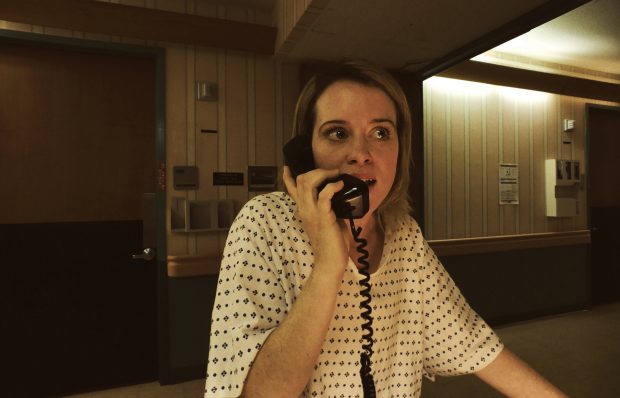
A low-budget psychological thriller, Unsane is a less involving film than its subject matter and star deserve. Claire Foy is extraordinarily powerful as a paranoid prisoner of mental trauma inflicted on her by a stalker and bureaucratic malfeasance, distressed, knowing, sarcastic, resistant. The film fails her in other areas but is an intriguing experiment nonetheless, and we find much to discuss, including its cinematography, relationship to termite art, and potential audiences.

The podcast can be listened to in the player above or on iTunes.

With José Arroyo of First Impressions and Michael Glass of Writing About Film.

9 – Flatliners

With a weary sigh, we get to Flatliners. Ellen Page, James Norton, Diego Luna, Nina Dobrev and Kiersey Clemons expand their minds and run around shitting themselves in fear.

Questions abound: Why did they call this Flatliners when the obviously correct title is Hot Doctors? Was Kiefer Sutherland wasted? Is it wise to be wasted while appearing in a film? In precisely how many millions of ways is the film inconsistent? Just how stupid and blind is its attitude towards the very real problems it presents? Does it make sense as a horror flick? Are Mike and José too obsessed with the cast’s attractiveness? Are we perverts? Most importantly, who’s hotter: the ginger guy or the hot girl?

All this and Catholic guilt too.

The podcast can be listened to in the player above or at this link.

With José Arroyo of First Impressions and Michael Glass of Writing About Film.