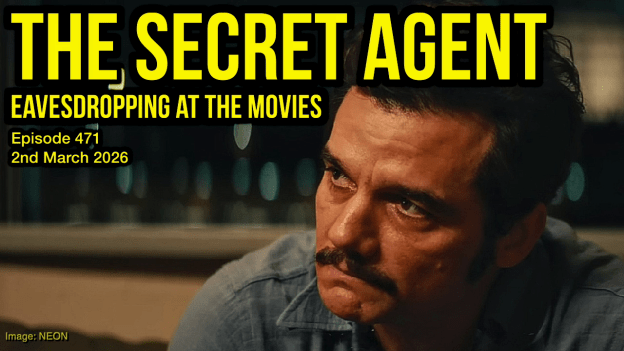
We’ve previously seen Bacurau, writer-director Kleber Mendonça Filho’s last film, which we loved, and find The Secret Agent a similarly fascinating depiction of political corruption and persecution in Brazil, though much more grounded and fleshed out, particularly given the historical setting in 1977, at which time Brazil was subject to a military dictatorship. To José, who grew up in Franco’s Spain, The Secret Agent‘s depiction of life under fascism richly, and scarily, evokes the dynamics at play in such a society. As Wagner Moura’s protagonist discovers, simply upsetting the wrong person can be enough to have hitmen sent after you.
Mike argues that the film takes too long to get going – in developing its picture of the lawless world in which Moura joins other political refugees and a dissident network, it makes us wait to find out who he is and why he’s among that group. José doesn’t share that assessment, finding the time well spent and trusting the film’s pacing. We discuss the flights of fancy, including an animated segment which dramatises news reports of a supposedly supernatural severed leg killing people (in fact, the police and media are all too happy to make use of the nonsensical urban legend to cover up their extrajudicial murders); Moura’s performance, which earned him an Oscar nomination; the generations’ differing attitudes to maintaining historical records and keeping the past alive; and the hereditary aspect of positions of power, in which such figures as the police chief, wealthy industrialists, and even contract killers are always accompanied and assisted by their sons.
Russell Crowe shines in Nuremberg as Hermann Göring, who became the face of the Nazi Party following Hitler’s suicide and the end of the war, as he’s held in custody and probed by a psychiatrist as the titular trials approach. Indeed, while a mediocre film, its actors’ performances are a pleasure – with the exception of Rami Malek, whose psychiatrist is twitchy, busy, and a failure. A shame that he’s the protagonist, then.
We discuss the film’s structure and screenplay: José contends that Malek’s character is not just badly played but an irrelevance, and the drama would be much better served by focusing on Michael Shannon’s prosecutor; Mike criticises what he claims is a stupid person’s idea of clever writing.
And there’s more to think about: how Nuremberg compares to Bridge of Spies, which similarly depicted a novel trial that had obvious implications beyond the courtroom, and Judgment at Nuremberg, the other major dramatisation of the trials; the film’s tone, which is able to handle moments of humour but sometimes veers into the overly glib and kitsch; the present-day rise of fascism and the genocide in Gaza to which the film speaks; the use of real footage of Holocaust victims and the purpose to which it’s put; and whether we think that its critique of the Catholic Church for its support of the Nazis, and suggestion that dropping the atomic bomb on Japan was an unjustifiable atrocity, are surprising and bold things for a mainstream American film to do… or not particularly impressive, and shouldn’t people just know this stuff anyway?
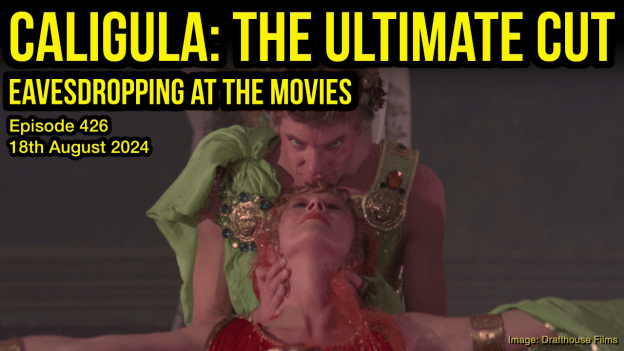
One of cinema’s most infamous disasters, Caligula was conceived by producer Bob Guccione, the founder of Penthouse magazine, as an explicit, expensively-made adult film, about the rise and fall of the titular Roman emperor. In pursuing this, Guccione removed director Tinto Brass during post-production, so that he could have hardcore pornography shot and inserted into the film. On its release in 1979, Caligula was critically savaged on both moral and cinematic grounds, confiscated by police in some countries, banned in others, and the cause of lines that stretched around the block. It has remained an artifact of cult interest ever since, and the subject of occasional attempts to reconstruct it in a form that reflects something approaching its creators’ original visions – to whatever extent their visions agreed with each other.
Caligula: The Ultimate Cut is the most thorough of these reconstructions by far, benefitting from the rediscovery of 96 hours of original material, which had been rushed out of Italy and hidden during the film’s release. Opening intertitles claim that every frame of art historian Thomas Negovan’s cut is previously unseen. It’s long been wondered whether there’s a great film within Caligula; although we don’t think The Ultimate Cut demonstrates that there is, it’s entertaining and striking, and offers an idea of what might have been.
The Zone of Interest is a title that accurately reflects the film it adorns: it’s a term used by the Nazis to euphemistically address the 40 square kilometre area surrounding the Auschwitz concentration camp, conspicuously refusing to mention the factory of death it enclosed, conveying a culture of at best wilful ignorance of and at worst tacit complicity with the Holocaust. Similarly, Jonathan Glazer’s film is conspicuous in its refusal to show us the interior of the camp (with a notable exception, which we discuss), instead keeping its attention on the surrealistically normal country house with which it shares a wall, which is occupied by the camp’s commandant, Rudolf Höss, and his family. The film is not interested in imagery of suffering, torture, and death: its subject is the culture and mentality of those who administrate and benefit from it.
There’s a huge amount to discuss in this thought-provoking film, and we reflect on our own experiences visiting Auschwitz, now a museum and memorial, in so doing. Our key insight from visiting, something obvious on paper but not clear until we were there, was the industrial nature of the camp, in which it used its victims up for the labour they could extract, allowing them to starve to death as the energy content of their bodies diminished, and replacing them with a steady intake of others. The film conveys some of this in the businesslike manner in which Höss’s job is conducted – it’s all phone calls, meetings, conferences, folders, agendas. And we discuss Höss’s wife, Hedwig, and her complicity; the soundtrack, which beds the film in a constant hum of machinery and movement from the camp, and the ending, which offers a surprising and effective flourish that grounds everything we’ve seen in documentary reality. With José Arroyo of First Impressions and Michael Glass of Writing About Film.
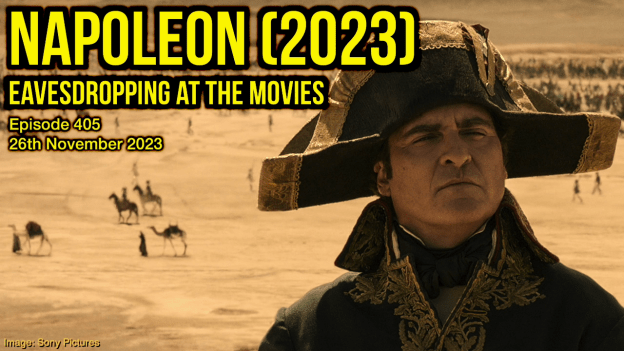
For our discussion of Ridley Scott’s new historical epic, Napoleon, we have the privilege of being joined by Paul Cuff, a film historian and expert on the Napoleonic era in cinema, including and especially Abel Gance’s Napoléon from 1927, about which he wrote A Revolution for the Screen: Abel Gance’s Napoleon. Together, we ask whether Scott’s film has anything to say about the man whose life it depicts – and if so what? – whether its ahistoricity matters, and how substantially it fleshes out its characters and the events and relationships dramatised.
We disagree on Till, which dramatises the events surrounding the infamous lynching of Emmett Till, a black fourteen-year-old boy abducted, tortured, and shot in Mississippi in 1955, and his mother’s decisive actions following the crime, which included having his mutilated body shown in a public funeral service with an open casket, and having brutal photographs of it published in the press. Emmett’s murder and Mamie’s activism forced the USA to confront the reality of its racism and catalysed the civil rights movement – of course, progress made subsequently was not instant and vast racial inequality and injustice is present in the country to this day, but the passing of the Civil Rights Act in 1964 might not have happened if not for the events of nine years prior.
While Till‘s story has often been told and referenced in music, documentary and other media, it’s surprising to say the least that it’s taken this long to be the subject of a major feature film. Perhaps it’s the visceral nature of the case, the importance of the imagery of Emmett’s body that has led to such reticence, and, as José suggests, nervous anticipation of what might be depicted could keep audiences away. That imagery in Till is shocking and upsetting, but the film keeps a tactful eye on what it shows, and refuses to depict Emmett’s torture and murder.
Still, while we agree on the sensitivity and care with which we feel the film handles these crucial elements, we disagree on almost everything else. José sees in Till an intelligent, complex exploration of racism and power structures; Mike finds amateurism in its visual compositions and excess in its orchestral score. It’s a valuable film and one that never indulges in smugness or didacticism, but we refuse to provide a coherent opinion as to whether it’s good or not.
Writer-director Robert Eggers, who previously wowed us with The Lighthouse, returns in style with a brutal, bloody Viking epic, based on Amleth, the figure in Scandinavian legend that inspired Shakespeare’s Hamlet. It’s the first of his films to see a wide, mainstream release and large-scale ad campaign to match, and it’s perhaps for that reason that it is in some sense less demanding that its audience put the work in to understand and interpret it – although there remains plenty of room for that, and it’s in a different league to the blockbusters with which it’s competing. It’s a film to put down what you’re doing right now and see at the cinema – it’s vicious, atmospheric, and beautifully shot, and you won’t regret seeing it where it’s meant to be seen.
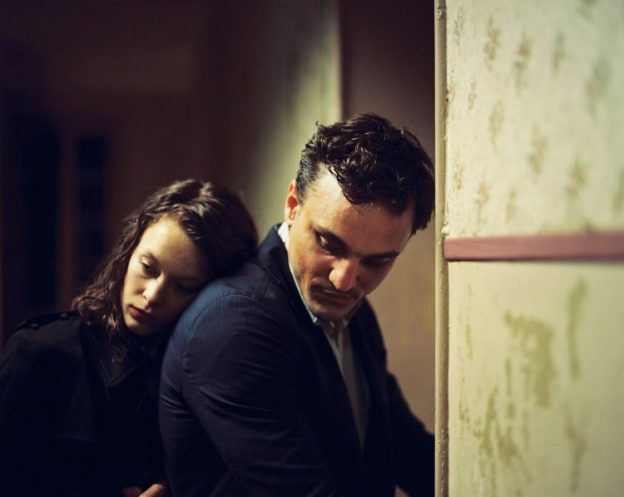
Adapted from the 1944 novel of the same name by Anna Seghers, writer-director Christian Petzold’s Transit behaves to some degree like Shakespeare in modern dress. The story follows a German man, Georg (Franz Rogowski), escaping facist-occupied Paris to Marseille, and there encountering other refugees, forging connections and affections with them, making arrangements at consulates for passage and visas to Mexico and the USA, all while rumour and hearsay about the spread of the occupation to the port city hangs over him. But with markers from nearly a century later – present-day vehicles in particular, although much of the clothing lives in an ageless world that bridges the years, and an ethnic component that makes more sense in today’s world than the Forties – Petzold turns a historical narrative into a fable of creeping fascism and the refugee crisis of today. Indeed, the idea that Transit functions like modern-dress Shakespeare might make it sound terribly stilted and artificial, but the real power of Transit‘s transposition to the modern day is just how perfectly it works. Transit‘s world is deeply convincing.
Mike argues that part of the reason that this is the case is the film’s focus on the refugees, and the details of day-to-day life in a city merely threatened by future occupation rather than currently undergoing it. The film’s explicit visual symbols of occupation – stormtroopers lining up citizens against walls, dragging refugees from their families – do stand out, and are both necessary and necessarily rare. That the occupation looms is enough, for the most part – it’s what it makes people do and feel that is the film’s focus, and it doesn’t need to build a Children of Men-style dystopia to explore that. The film is described on the poster, in rather an exciting quote from Indiewire, as “Casablanca as written by Kafka” – a glib line that we partially agree with. The Casablanca connection is clear, at least in basic terms being a complicated World War II love story set in a – for now – safe haven for refugees, the assignment and value of visas and travel documents of constant importance. The Kafka connection is inaccurate, the bureaucratic systems depicted in the Mexican and US consulates being ones that, while overwhelmed by vast numbers of refugees, aren’t designed to confuse or dehumanise. Whatever ails Georg isn’t Kafkaesque.
Georg, as José points out, is something of a cipher. We hear little of his story, know only one or two real details about him of any substance – and even one of those may be a lie – but to the film’s credit it’s not something we ever question. His mental state, reasons for behaving as he does, are always clear, if, as Mike suggests, a little frustrating at one point. Through him, we are able to hear people’s stories, those he encounters in queues and cafés keen to tell him who they are and why they’re there. Being able to tell one’s story and having it heard is a central theme to the film, as well as the ways in which we change or misremember our stories to our benefit – a slightly unreliable narrator occasionally describing things that differ in details from how we’re shown them. Georg may not speak much, may not tell anyone his story during the course of the film, but the narration tells his story in the third person – José having read that some or all of the narration is lifted directly from Seghers’ novel, though having not read the novel, we cannot be entirely certain of how much.
The narration, when it faithfully describes what we see, comes across to Mike as rather needless – showing and telling at the same time to pointless effect. Mentioning one scene in which the narration tells us that a number of refugees feel shame for standing by as a woman is violently separated from her family, he complains that the film should be able to convey this visually. José argues that underlining the point through narration is purposeful, bringing home that we in the present day should feel the same shame for standing by as refugees and immigrants have the same things done to them today. The narration changes a dramatisation into a call to action, and in so doing the film constantly asks us pointed ethical and moral questions of ourselves.
In short, Transit is a considerable film and unquestionably worth your time. We can’t recommend it highly enough.
The podcast can be listened to in the players above or on iTunes.




 Eavesdropping at the Movies