Tag Archives: epic

439 – The Brutalist

Listen on the players above, Apple Podcasts, Audible, Spotify, or YouTube Music.

We visit BFI Southbank for a 70mm screening of The Brutalist, Brady Corbet’s epic period drama. It’s a super-sized film – 215 minutes, not including the intermission – and it deserves a super-sized podcast, for which we’re joined, as we occasionally are, by Mike’s brother, Stephen, who’s already seen the film once. It’s an extraordinarily complex, subtle and absorbing film that draws on countless themes and parts of history in telling its story of a Hungarian Holocaust survivor and architect who escapes to America and finds a wealthy client enamoured with him.

We dig in to the film’s themes with breathless enthusiasm, and talk sex, racism, the immigrant experience, long takes, rape, capitalism, doing things for effect, art, aspiration, jealousy, the value of 70mm, and much more. José describes The Brutalist as his film of the year; Mike ponders whether he likes it more than the Robbie Williams monkey movie.

With José Arroyo of First Impressions and Michael Glass of Writing About Film.
428 – Megalopolis

Listen on the players above, Apple Podcasts, Audible, Spotify, or YouTube Music.

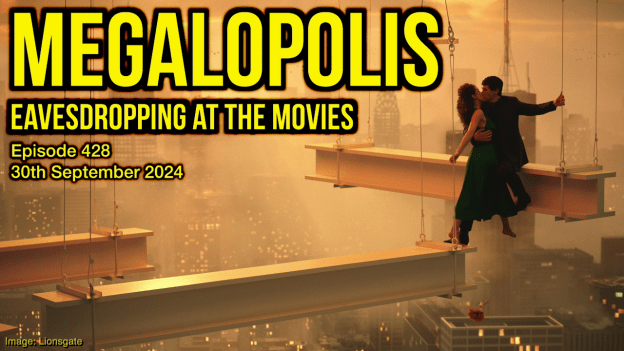
Francis Ford Coppola’s long-awaited passion project, Megalopolis, self-funded to the tune of $120m, has finally arrived. We love it. It’s wild, imaginative, earnest, and beautiful. We discuss and decry some of the criticisms of it we’ve already seen while coming up with some of our own – how could we have known that an octogenarian might hold rather traditional views? – in between breathlessly enthusing about what captivated us.

Megalopolis is hardly a perfect film but it’s a visual treat and a fantastic cinematic experience. Don’t let the naysayers’ sniping turn you off. Indulge!

With José Arroyo of First Impressions and Michael Glass of Writing About Film.

423 – Dune: Part Two

Listen on the players above, Apple Podcasts, Audible, Google Podcasts, or Spotify.

Denis Villeneuve’s epic adaptation of Dune makes its first appearance on the podcast in the form of the second film in the series – we saw the first when it came out but never podcasted on it. With the lore in place, the scene set, and the characters established, Dune: Part Two is free to develop romance, engage in action, and tell the story of the construction of a messiah. It’s beautiful, exciting entertainment – as long as you can remember everyone’s names and what their magic powers are and what they’re up to and why.

José feels no such issues keeping track of Part Two‘s various story elements, but Mike hasn’t done the homework and finds that the film isn’t going out of its way to help him. But no matter! The imagery on offer is astonishingly pretty, reassuringly expensive, and tuned for maximum visual impact – though we wonder how poetic it is, and ask ourselves to what extent the imagery in Villeneuve’s other work lingers in the mind, despite its premium sheen. We also discuss the degree to which we feel Part Two really feels like it’s buying in to its more supernatural elements. It tells a story of prophecy, visions, and unlikely fates, but, Mike suggests, also offers mechanisms and plausible explanations for things we see, arguably favouring its scepticism to avoid putting off an audience unwilling to go along with the otherworldly.

Whether you care or not, whether you can follow the details or not, there’s no reason to not see Dune: Part Two on the biggest and best screen available. For the visual design and production alone, it’s value for money – that the rest is good is a lovely bonus.
With José Arroyo of First Impressions and Michael Glass of Writing About Film.
405 – Napoleon (2023)

Listen on the players above, Apple Podcasts, Audible, Google Podcasts, or Spotify.

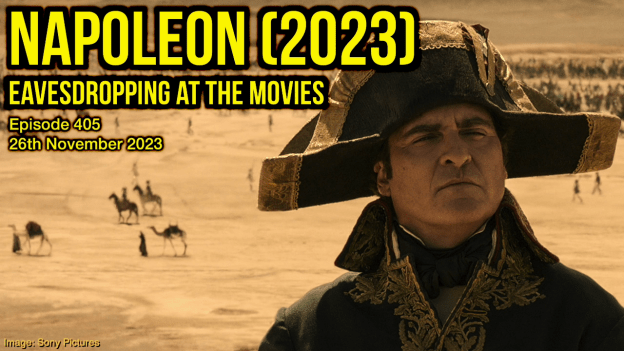
For our discussion of Ridley Scott’s new historical epic, Napoleon, we have the privilege of being joined by Paul Cuff, a film historian and expert on the Napoleonic era in cinema, including and especially Abel Gance’s Napoléon from 1927, about which he wrote A Revolution for the Screen: Abel Gance’s Napoleon. Together, we ask whether Scott’s film has anything to say about the man whose life it depicts – and if so what? – whether its ahistoricity matters, and how substantially it fleshes out its characters and the events and relationships dramatised.

With José Arroyo of First Impressions and Michael Glass of Writing About Film.

403 – Killers of the Flower Moon

Listen on the players above, Apple Podcasts, Audible, Google Podcasts, or Spotify.

Based on true events, Killers of the Flower Moon tells a story that invokes the foundational genocide upon which the USA was built, but has its own peculiarities. The Osage Nation, a Native American tribe and unusually the owners of their reservation in Oklahoma, became extraordinarily wealthy in the early 20th century upon finding their land gushing oil – but in pursuit of their riches, the white population in the region devised a plan to rob them of their individual land rights, which were only allowed to be inherited. In telling this story, Killers of the Flower Moon justifies its three and a half hours of runtime – though there’s no reason not to include an intermission! – and Leonardo DiCaprio, in particular, has never been better.

We discuss the specific events depicted and the wider history to which they relate and that they evoke in microcosm; the complexities in DiCaprio’s character, who participates knowingly in hideous crimes but truly loves his wife, whose community and family he’s devastating, all the while not quite having the mental acuity to understand the full extent of what he’s involved in; the quality and qualities of the performances and characterisations; the visual design, effects of lighting, and evocation of the feeling of so many mid-20th century Westerns through subtle and specific elements of the cinematography; and the idiosyncratic ending and what it has to say to its audience.

With José Arroyo of First Impressions and Michael Glass of Writing About Film.

353 – The Northman

Listen on the players above, Apple Podcasts, Audible, Google Podcasts, or Spotify.

Writer-director Robert Eggers, who previously wowed us with The Lighthouse, returns in style with a brutal, bloody Viking epic, based on Amleth, the figure in Scandinavian legend that inspired Shakespeare’s Hamlet. It’s the first of his films to see a wide, mainstream release and large-scale ad campaign to match, and it’s perhaps for that reason that it is in some sense less demanding that its audience put the work in to understand and interpret it – although there remains plenty of room for that, and it’s in a different league to the blockbusters with which it’s competing. It’s a film to put down what you’re doing right now and see at the cinema – it’s vicious, atmospheric, and beautifully shot, and you won’t regret seeing it where it’s meant to be seen.

With José Arroyo of First Impressions and Michael Glass of Writing About Film.
173 – Ad Astra

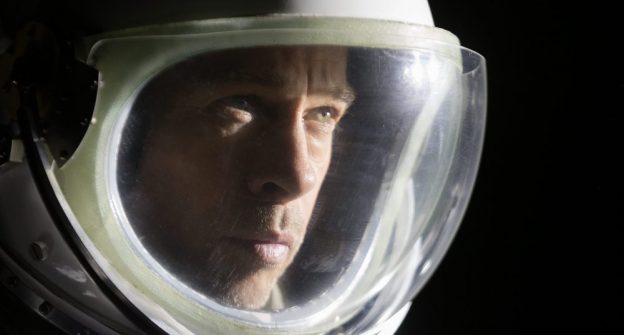
Ad Astra sees a withdrawn, isolated Brad Pitt take to the stars as Roy McBride, an astronaut in search of his father, and with him writer-director James Gray shows us stunning imagery and brings us brilliantly into McBride’s suppressed mental state. José is head over heels in love with the film’s epic feel, its exploration of universal human problems, the way in which it imagines a human race that, in spreading to and taming other planets and moons, brings its pre-existing problems with it, and the way in which Gray expresses McBride’s inner turmoil through action. Mike is less keen, particularly arguing for the weakness of the film’s first act, and asking questions of the film’s gender theming, but finds much to love too.

Ad Astra is a vast, careful, $100m art movie, the likes of which only Christopher Nolan normally gets to make. It’s very much worth your time. See it on the largest screen you can.

The podcast can be listened to in the players above or on iTunes.

With José Arroyo of First Impressions and Michael Glass of Writing About Film.