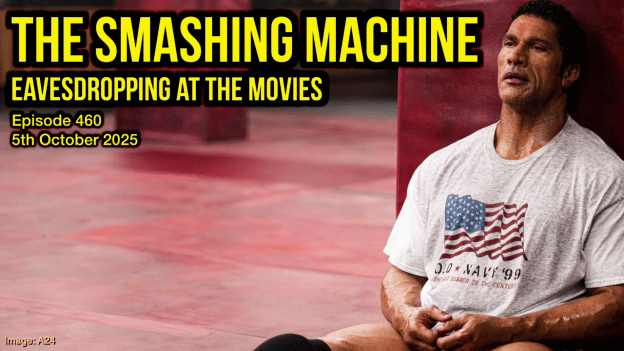
Mike isn’t impressed with The Rock’s attempt to take on a dramatic role in an intimate biopic after decades of popcorn blockbusters, seeing it as Oscar bait. José doesn’t share his cynicism and likes the lead performance. We discuss what The Smashing Machine depicts – disagreeing, in particular, about whether the protagonist shares any blame for the issues in his relationship – as well as whether its look and storytelling are problems, and just how shoddy things are getting at Cineworld. Yet we keep going back.
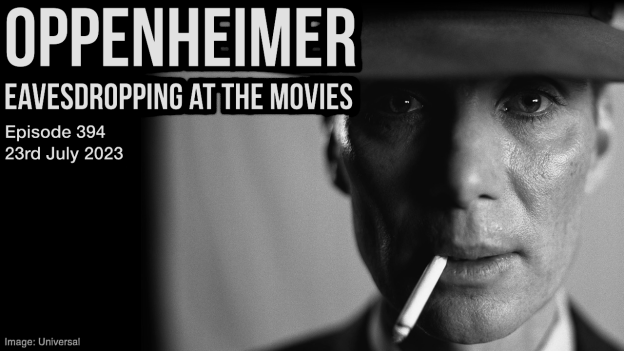
The second half of our Barbenheimer double bill takes us to the BFI IMAX in London to see Oppenheimer, the complex story of J. Robert Oppenheimer’s infamous role in the development of the atomic bomb during World War II, the creation and use of which changed history. Writer-director Christopher Nolan, as he has done increasingly over his career, makes extensive use of IMAX 70mm film to tell the story, but as well the spectacle and landscape we’re used to it showing off, here it’s devoted to the intimate.
We’re joined by Mike’s brother and previous guest Stephen to discuss the film, and consider the use of IMAX for close-ups and portraiture, as well as the story’s structure and how the editing and music create pace, the film’s implicit attitude towards Communism, whether Florence Pugh is treated unfairly, the way in which black-and-white footage is used to convey a shift in perspective, how the attacks on Hiroshima and Nagasaki are handled, the Stan Brakhage-esque imagery that conveys the radical sense that all matter is energy waiting to be unleashed, and much more. For José, it’s Nolan’s best film. It certainly deserves to be seen on an IMAX screen.
Disney has already turned one of its theme park rides into a box office colossus – is it time for another? They seem to think so, bringing us Jungle Cruise, an adaptation of one of the attractions from Disneyland’s grand opening in 1955, the Jungle River Cruise, starring The Rock, who we still refuse to call Dwayne Johnson, Emily Blunt, and Jack Whitehall, as explorers searching for the Tree of Life.
The film gives the ride more than a nod and a wink, The Rock’s character operating a cruise along the Brazilian Amazon, complete with the real ride’s cheesy dad jokes – and there’s effort made to reckon with the attraction’s history of racist representation of indigenous peoples. How successfully it does so is up for debate, the film indulging in its own cultural imperialism – despite being set in Brazil, there isn’t a word of Portuguese spoken; and no matter the purity of their intention, the characters are still in Brazil to take something that doesn’t belong to them.
We also discuss the film’s feminism and sexual politics, as embodied by Blunt’s and Whitehall’s characters, the setting in 1916 and the use of England rather than the USA as a point of origin for its story, and consider who the film is for – Mike sees its relationship with the likes of Jumanji, Indiana Jones, Hook and The Mummy, and is sure that he’d have loved this as a kid as much as he did those. It fails to really explore the poetic potential of some of its ideas, and one too many action scenes feel like they need explosions to keep things exciting, but on the whole, Jungle Cruise is a likeable bit of popcorn fodder with three terrific performances, and chemistry to match.
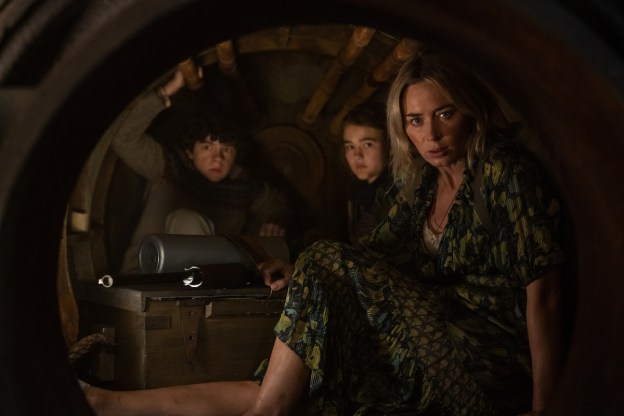
A Quiet Place Part II picks up moments after its 2018 predecessor ends, its characters desperate for refuge from the terrifying predators hunting them. Seeking survivors, they encounter a family friend, now a recluse, having lost his wife and children. Emboldened by her discovery of a way to combat the aliens, the family’s deaf daughter makes a beeline for a radio station she believes can help, and what was a home invasion horror becomes an action adventure.
While accommodating this alteration in tone, A Quiet Place Part II offers, as sequels tend to do, more of what made the first film so successful, and it’s terrifically entertaining cinema – but a diminished experience, compared to its predecessor, in almost every way. We consider the film’s view of society, the uncritical whiteness in its casting and its inability to imagine ways of living that don’t involve the nuclear family unit; and the lack of threat we feel, despite its functional and well-orchestrated set-pieces – we simply never feel like these characters are at any real risk of being allowed to die.
We have problems with A Quiet Place Part II, but don’t let them dissuade you from seeing it. It’s exciting and made José jump time and time again – we just wish, both in cinematic and social terms, it could see beyond its rather narrow boundaries.
Mary Poppins is back after a mere 54 years since the first film. The kids have grown up, life has grown difficult, and a magical undying supernatural flying nanny is precisely what they need.
What they don’t need are new ideas. Mary Poppins Returns copies the structure and concepts of the first film almost to the point of parody, today’s Disney operating in a world in which people apparently want low-effort, straight-up nostalgia (as their spate of CGI-laden remakes of their animated classics can confirm). However, the film has its charms, in time the songs may become memorable – one can rarely tell on first viewing – and children are sure to love it as previous generations loved the last.
The podcast can be listened to in the players above or on iTunes.
A Quiet Place is a deceptively simple horror film that finds a surprising degree of variety in its premise: the planet is overrun with monsters that cannot see but hunt by sound. We marvel at its creativity and technique, and indeed, the way it silenced the audience. We talk over its performances, its ending, the way it manipulates and moves characters to generate threatening situations, the intelligence of its editing in moving between storylines, and the shortcuts it takes with its internal logic in order to keep the story moving. We also mull over a potential for a sequel and decry one plot decision in particular.
But fundamentally, we urge everyone to see it. It silenced a full cinema, and that was quite remarkable.
The podcast can be listened to in the player above or on iTunes.



 Eavesdropping at the Movies