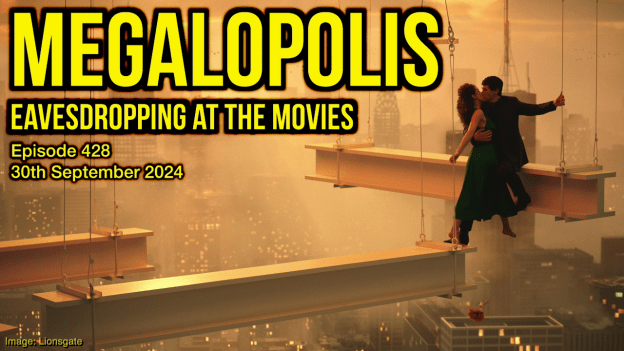
Francis Ford Coppola’s long-awaited passion project, Megalopolis, self-funded to the tune of $120m, has finally arrived. We love it. It’s wild, imaginative, earnest, and beautiful. We discuss and decry some of the criticisms of it we’ve already seen while coming up with some of our own – how could we have known that an octogenarian might hold rather traditional views? – in between breathlessly enthusing about what captivated us.
Megalopolis is hardly a perfect film but it’s a visual treat and a fantastic cinematic experience. Don’t let the naysayers’ sniping turn you off. Indulge!
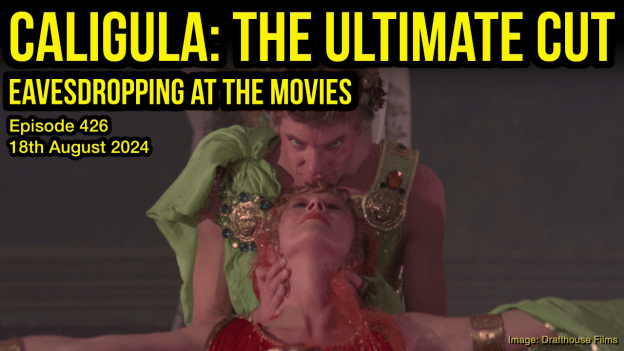
One of cinema’s most infamous disasters, Caligula was conceived by producer Bob Guccione, the founder of Penthouse magazine, as an explicit, expensively-made adult film, about the rise and fall of the titular Roman emperor. In pursuing this, Guccione removed director Tinto Brass during post-production, so that he could have hardcore pornography shot and inserted into the film. On its release in 1979, Caligula was critically savaged on both moral and cinematic grounds, confiscated by police in some countries, banned in others, and the cause of lines that stretched around the block. It has remained an artifact of cult interest ever since, and the subject of occasional attempts to reconstruct it in a form that reflects something approaching its creators’ original visions – to whatever extent their visions agreed with each other.
Caligula: The Ultimate Cut is the most thorough of these reconstructions by far, benefitting from the rediscovery of 96 hours of original material, which had been rushed out of Italy and hidden during the film’s release. Opening intertitles claim that every frame of art historian Thomas Negovan’s cut is previously unseen. It’s long been wondered whether there’s a great film within Caligula; although we don’t think The Ultimate Cut demonstrates that there is, it’s entertaining and striking, and offers an idea of what might have been.
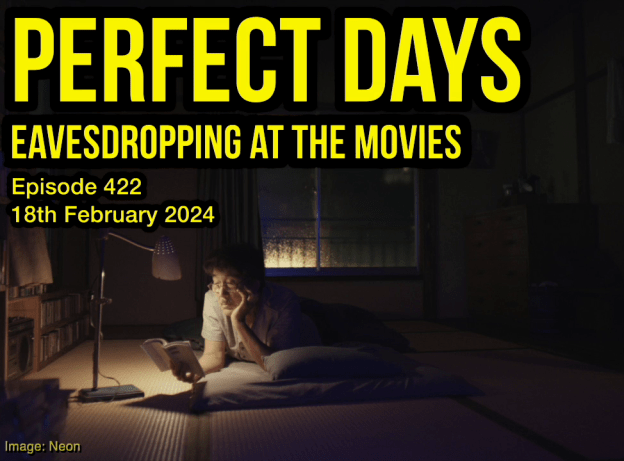
Wim Wenders finds inspiration in Japanese public lavatories in Perfect Days, a slice of life drama about Hirayama, a janitor who finds quiet happiness in his routine of travelling from public convenience to public convenience cleaning, photographing trees in the park, being welcomed at restaurants by proprietors who fetch him his usuals, and reading books before bed. We discuss Wenders’ delicate touch and observational eye, Kōji Yakusho’s central performance, for which he was named Best Actor at Cannes, how small moments indicate whole avenues of a person’s life, and the film’s theme of connections between the individual worlds in which we live.
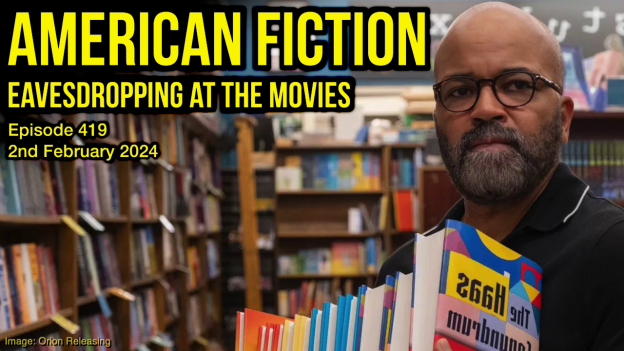
Writer-director Cord Jefferson’s debut feature, American Fiction, combines satire with family dynamics to fairly charming, if visually uninspiring, effect. Jeffrey Wright’s Thelonius is a novelist forced into a leave of absence from his teaching position, whereupon he returns to Boston and reconnects with his family, from whom he’s distant. He’s also furious that his latest manuscript has been rejected for not being black enough, and that what “black enough” means involves every negative stereotype of black people and culture imaginable. But when he sarcastically writes such a novel to shove society’s attitude in its face, it’s taken seriously by the white literary elite, who shower it with praise.
From the trailer, Mike was expecting more focus on the satire, and more energy à la Boots Riley’s Sorry to Bother You. It’s a surprise, then, that American Fiction spends so much time developing the family drama, but not an unpleasant one, and José finds that aspect the film’s most interesting. We consider the idea that the film uses the family story to practice what it preaches, offering a story about black people that doesn’t require them to be black in order to justify its existence – it’s a universal story about distanced siblings, a mother with failing health, and broken marriages. And we discuss the film’s ending, or lack thereof, in which the inescapability of the culture that demands stereotype is emphasised at the expense of a satisfying, earned conclusion to the story we’ve been told.
American Fiction doesn’t create a single artful image, and that ending is disappointing, but the film is also interesting, absorbing, and funny. Worth a look.
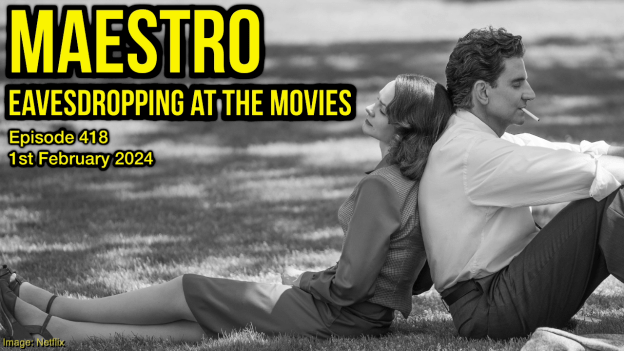
We find Maestro, Bradley Cooper’s latest actor-director star vehicle, which dramatises the life of iconic conductor Leonard Bernstein, to be dishonest, illustrative, and superficial Oscar bait. We also find it cinematically ambitious at times, with great production values – not many films of this type are being made with $80 million budgets. A mixed bag.
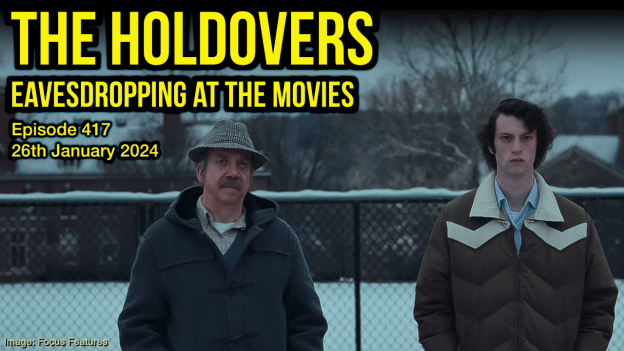
Alexander Payne evokes the Seventies in form and aesthetic in The Holdovers, a comedy-drama about the students and staff forced to stay at a New England boarding school over Christmas. It exudes charm and, over time, warmth, as the frosty relationship between student and teacher thaws, Payne handles the meandering tone beautifully, and it’s full of good jokes. For José, it doesn’t quite reach the level of the best in its genre; for Mike, it’s a good genre film elevated by some mysterious cinematic alchemy he doesn’t understand.
The Zone of Interest is a title that accurately reflects the film it adorns: it’s a term used by the Nazis to euphemistically address the 40 square kilometre area surrounding the Auschwitz concentration camp, conspicuously refusing to mention the factory of death it enclosed, conveying a culture of at best wilful ignorance of and at worst tacit complicity with the Holocaust. Similarly, Jonathan Glazer’s film is conspicuous in its refusal to show us the interior of the camp (with a notable exception, which we discuss), instead keeping its attention on the surrealistically normal country house with which it shares a wall, which is occupied by the camp’s commandant, Rudolf Höss, and his family. The film is not interested in imagery of suffering, torture, and death: its subject is the culture and mentality of those who administrate and benefit from it.
There’s a huge amount to discuss in this thought-provoking film, and we reflect on our own experiences visiting Auschwitz, now a museum and memorial, in so doing. Our key insight from visiting, something obvious on paper but not clear until we were there, was the industrial nature of the camp, in which it used its victims up for the labour they could extract, allowing them to starve to death as the energy content of their bodies diminished, and replacing them with a steady intake of others. The film conveys some of this in the businesslike manner in which Höss’s job is conducted – it’s all phone calls, meetings, conferences, folders, agendas. And we discuss Höss’s wife, Hedwig, and her complicity; the soundtrack, which beds the film in a constant hum of machinery and movement from the camp, and the ending, which offers a surprising and effective flourish that grounds everything we’ve seen in documentary reality. With José Arroyo of First Impressions and Michael Glass of Writing About Film.
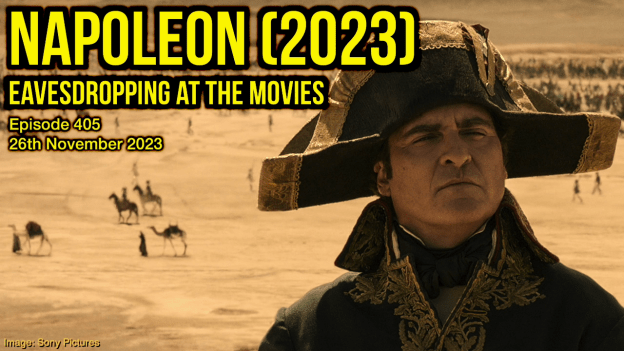
For our discussion of Ridley Scott’s new historical epic, Napoleon, we have the privilege of being joined by Paul Cuff, a film historian and expert on the Napoleonic era in cinema, including and especially Abel Gance’s Napoléon from 1927, about which he wrote A Revolution for the Screen: Abel Gance’s Napoleon. Together, we ask whether Scott’s film has anything to say about the man whose life it depicts – and if so what? – whether its ahistoricity matters, and how substantially it fleshes out its characters and the events and relationships dramatised.
David Fincher’s precise, controlled direction is a perfect match for Michael Fassbender’s precise, controlled performance in this lean but complex story of a botched assassination, revenge, and the hitman’s attempts to reassert precise control over his life.
We discuss the world in which The Killer is set and the way in which its title character operates, lives, and sees his place within it; the functions we see in its premise of a murderer-for-hire bored with his job, be it a critique of capitalism or a satire on work; the many names he assumes and what we take from the fact that they’re all drawn from sitcoms; the extraordinary audiovisual craft that we’re used to seeing from Fincher and thankfully not inured to; how the film uses noir and thriller tropes and where it might overplay them; the film’s obsession with process and procedure and why Mike likes playing it more than watching it; and more.
The Killer is a brilliantly conceived and assembled thriller filled with cinematography and editing to admire, and a lot to chew on despite its slight appearance. See it.
Based on true events, Killers of the Flower Moon tells a story that invokes the foundational genocide upon which the USA was built, but has its own peculiarities. The Osage Nation, a Native American tribe and unusually the owners of their reservation in Oklahoma, became extraordinarily wealthy in the early 20th century upon finding their land gushing oil – but in pursuit of their riches, the white population in the region devised a plan to rob them of their individual land rights, which were only allowed to be inherited. In telling this story, Killers of the Flower Moon justifies its three and a half hours of runtime – though there’s no reason not to include an intermission! – and Leonardo DiCaprio, in particular, has never been better.
We discuss the specific events depicted and the wider history to which they relate and that they evoke in microcosm; the complexities in DiCaprio’s character, who participates knowingly in hideous crimes but truly loves his wife, whose community and family he’s devastating, all the while not quite having the mental acuity to understand the full extent of what he’s involved in; the quality and qualities of the performances and characterisations; the visual design, effects of lighting, and evocation of the feeling of so many mid-20th century Westerns through subtle and specific elements of the cinematography; and the idiosyncratic ending and what it has to say to its audience.



 Eavesdropping at the Movies