Tag Archives: Barbenheimer

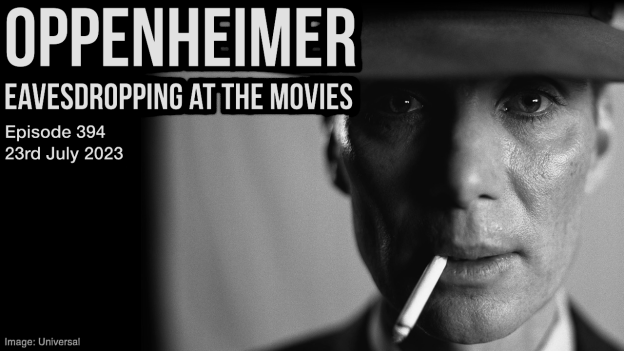
394 – Oppenheimer

Listen on the players above, Apple Podcasts, Audible, Google Podcasts, or Spotify.

The second half of our Barbenheimer double bill takes us to the BFI IMAX in London to see Oppenheimer, the complex story of J. Robert Oppenheimer’s infamous role in the development of the atomic bomb during World War II, the creation and use of which changed history. Writer-director Christopher Nolan, as he has done increasingly over his career, makes extensive use of IMAX 70mm film to tell the story, but as well the spectacle and landscape we’re used to it showing off, here it’s devoted to the intimate.

We’re joined by Mike’s brother and previous guest Stephen to discuss the film, and consider the use of IMAX for close-ups and portraiture, as well as the story’s structure and how the editing and music create pace, the film’s implicit attitude towards Communism, whether Florence Pugh is treated unfairly, the way in which black-and-white footage is used to convey a shift in perspective, how the attacks on Hiroshima and Nagasaki are handled, the Stan Brakhage-esque imagery that conveys the radical sense that all matter is energy waiting to be unleashed, and much more. For José, it’s Nolan’s best film. It certainly deserves to be seen on an IMAX screen.

With José Arroyo of First Impressions and Michael Glass of Writing About Film.

393 – Barbie

Listen on the players above, Apple Podcasts, Audible, Google Podcasts, or Spotify.

After a few months off, during which Mike has forgotten how to record podcasts – sorry about the audio early on – we’re back for Barbenheimer weekend. Never mind your Infinity Wars, this is the crossover they said would never happen, and the clash of tone between joy-of-pink Barbie and sin-of-man Oppenheimer, coincidentally released during the same weekend, has unexpectedly and charmingly reignited the public’s interest in going to the pictures. The question isn’t, “which one will you see?”, it’s, “which one will you see first?”

And we picked Barbie. Our screening was packed with young girls typically unaddressed by the biggest releases, and this film does a great job of correcting that. José describes its treatment of patriarchy as a fact as one of the most radical things he’s seen, and it’s a sign of where we are culturally that it can be, and that every joke and piece of commentary the film builds upon it is implicitly understood by an audience the film treats as intelligent.

Yes, Barbie‘s a toy advert. Yes, you’re always aware that every joke at the expense of Mattel and Barbie’s cultural footprint has the company’s stamp of approval. Yes, Mike brings up Jean Baudrillard. (He’s such a Ken at times.) But it’s also witty, ironic, self-knowing, and really good fun.

With José Arroyo of First Impressions and Michael Glass of Writing About Film.