433 – Juror #2

Listen on the players above, Apple Podcasts, Audible, Spotify, or YouTube Music.

A film whose brilliant conceit is so simple and compelling we can’t believe we’ve never seen it before, Juror #2 tells the story of a juror whose responsibility it is to assess the guilt of a defendant who he knows is innocent of murder – because it was the juror who did it.

Summoned to serve on a jury and quickly recognising the details of the case, Nicholas Hoult’s Justin realises that the deer he hit with his car one dark, stormy night was in fact the defendant’s girlfriend, for whose supposed murder he is on trial. So begins a morality play of sorts, Justin wanting to do the right thing and keep an innocent person from prison, but unwilling to expose himself as the real, if accidental, killer.

It’s a film that sets two institutions, the family and the court, at war. Justin’s wife has a baby on the way, and is there any wrong that can’t be justified by the protection of the family? We discuss this in the particular light of director Clint Eastwood’s reputation as a lifelong conservative, Mike suggesting that the distrust the film shows towards the legal system, a government institution, has precedent in Eastwood’s other work, but its critique of the sanctity of the family is surprising and invigorating.

Juror #2 is a thoroughly engrossing exploration of a terrific idea, and you’ll take its questions home with you long after it ends. What would you do? Are you sure?
With José Arroyo of First Impressions and Michael Glass of Writing About Film.

432 – Heretic

Listen on the players above, Apple Podcasts, Audible, Spotify, or YouTube Music.

Hugh Grant brings his idiosyncratic brand of English charm to the world of horror in Heretic, in which he isolates and tests the faith of two young Mormon missionaries. It’s a film that leaves you asking all sorts of questions, such as, “did anything he was up to actually make any sense?”, but for a horror film so heavy on the dialogue and relatively light on the scares, it’s fabulously enertaining throughout – a real achievement of direction and writing. See it!

With José Arroyo of First Impressions and Michael Glass of Writing About Film.

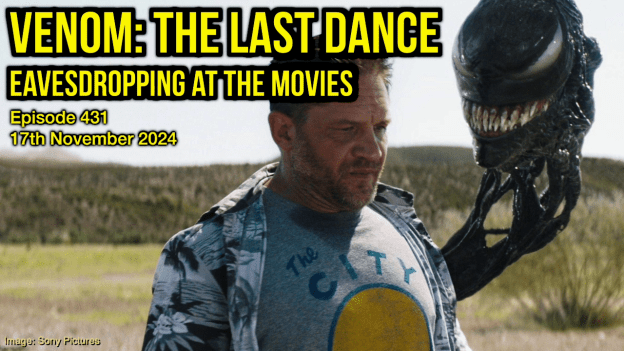
431 – Venom: The Last Dance

Listen on the players above, Apple Podcasts, Audible, Spotify, or YouTube Music.

We enjoyed the first. We didn’t care for the second. Does the third bring back the fun?

No, not really.

With José Arroyo of First Impressions and Michael Glass of Writing About Film.
430 – Gladiator II

Listen on the players above, Apple Podcasts, Audible, Spotify, or YouTube Music.

Ridley Scott returns to Gladiator after more than twenty years, telling a story that’s broadly the same, but neatly picks up from the original too. Gladiator II stars Paul Mescal in the central role, and we discuss whether he has the movie star charisma to match his indie film credentials; we also talk action, visual effects, Denzel Washington’s Iago figure, the trope of the gay villain, and more.

With José Arroyo of First Impressions and Michael Glass of Writing About Film.
429 – Joker: Folie à Deux

Listen on the players above, Apple Podcasts, Audible, Spotify, or YouTube Music.

2019’s Joker, which gave the iconic supervillain an all-purpose mental health disorder, a tragic origin story, and a name – Arthur Fleck – was never meant to have a sequel. But it made a billion dollars, so Joker: Folie à Deux is here. And, being a jukebox musical based primarily on show tunes from the mid-20th century canon, we ask who it’s for. The first film took risks in eschewing so many trappings of the comic book genre; did the filmmakers hope that their audience would respond similarly to further experimentation? Or is it a means of punishing an audience they attracted but loathe?

If the film hates its audience… well, so does Mike, which might explain why he got on with it. José, on the other hand, liked the first film, and is happy to see more of Joaquin Phoenix and hear those classic songs. Joker: Folie à Deux is far from a great film, not that close to a good film, and doesn’t have much of interest or intelligence to say about its themes – but it’s fascinating that it exists.

With José Arroyo of First Impressions and Michael Glass of Writing About Film.
428 – Megalopolis

Listen on the players above, Apple Podcasts, Audible, Spotify, or YouTube Music.

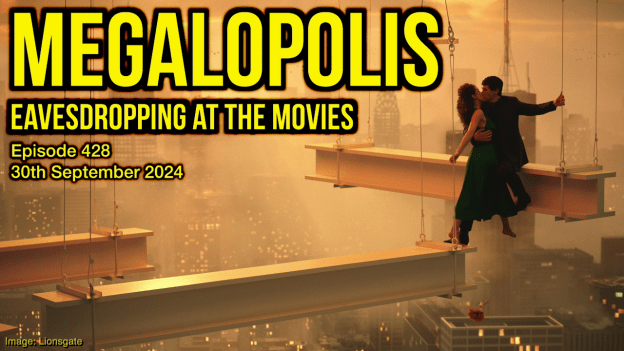
Francis Ford Coppola’s long-awaited passion project, Megalopolis, self-funded to the tune of $120m, has finally arrived. We love it. It’s wild, imaginative, earnest, and beautiful. We discuss and decry some of the criticisms of it we’ve already seen while coming up with some of our own – how could we have known that an octogenarian might hold rather traditional views? – in between breathlessly enthusing about what captivated us.

Megalopolis is hardly a perfect film but it’s a visual treat and a fantastic cinematic experience. Don’t let the naysayers’ sniping turn you off. Indulge!

With José Arroyo of First Impressions and Michael Glass of Writing About Film.
427 – Alien: Romulus

Listen on the players above, Apple Podcasts, Audible, Spotify, or YouTube Music.

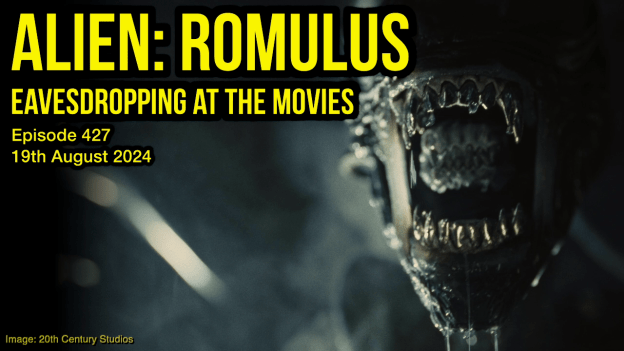
A welcome new instalment in the Alien franchise, which has moved between genres and directors, remained popular for over four decades, and offered fascinating expansions of its internal mythos, Alien: Romulus moves with the times to give Generation Z the opportunity to die in space. It goes like the clappers, orchestrates loads of entertaining, tactile action, and is unbelievably good-looking. It’s also underwritten, arguably overstuffed with reference to previous films in the series, and features one of those entirely uncontroversial and ethically pure reanimations of a deceased actor through CGI and other technologies. Perhaps after seeing the muted responses to the ideas on offer in Prometheus and Alien: Covenant, the series has decided to seek refuge in the cloying bosom of nostalgia – but we differ on how excessive it is, while enthusiastically agreeing that Romulus is great fun, and easy to recommend.

With José Arroyo of First Impressions and Michael Glass of Writing About Film.
426 – Caligula: The Ultimate Cut

Listen on the players above, Apple Podcasts, Audible, Spotify, or YouTube Music.

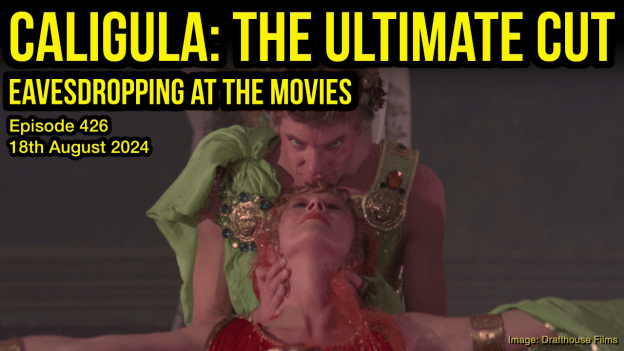
One of cinema’s most infamous disasters, Caligula was conceived by producer Bob Guccione, the founder of Penthouse magazine, as an explicit, expensively-made adult film, about the rise and fall of the titular Roman emperor. In pursuing this, Guccione removed director Tinto Brass during post-production, so that he could have hardcore pornography shot and inserted into the film. On its release in 1979, Caligula was critically savaged on both moral and cinematic grounds, confiscated by police in some countries, banned in others, and the cause of lines that stretched around the block. It has remained an artifact of cult interest ever since, and the subject of occasional attempts to reconstruct it in a form that reflects something approaching its creators’ original visions – to whatever extent their visions agreed with each other.

Caligula: The Ultimate Cut is the most thorough of these reconstructions by far, benefitting from the rediscovery of 96 hours of original material, which had been rushed out of Italy and hidden during the film’s release. Opening intertitles claim that every frame of art historian Thomas Negovan’s cut is previously unseen. It’s long been wondered whether there’s a great film within Caligula; although we don’t think The Ultimate Cut demonstrates that there is, it’s entertaining and striking, and offers an idea of what might have been.

With José Arroyo of First Impressions and Michael Glass of Writing About Film.

425 – Deadpool & Wolverine

Listen on the players above, Apple Podcasts, Audible, Spotify, or YouTube Music.

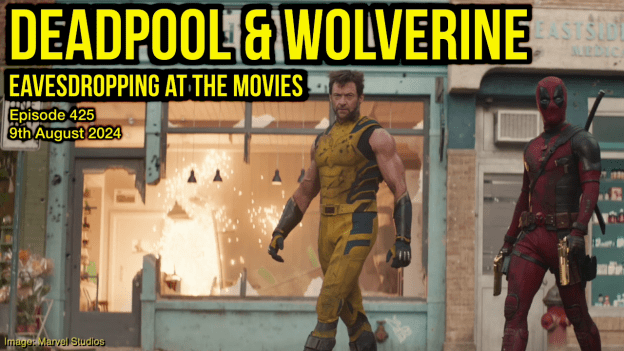
Deadpool 2 put us in such a foul mood when it came out in 2018 that we threw away our podcast on it. It was too toxic to publish. Fortunately, Deadpool & Wolverine, the third in the series, didn’t have such an effect on us – even José found some things to compliment about it.

Perhaps it’s the relative diminishment of Marvel since its peak in 2018, when it was reaching the climax of the story it had been building for a decade, that makes Deadpool & Wolverine work as it otherwise might not – its jokes about the X-Men joining the MCU at a low point really landed, for example. It’s far from perfect – Ryan Reynolds’ schtick remains smug, and the film tries to have it both ways, delivering snarky commentary on the sorts of things films like this do, then discarding the snark when it wants to do them itself. But it’s pacey, energetic, full of intense action with a delightfully cartoony attitude, filled with so many attempts to make you laugh that some of them are bound to work, and featuring a pair of enjoyable, charismatic villains: Matthew Macfadyen’s Mr. Paradox is a marvellously hammy presence, while Emma Corrin’s Cassandra Nova’s slight physique and genteel demeanour make her telepathic abilities all the more threatening.

With José Arroyo of First Impressions and Michael Glass of Writing About Film.

424 – Trap

Listen on the players above, Apple Podcasts, Audible, Spotify, or YouTube Music.

After a long time off, we return with M. Night Shyalaman’s new thriller, Trap, in which Josh Hartnett’s doting dad, Cooper, takes his daughter to see her favourite pop star at a massive arena gig, but finds himself surrounded and hunted by the FBI.

We discuss the ways in which Shyamalan gives Cooper opportunities for escape but closes them off; the unusually disappointing lack of imagination and expression in some of the visual design and shot selection (something we’re used to finding so interesting from Shyamalan); the attempt to sell a psychological background to Cooper, which is somehow neither intelligent nor daft enough; the production of the music and Saleka Night Shyamalan’s performance as Lady Raven; Mike’s fickleness in choosing whom to root for; and José’s joy at seeing Hayley Mills. But despite picking at flaw after flaw, as we always do, we had a great time in Trap, and recommend it.

With José Arroyo of First Impressions and Michael Glass of Writing About Film.