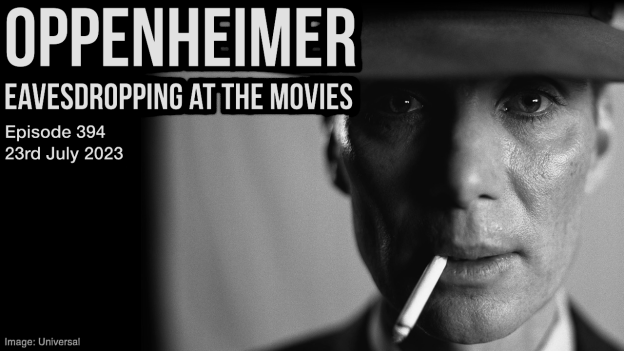
385 – Till

Listen on the players above, Apple Podcasts, Audible, Google Podcasts, or Spotify.

We disagree on Till, which dramatises the events surrounding the infamous lynching of Emmett Till, a black fourteen-year-old boy abducted, tortured, and shot in Mississippi in 1955, and his mother’s decisive actions following the crime, which included having his mutilated body shown in a public funeral service with an open casket, and having brutal photographs of it published in the press. Emmett’s murder and Mamie’s activism forced the USA to confront the reality of its racism and catalysed the civil rights movement – of course, progress made subsequently was not instant and vast racial inequality and injustice is present in the country to this day, but the passing of the Civil Rights Act in 1964 might not have happened if not for the events of nine years prior.

While Till‘s story has often been told and referenced in music, documentary and other media, it’s surprising to say the least that it’s taken this long to be the subject of a major feature film. Perhaps it’s the visceral nature of the case, the importance of the imagery of Emmett’s body that has led to such reticence, and, as José suggests, nervous anticipation of what might be depicted could keep audiences away. That imagery in Till is shocking and upsetting, but the film keeps a tactful eye on what it shows, and refuses to depict Emmett’s torture and murder.

Still, while we agree on the sensitivity and care with which we feel the film handles these crucial elements, we disagree on almost everything else. José sees in Till an intelligent, complex exploration of racism and power structures; Mike finds amateurism in its visual compositions and excess in its orchestral score. It’s a valuable film and one that never indulges in smugness or didacticism, but we refuse to provide a coherent opinion as to whether it’s good or not.

With José Arroyo of First Impressions and Michael Glass of Writing About Film.

384 – Avatar: The Way of Water – Second Screening

Listen on the players above, Apple Podcasts, Audible, Google Podcasts, or Spotify.

Listen to our previous podcast on Avatar: The Way of Water here.

We take a trip to London to see Avatar: The Way of Water again, this time on the biggest screen in the country at the BFI IMAX, in high frame rate and 3D. We discuss the difference in experience between seeing it here and at the IMAX Digital cinema at Cineworld Broad Street, where we saw it previously. Mike questions why the film switches between 24fps and 48fps, rather than sticking with the high frame rate throughout – director James Cameron describes how HFR assists in making 3D imagery less difficult to resolve, and implies that he limits its use to avoid the so-called “soap opera effect” that made the Hobbit films and Gemini Man look so cheap, but Mike doesn’t buy that it’s necessary to keep returning to 24fps, and thinks Cameron’s a big scaredy-cat. José, on the other hand, can’t seem to tell the difference between the frame rates at all.

We also discuss what a second viewing of the film brings into focus that we hadn’t put our finger on before, Mike comparing it to the nature documentaries that IMAX have produced for years, and José implores the film community to drop its snootiness and embrace the opportunity to see such a marvellous spectacle while it’s still in cinemas. It’s really special.

The James Cameron interview we refer to in the podcast is available here.

With José Arroyo of First Impressions and Michael Glass of Writing About Film.

383 – Matilda the Musical

Listen on the players above, Apple Podcasts, Audible, Google Podcasts, or Spotify.

The stage musical adaptation of Roald Dahl’s 1988 novel, Matilda, about a young girl with hyperintelligence, telekinetic powers, uncaring parents and a terrifying headmistress, premiered in 2010 and has gone on to achieve enormous popularity, as well as seven Olivier Awards and five Tonys. This cinematic adaptation features the same music and the same director as the stage version, but does it have the same magic?

With José Arroyo of First Impressions and Michael Glass of Writing About Film.
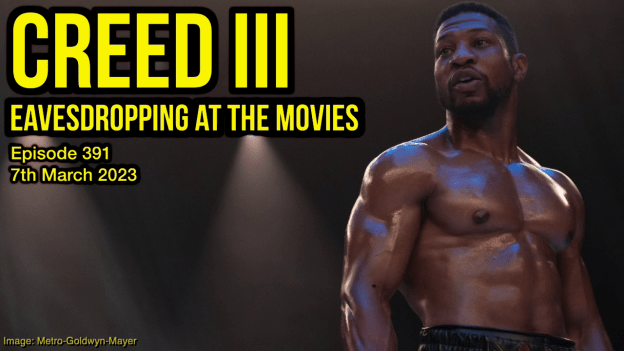
382 – Corsage

Listen on the players above, Apple Podcasts, Audible, Google Podcasts, or Spotify.

An icon across continental Europe though barely known in the UK, the life of Sisi, or Sissi – Empress Elisabeth of Austria to you – has been dramatised often, including in a famous trilogy of films depicting her youth that made Romy Schneider a star. In Corsage, the role is played by Vicky Krieps, and the perspective we’re given is of a woman whose societal purpose it is to bear children and look beautiful reaching the age of 40, a milestone that focuses her mind. It’s a film made by women about the particular effect that ageing has on women under patriarchy, but is it complex and insightful or predictable and obvious?
With José Arroyo of First Impressions and Michael Glass of Writing About Film.

381 – Avatar: The Way of Water

Listen on the players above, Apple Podcasts, Audible, Google Podcasts, or Spotify.

Listen to our second podcast on Avatar: The Way of Water, in which we discuss seeing the film in high frame rate at the BFI IMAX, here.

A mere thirteen years after the release of the highest-grossing film of all time, its sequel, Avatar: The Way of Water, arrives to a cinematic landscape that has changed significantly. James Cameron’s epic sci-fi franchise Avatar began life in 2009, when Marvel had released only two of its (at present) 30 films which would make universes, crossovers, and interconnected stories de rigueur for blockbuster cinema – and one of which would, briefly, overtake Avatar‘s record for worldwide gross. That’s how long it’s taken to create just one sequel to Avatar, with no indication that anything more complex than a linear progression of further sequels is planned. And there was no question that this sequel would, like its predecessor, make use of stereoscopic 3D – but while the 2009 film catalysed a new wave of interest in the technology, it has since fallen out of favour, as it always has over the years. As 2023 approaches, is The Way of Water out of date?

With José Arroyo of First Impressions and Michael Glass of Writing About Film.

380 – Glass Onion: A Knives Out Mystery

Listen on the players above, Apple Podcasts, Audible, Google Podcasts, or Spotify.

There’s an unwelcome element of particularly American and ill-fitting barbarism in Glass Onion: A Knives Out Mystery, a film that we hoped would be cleverer and more charming than it is. It’s also more of a straightforward thriller than a whodunnit, with one particular alteration to the murder mystery formula meaning that so much is kept from the audience that it stops being fun to play along. There’s still enough here to enjoy, but we’d like the third film to be more like the first, please.

With José Arroyo of First Impressions and Michael Glass of Writing About Film.
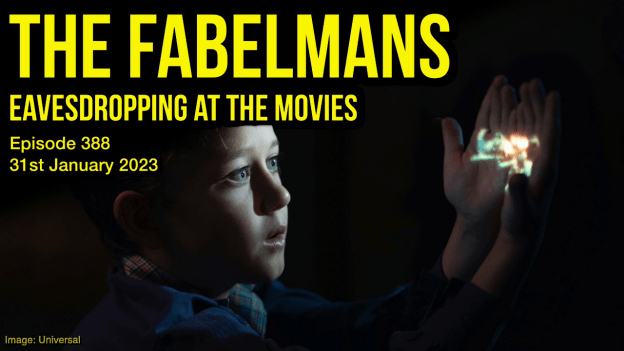
379 – The Old Dark House

Listen on the players above, Apple Podcasts, Audible, Google Podcasts, or Spotify.

If you’re tempted to explore this cult classic, the restored DVD and Blu-Ray of The Old Dark House is available as part of Eureka Entertainment’s Masters of Cinema series.

José gave an introduction to the MAC’s screening of The Old Dark House, a 1932 comedy horror directed by James Whale, focusing on queerness. James Whale was openly gay – although what it meant to be openly gay in the 1930s is up for discussion – and knowledge of his sexuality has led to interpretations of his work in that light, including Frankenstein (1931) and The Invisible Man (1933). The Old Dark House arguably invites such readings more explicitly than those, with the demeanour of Ernest Thesiger as Horace Femm (not to mention his surname), the relationship between Morgan (Boris Karloff) and Saul (Brember Wills), and the casting of a woman in the role of patriarch, with actress Elspeth Dudgeon credited as John Dudgeon.

As well as its queerness, we discuss its preponderance of tropes and how well they cohere, its use of distorted imagery, its pacing and more.

With José Arroyo of First Impressions and Michael Glass of Writing About Film.

378 – The Menu

Listen on the players above, Apple Podcasts, Audible, Google Podcasts, or Spotify.

The Menu is a smörgåsbord both of scenes, its plot dropping ideas as soon as it picks them up in its rush to entertain, and of styles and genres, with black comedy, satire and horror combining. But while it’s witty and engaging, it’s also inconsistent, unfulfilling, and, although the flights of fancy with which it imbues some of its action are good fun, fairly trite. As is way The Menu thinks of the food it mocks, so is the film itself: it looks delicious at first blush but fails to impress under scrutiny. And such small portions!

With José Arroyo of First Impressions and Michael Glass of Writing About Film.

377 – Black Panther: Wakanda Forever

Listen on the players above, Apple Podcasts, Audible, Google Podcasts, or Spotify.

The sequel to the best Marvel film by far has to deal with tragic circumstances – the star of the first, Chadwick Boseman, died at the age of 43 in 2020. His role was not recast; instead, Black Panther: Wakanda Forever shows us the funeral of his character, T’Challa, and his sister, Shuri’s, difficulty in dealing with his death. Letitia Wright, playing Shuri, has primarily been a source of comic relief in the MCU until now – we discuss how she copes with the dramatic heavy lifting now required of her.

Despite the foregrounding of Shuri, Wakanda Forever is reliant on an ensemble, and quite a radical one, as José puts it: the story of a male superhero has been adapted to feature a group of women in his place, and what’s perhaps most remarkable is how the film does it without the feeling of overt messaging and tokenism that is often present in tentpole films that do something similar. And the villain, Namor, has been given an ethnic background José assures Mike was never present in the comics, his new Mayan origins and historical conflict with the conquistadores allowing for his underwater civilisation to mirror Wakanda.

While memorialising Chadwick Boseman, Wakanda Forever is able to see a future following the loss of his character. That it would deal with Boseman’s death with tact and sensitivity wasn’t in doubt, but that the world of Black Panther could thrive without him was, and this sequel shows that it’s certainly capable of doing so.

With José Arroyo of First Impressions and Michael Glass of Writing About Film.

376 – Bros

Listen on the players above, Apple Podcasts, Audible, Google Podcasts, or Spotify.

We wanted to like Bros more. Co-writer and star Billy Eichner jumped at the chance to expand the boundaries of the wide-release Hollywood rom-com to tell the story of a gay romance and give representation to people who are usually marginalised, if included at all, in mainstream comedy, and whose inclusion is often at their expense. It’s a shame, then, that it’s dull, uncreative, flat, comedically unimaginative and unskilled, and preachy. What a colossal waste of an opportunity.

With José Arroyo of First Impressions and Michael Glass of Writing About Film.