Adam McKay brings the confrontational, fourth-wall-breaking style he employed in The Big Short to a story of lust for power, hidden agendas, opportunism, and as near as makes no difference a coup d’état of the American government, engineered from inside the White House. Christian Bale plays Dick Cheney as he transforms from a brainless layabout into the de facto President of the United States, operating with scary, virtually boundless power to do whatever he wishes. It’s energetic, interesting, self-aware, and makes statements and accusations as bold as you’re likely to see in mainstream cinema. But it’s difficult to trust, says only what you’d like to hear, narrates where there are obvious opportunities to dramatise, and, fundamentally, fails to do what a biopic should: develop and convey an understanding of who its subject is and why. We weren’t impressed with much more than the makeup, unfortunately – though it is brilliant makeup.
We also have a browse through the Oscar nominations, why not.
The podcast can be listened to in the players above or on iTunes.
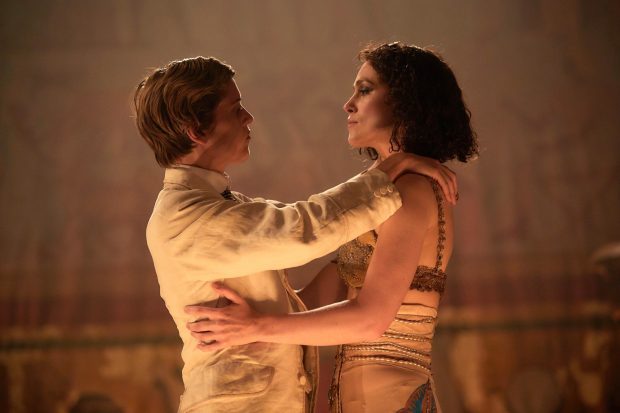
Gender-bending in turn-of-the-century France, with the true story of Colette, probably the most famous female writer in French history and author, although they were published under her husband’s name, of the Claudine stories. With representational interests that give voice and presence to people and lifestyles one might not expect in a period film, and two very good central performances, one sensitive and complex, from Keira Knightley, and the other fabulously charming, Dominic West’s, there are things we like. But our overall response is disappointed, the positives dulled by a poor script, some badly developed characters, and direction that allows no metaphor to pass unvocalised.
Mike considers it a potentially smart film destroyed by a pointless fear of its audience not getting it; José sees it as the middle-of-the-road cinema it is, for better and worse. It’s worth a look in some respects, but we can’t claim it’s a good film.
The podcast can be listened to in the players above or on iTunes.
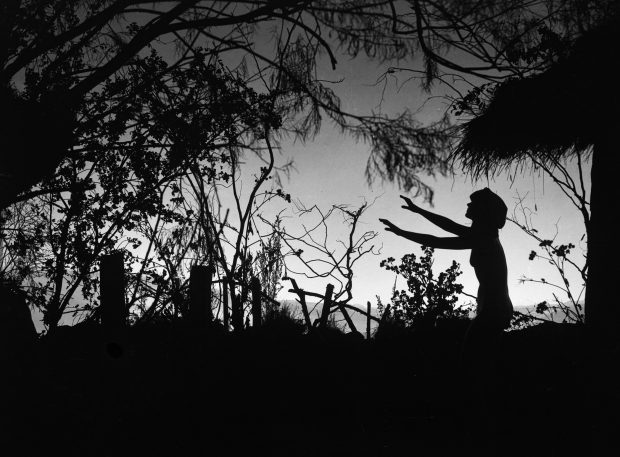
A 1922 Swedish-Danish silent film in the form of a semi-dramatised lecture, we had absolutely no idea what to expect of Häxan, written and directed by Benjamin Christensen. And what a great surprise it was, as we discover an extraordinary, perceptive, original, bold, witty piece of work that details the history of witchcraft, visualises medieval beliefs in wild set-pieces, and draws interesting parallels with modern-day institutionalisation of “hysterical” women.
The projection was out of this world, a 2K 2007 restoration by the Swedish Film Institute with unimaginable clarity, sharpness and contrast. It was unbelievable to look at. (Thanks to Holly Cooper for finding the technical details out for us.) And the film is full of images that benefit from the restoration; Bosch-esque dramatisations of Satanic seductions, a Witches’ Sabbath, and unholy births of demonic creatures. It was the most expensive silent film to ever emerge from Scandinavia, and it shows. Though neither Mike nor José is an expert on horror, and indeed despite Häxan‘s fundamental differences from horror, in its imagery its possibly foundational influences on several subgenres of horror is palpable.
There’s a remarkably sceptical, anti-clerical theme that runs throughout the film. While not strictly atheist, Häxan says clearly from the start it will discuss what folks in the Middle Ages believed without asking us to buy into it. Indeed, there’s a frankly dismissive tone: “Of course, this is all nonsense”, the film effectively says, “but let’s learn about it anyway, shall we?” This set-up, while unexpected, arguably creates a lack of direction and drive until the final chapter, in which we are brought into the modern day (of 1921) and Christensen draws direct links between the superstitions of old and what real-life events, phenomena and afflictions they may have been responding to. And that would be interesting, but the film goes further, talking about this all as not just a difference in the understanding of the physical world between people of different eras, but as a continuum of oppression and abuse of women. Burning at the stake, Christensen says, has been replaced by the mild shower of the mental institution, but how much progress does that really represent? Women are now considered to be ill or troubled rather than in league with the Devil, but is the difference between murdering and imprisoning them really so great? Not only does it pose these insightful and powerful questions, it even proposes things as specific as institutional sexual abuse keeping women in an inescapable cycle of incarceration and continued abuse; assaulted by the very men charged with running the system that’s supposed to protect them, they are left permanent victims, unable to plead their cases, for anything they say will be considered symptomatic of their hysteria, just as women on trial for witchcraft had no escape from torture and murder in a system that was ostensibly just.
We could go on. And in the podcast, we do. The 2007 SFI restoration we saw is available through Criterion, and you owe it to yourself to see it – it’s available on DVD and digitally on Amazon and iTunes, though the Blu-Ray appears to be available only in North America, unfortunately. Brilliant film.
(P.S. José would like to apologise for saying silent films ran at 8 frames per second, when they actually had frame rates that varied from 16-24 fps and often changed due to being hand-cranked.)
The podcast can be listened to in the players above or on iTunes.
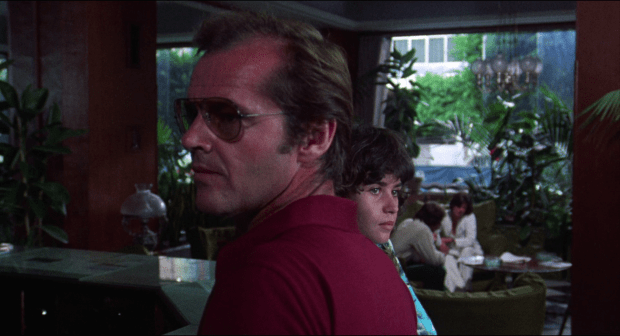
A remarkably lean Jack Nicholson steals a man’s identity in an attempt to leave his life behind in The Passenger, Michelangelo Antonioni’s existentialist thriller from 1975. Though the film contains many of the raw ingredients of a Bond film or Graham Greene novel – a charismatic leading man, a beautiful European love interest, criminal activity, subterfuge and globetrotting – Antonioni cooks up a deeply atmospheric, contemplative work about identity, dispossession and escape.
In the four days between seeing the film at the BFI Southbank and recording the podcast, the film grew in José’s estimation, while Mike was captivated by it immediately, commenting on the lucid, imaginative camerawork that brings past and present together in single takes and seems to give the camera a physical presence in the film’s world, and considering the displacement of Nicholson’s character, a man living between countries and cultures. José, having watched and written on a number of Antonioni’s films back in June (links below), expounds on why he loves them and what he sees as the connective tissue of his oeuvre.
Mike describes Maria Schneider’s unnamed companion character’s similarities to the modern trope of the Manic Pixie Dream Girl, José talks about the joy of seeing Spain in 1975, when he was but a wee nipper, and, of course, we give a few words to that penultimate shot, an extraordinary, brilliantly orchestrated long take that speaks of isolation and finality.
Something a little different for us today, as we visit the Tate Modern to view Christian Marclay’s 24 hour long video art installation, The Clock. It’s a looping supercut of clips from film and television that involve clocks, watches, and people telling each other the time, synchronised to the real world. If you watch it at 8:10pm, it’s 8:10pm in the film too. Supported by London’s White Cube gallery, some 12,000 clips were assiduously located and assembled over three years by Marclay and his team of six researchers to create The Clock, and since its first exhibition in 2010 it’s been popping up every now and again. We jumped at the chance to see it.
The Clock‘s scarcity, ambition, and strength of concept have arguably been partially responsible for its uniformly positive reception since 2010. We, however, find plenty to criticise, including a certain imperial flavour to the overwhelmingly Anglo-American choices of source films, not to mention the whiteness that pervades the entire project and lack of imagination displayed by its reluctance to explore outside the canon. If one of the ideas behind the piece is to draw commonalities between cultures and eras, as Mike suggests, then this is a failure not just to please our sensibilities but to achieve its own purpose. The few non-English language clips that do intermittently show up serve only to highlight their own absence.
There’s also a discussion to be had about the piece’s presentation. On the one hand, with the film housed in a vast, purpose-built room, entirely darkened, with sofas lined up in perfect geometric alignment, it’s an unadulterated joy to let the time fly by, even when you know full well that you’ve been stood up for two hours because no seat is available and the artwork itself has been counting the minutes, mocking you. José decries the dismissive, contemptuous treatment cinema receives in art galleries, on which he has also recently written – https://notesonfilm1.com/2018/12/22/the-museums-disdain-for-cinema/ – but finds The Clock‘s presentation in this respect faultless. On the other, likely for the sake of a smooth viewing experience, the source clips have all been cropped (and in a few cases, stretched) to fit the same aspect ratio, a decision that we feel shows disrespect for the images and people behind them that far outweighs any benefit it has as to unifying them.
There are, though, ways in which Marclay manipulates the source material that we find valuable. Indeed, the entire piece assembles clips from thousands of films, and editing is what it’s all about. When The Clock edits clips together along thematic lines, such as when we see people in different films, places, and eras all taking their seats for concerts and plays at the same time, and when it indulges in formal exercises, cutting together car doors slamming or people smoking, it qualitatively changes its source footage into something different, achieving interesting and sometimes simply swoony effects. At other times, a character in one film will pick up the phone and speak to a character in a different film (often in a different era), the piece using humorous juxtaposition to connect them. And the piece constantly edits and mixes its own soundtrack, using the source films as a basis and typically fading between them, again smoothing the viewing experience, and occasionally building a soundtrack that sits behind an entire section of clips, binding them and creating something new, such as the anticipation generated by Run Lola Run‘s soundtrack as the film chases down noon. It’s at these times that Mike is most impressed, seeing a marked difference between when The Clock is a film and when it’s a film project, finding that too often is it the latter. But those moments of filmmaking are quite fantastic.
The Clock is a singular work and one we’d urge anybody to see given the chance, but with room for significant and fair criticism. Keep an eye out for it.
The podcast can be listened to in the players above or on iTunes.
Greek weirdo Yorgos Lanthimos, whose off-kilter thriller The Killing of a Sacred Deer divided and provoked us a year ago, brings us The Favourite, a wild dramatisation of the power games surrounding Queen Anne’s bedchamber in the early 18th century. It’s his first feature on which neither he nor his usual partner Efthymis Filippou is credited as a writer, and that might account for its liveliness compared to his previous work, which tends to offer significant downtime in which the audience can ponder what it’s seeing. The Favourite moves rapidly and fluidly, the shifting dynamics between Olivia Colman’s Queen Anne, Rachel Weisz’s Lady Marlborough, and Emma Stone’s Abigail Hill constantly exciting, with their plans always subject to change depending on who knows what about others. And on top of the intrigue, it’s really, really funny.
The Favourite offers us a brilliantly cast and even more brilliantly performing female trio, picking on a rare historical moment in which all the most important and influential people were women. (The men are all secondary, made physical jokes of, with their extravagant costumes and makeup outdoing the women’s.) Sex is always on the table and made to mean different things to different people: to Marlborough and Abigail it’s a tool to be used to manipulate and control the Queen, to whom it offers intimacy and emotional satisfaction she deeply craves and is allowed to feel she doesn’t deserve. The film doesn’t offer titillation, nor does it wish to shock or surprise with its depictions of sex or even the concept of the lesbian relationships. It’s actually quite remarkable how the film so casually avoids making it superficial and gratuitous.
We take our time to appreciate the cinematography, extraordinary wide-angle and occasionally fisheye shots that render characters, particularly the Queen, tiny playthings in a ludicrously ostentatious doll’s house. Mike remarks upon the way status is conferred by placing characters above and below each other and shooting at extreme angles to emphasise; José picks up on the costuming and its relationship to gender, mentioning in particular his admiration for Nicholas Hoult’s self-effacing, generous performance as Robert Harley, impressed by his willingness to make himself a feminised figure of fun.
There’s so much more we loved and we’re effusive throughout the podcast. And again. It’s a really, really, really, really, very very funny film indeed.
The podcast can be listened to in the players above or on iTunes.
Much to Mike’s disdain – he throws tantrums about Netflix films – we settled in with a KFC to discuss Alfonso Cuarón’s Roma, a semi-autobiographical film about the live-in housekeeper to an upper middle class Mexican family. Carefully composed and inflected with a neorealist aesthetic, it’s been making countless year-end lists and is being touted as potentially Netflix’s first Best Picture nominee at the Academy Awards, so Mike wasn’t allowed to say no.
The film is remarkable for depicting modern-day indigenous Mexicans, people to whose existence many outside the Americas might not have ever given any thought. Yalitza Aparicio, Roma’s star, is a non-professional actor of Mixtec and Triqui origin, and simply her appearance is interesting, let alone the film’s use of Mixtec language (Mike gets this name wrong at first but don’t hold it against him) and its development of the indigenous population as lower class workers. We consider the use of black-and-white imagery – José questioning what it brings to the film – and the ways in which the sound design and long panning shots attempt to place the viewer within the film’s environments. Mike explains a prejudice he holds against “personal” films, and José considers Roma‘s place alongside Cuarón’s previous work, and the melodrama of the birth scene.
Mediático, a film and media blog focused on Latin American, Latino and Iberian media, took an immediate and deep interest in Roma and marshalled eight academics to each write a short essay on the film, and we refer to some of the points raised throughout the podcast. The dossier is well worth reading, will enrich your experience of the film, and can be found here: http://reframe.sussex.ac.uk/mediatico/2018/12/24/introduction-to-the-special-dossier-on-roma-alfonso-cuaron/
(The links to the essays are on the right hand side of the webpage.)
In addition, the dossier refers on several occasions to Richard Brody’s review of the film in The New Yorker, in which he is critical of the lack of a voice given to the main character and finds the film asks more questions of the world it depicts than it answers. We refer to this, too, and you can read it here: https://www.newyorker.com/culture/the-front-row/theres-a-voice-missing-in-alfonso-cuarons-roma
As for us? We find areas of interest, things to both agree and disagree with, in all the articles we read. José was deeply riveted by Roma despite a reservation or two and continues to see Cuarón as a great director. Mike was less interested, admitting that had he been watching the film alone, he would likely have turned it off before the halfway point; an issue with watching things at home that isn’t as pressing at the cinema (he wouldn’t have walked out of a screening). But that’s a tantrum for another day.
The podcast can be listened to in the players above or on iTunes.
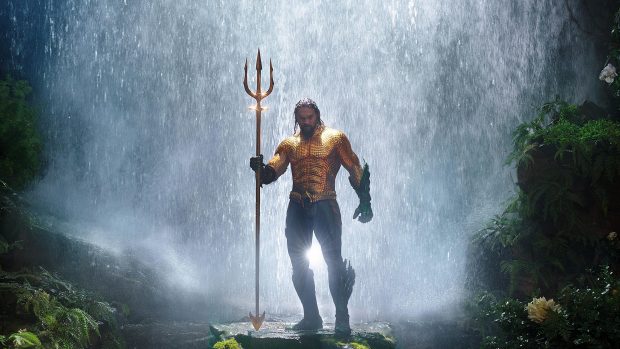
DC’s search for a cinematic tone continues to lurch between monochrome gravity and Technicolor frivolity, James Wan’s Aquaman firmly occupying the latter end of the spectrum. Although Mike has long been amused at how feeble is the concept of a superhero whose power is fish telepathy, the film has a good sense of humour about itself (even if some of the specific jokes are a little clunky) and hugely enjoyable freedom in its design, the giant seahorses a particular charm.
We discuss what’s to like and dislike about the film’s visual design and action, its message that violence is the least good solution to any problem, the welcome wisdom and calmness brought by Willem Dafoe and Dolph Lundgren (yes, really), and its adaptation of Arthurian legend and how it fits into a recent spate of films and television programmes fascinated with monarchy, bloodlines, divine rights and so on.
Jose is overall more reserved than Mike but still announces that he enjoyed himself, and the golden rule holds true: the key to happiness is low expectations.
The podcast can be listened to in the players above or on iTunes.
Mary Poppins is back after a mere 54 years since the first film. The kids have grown up, life has grown difficult, and a magical undying supernatural flying nanny is precisely what they need.
What they don’t need are new ideas. Mary Poppins Returns copies the structure and concepts of the first film almost to the point of parody, today’s Disney operating in a world in which people apparently want low-effort, straight-up nostalgia (as their spate of CGI-laden remakes of their animated classics can confirm). However, the film has its charms, in time the songs may become memorable – one can rarely tell on first viewing – and children are sure to love it as previous generations loved the last.
The podcast can be listened to in the players above or on iTunes.
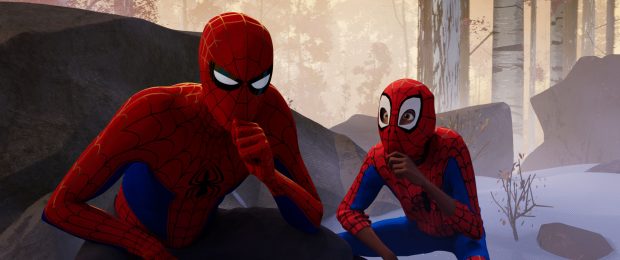
It’s colourful, friendly, packed full of visual energy and wit. It’s also light and just a little forgettable, like a straight-to-video movie that’s made it onto the big screen. But we had a good time and find lots to praise about Spider-Man: Into the Spider-Verse.
The podcast can be listened to in the players above or on iTunes.




 Eavesdropping at the Movies