Author Archives: michaeljglass

239 – Sorcerer

Listen on the players above, on Apple Podcasts, or on Spotify.

William Friedkin remakes Henri-Georges Clouzot’s The Wages of Fear, telling four strangers’ tale of their two-hundred-mile journey through the South American jungle, transporting dangerously explosive cargo for a US oil company. Though a flop upon its release, we find some nice things to say about Sorcerer.

It’s impressively narrated, largely wordlessly, although we wouldn’t have minded some character development, and Friedkin’s preference for spectacle over depth is on display: as with The French Connection, the end leaves us asking, “is that all it’s about?” The treatment of South America and its people is lazy if not worse, the central characters ending up in this hell as a form of cosmic punishment for their sins. But there’s a keen sense of pace to Sorcerer, despite how long it takes for the journey to even begin, some memorable images, and one outstanding, stunning set-piece. Its present-day reappraisal is understandable, and despite its problems, it’s worth a look.

With José Arroyo of First Impressions and Michael Glass of Writing About Film.

238 – The French Connection

Listen on the players above, on Apple Podcasts, or on Spotify.

A classic of Hollywood crime, The French Connection paints a bleak picture of life and justice in America, as Gene Hackman’s Popeye Doyle demonstrates that no matter how low the drug dealers he pursues, he can sink lower. We ask what its depiction of New York’s underbelly and the accuracy of Doyle’s hunches despite his revolting behaviour says about the filmmakers, and consider Pauline Kael’s assertion that the film is “what we once feared mass entertainment might become”. Underneath the iconic style and unforgettable chase, is there anything meaningful to The French Connection?

(You can see Mike’s film, which for some reason he doesn’t mind comparing to The French Connection, below.)

With José Arroyo of First Impressions and Michael Glass of Writing About Film.
237 – Bug

Listen on the players above, on Apple Podcasts, or on Spotify.

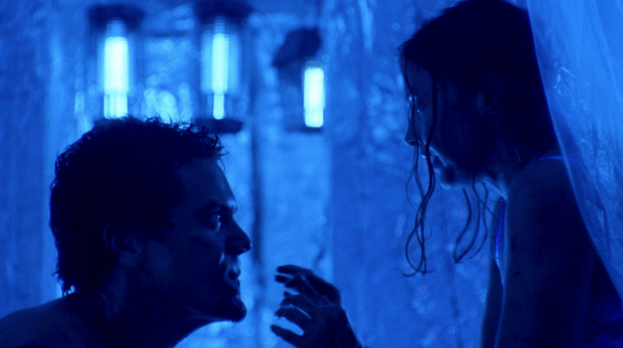
Adapted from Tracy Letts’ 1996 play of the same name, 2006’s Bug, directed by William Friedkin, sees two lonely people with traumatic histories connect and share a descent into madness. It’s a bit of an experiment, its theatrical roots obvious, some questions left unsatisfyingly unanswered, and it’s not until the final act that it takes off. But it’s interesting, features strong performances from Michael Shannon (who also played the role on stage) and Ashley Judd, and is essential viewing for anyone interested in Friedkin, Shannon, Judd or Letts.

With José Arroyo of First Impressions and Michael Glass of Writing About Film.

236 – Da 5 Bloods

Listen on the players above, on Apple Podcasts, or on Spotify.

Spike Lee’s latest joint sees four US Army veterans, the Bloods, return to their former battlefields in Vietnam in search of two things: the body of their fallen comrade and leader, Stormin’ Norman, and a cache of gold bars, intended during the war to pay the Lahu people for their help fighting the Viet Cong, but taken and buried by the Bloods for themselves. Set in the modern day, exploring the history of black oppression and racism in the USA, and released on Netflix among a backdrop of Black Lives Matter protests around the world, Da 5 Bloods could hardly be more relevant. But is it successful?

No, argues José. Spike Lee is in full-on propagandist, pamphleteer mode here, delivering lessons about racism and class, warfare and imperialism, black martyrs and heroes, but inartfully and clunkily. Although his direct address is striking and powerful, the Rambo-esque action adventure story to which it’s married lacks imagination and intelligence, and really functions only as a frame from which to hang the film’s essays. Its representation of the Vietnamese is at best crude and even arrogant, a scene with a man selling oranges and chickens particularly egregious, and its characters are thinly drawn, their relationships and development unsatisfying. Mike argues for one or two things he likes, particularly the way in which Stormin’ Norman is integrated into the story and the flashbacks to the war are put together, but ultimately cannot but agree with José’s disappointment.

Da 5 Bloods is an overpraised film that promises more than it delivers. But someone has finally managed to make a Vietnam film without using “Fortunate Son”, so there’s that.

With José Arroyo of First Impressions and Michael Glass of Writing About Film.
235 – Vitalina Varela

Listen on the players above, on Apple Podcasts, or on Spotify.

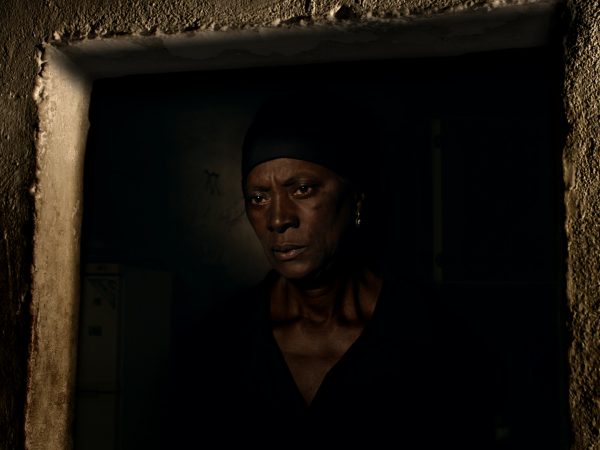
A slow, careful drama, Vitalina Varela – named for the non-professional actor at the centre, who plays a version of herself – tells a story of grief, anger, and discovery. Vitalina, abandoned by her husband in the 1980s, travels to Portugal from Cape Verde to confront him, but finds that he has passed away just days ago. She is left to explore the house he has left empty and the life he led without her for some forty years, and the film gives ample time to the feelings and questions that arise within her.

We discuss the economic situation depicted – this is a slum in Lisbon, built into the ground, feeling a world away from the vibrant, wealthy capital nearby – and Varela’s visual power, her performance one of presence as much as acting, as she moves slowly through the town like a ghost. Leonardo Simões’ cinematography is extraordinarily beautiful, thoughtfully composed and intricately lit, and Mike remarks upon how the edges of the 4:3 frame blend into the blackness of a widescreen television, giving a feeling of an expanse of darkness. We ultimately disagree on how much we liked it: José was engrossed throughout, Mike found the tempo a trial – but stories like Vitalina Varela’s are necessary to tell, rare to see, and worth experiencing.

With José Arroyo of First Impressions and Michael Glass of Writing About Film.

234 – Hook

Listen on the players above, on Apple Podcasts, or on Spotify.

A film dear to Mike’s heart since childhood, and a large blot on Steven Spielberg’s career despite its financial success, Hook imagines a world in which Peter Pan, J. M. Barrie’s flying boy who never grows up… grows up and forgets how to fly. When the adult Peter, a workaholic corporate lawyer unaware of his origins, travels to London with his family, his children are kidnapped, forcing him to return to Neverland, confronting his past, his attitude, and his erstwhile adversary, Captain Hook.

Hook is a chunky, colourful family film with flaws all over the place. Its action is unexciting, its plot composed of several disparate strands and themes that never cohere elegantly. José takes issue with Dustin Hoffman’s accent and John Williams’ score, finding the former pointless and unsuccessful, the latter prescriptive and overbearing. But Mike defends them, finding charm in them, and appreciating as an adult what never stuck in his mind as a child, in particular the central emotional conceit: that for all the costs of growing up, the refusal of the Lost Boys to do so, and the fact that all adults in Neverland are pirates, Peter’s happy thought – the crucial feeling that allows him to fly again – is of becoming a father and holding his newborn son. And José finds beauty in the lighting and staging of the film’s London townhouse scenes that he never appreciated upon its first release.

A messy film, but with pleasures. And anyway, it turns out that if you saw it five hundred times as a preteen then no criticism anybody can make can matter.

With José Arroyo of First Impressions and Michael Glass of Writing About Film.

233 – Hoop Dreams

Listen on the players above, on Apple Podcasts, or on Spotify.

From a central focus on two aspiring young basketball hopefuls from Chicago, Hoop Dreams weaves an incredible tapestry of race and class in America, without once explaining itself to the audience, without once winking and imploring us to notice something. William Gates and Arthur Agee, two black boys of about 14 or 15 years old, are plucked from their neighbourhoods by a scout for St. Joseph’s High School in Westchester, a white suburban private school that dips into the inner city looking for talent to boost its basketball team, chucking back any kid that doesn’t show enough promise. Over the course of several years, we follow William and Arthur’s development.

William and Arthur don’t start in the same place – William is touted as the next Isiah Thomas, a former St. Joseph’s alumnus who reached the NBA, and receives as an individual gift a personally guaranteed scholarship to St. Joseph’s from a wealthy benefactor. Arthur is labelled with no particular expectation beyond that he shows the potential to go pro, and whose partial scholarship becomes a financial burden once the school decides they’ve had enough of him – they want tuition fees from him now. The stresses put on these boys come from all angles – their school demands they perform for the team while keeping their grades up, their parents and communities put all their hopes into their success, and achieving stardom, a vanishingly unlikely prospect, feels like the only hope for a life free of minimum wage jobs and the power being cut off because of unpaid bills. Over the course of three hours, we understand intimately who William and Arthur are, the familial and socioeconomic circumstances that shape them, and follow them as they grow, learn, and encounter hurdles throughout their time at St. Joseph’s.

Hoop Dreams is an all-time great documentary, a portrait of life in early Nineties America that is both a state-of-the-nation declaration for its time and effortlessly legible and relevant today.

With José Arroyo of First Impressions and Michael Glass of Writing About Film.

232 – Ema

Listen on the players above, on Apple Podcasts, or on Spotify.

A somewhat elliptical family drama from Pablo Larraín, Ema tells the story of a young woman who returned a child she adopted, feels the loss deeply, and wants to get him back. We discuss the central performances from Mariana Di Girolamo and Gael García Bernal, how their characters throw the most painful insults at each other but remain so obviously in love, Ema’s sexual fluidity and willingness to use sex as a tool, the poetic opening movement to the film including the astonishing on-stage, colour-shifting Sun, and whether Ema’s pain is as apparent as we’d like.

With José Arroyo of First Impressions and Michael Glass of Writing About Film.
231 – Burt Lancaster

Listen on the players above, on Apple Podcasts, or on Spotify.

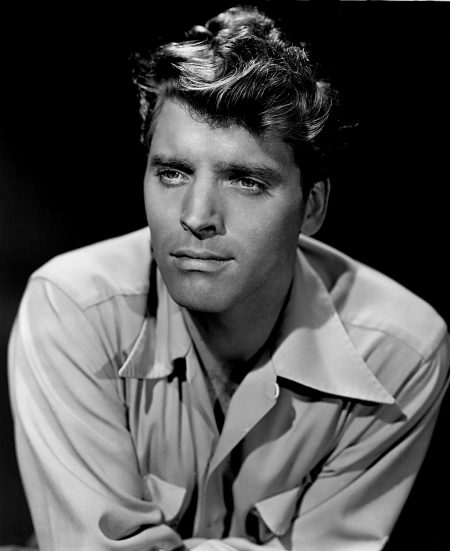
On a very special Eavesdropping at the Movies requested by our listeners, José takes us through the career of Burt Lancaster, every one of whose films he has been watching during the lockdown. Lancaster is a star through whose career a whole history of movements and evolutions in Hollywood can be tracked, from the studio noirs of the 1940s right through to the anti-war allegories of the 1970s, taking in all of the social, political, stylistic, industrial and aesthetic shifts that would take place in a constantly changing America.

On screen, Lancaster was capable of moving fluidly between genres and styles, including noir, action-adventure and Westerns, won the 1960 Oscar for Best Actor for Elmer Gantry, was regularly amongst the top box-office stars from 1950-1965, and worked with some of the great screenwriters and playwrights, including Tennessee Williams and Arthur Miller. Off screen, he was one of the foremost independent producers of his day. He fought against McCarthyism during the height of the Red Scare, employing blacklisted screenwriters when nobody else would, later made a number of anti-racist revisionist Westerns, and championed progressive causes throughout his life. José argues that Lancaster conceived of the cinema as a national theatre of ideas, a place in which conversations could be had and arguments advanced, a conception that ties his entire, varied career together.

Mike, on the other hand, has barely seen anything of Burt Lancaster’s, and José has put him on a crash course of five or six films in order to get a sense of his work, style and persona. He’s left with questions to throw at José: Why Lancaster hasn’t lingered culturally as strongly as some of his contemporaries? Is it his politics? His acting ability? His style? Is his reputation for muscles, teeth, and little else, justified?

Burt Lancaster, José concludes, represents the best of America. His work is ripe for rediscovery, and offers rich insight on a constantly changing culture and industry.

With José Arroyo of First Impressions and Michael Glass of Writing About Film.
230 – I vitelloni

Listen on the players above, on Apple Podcasts, or on Spotify.

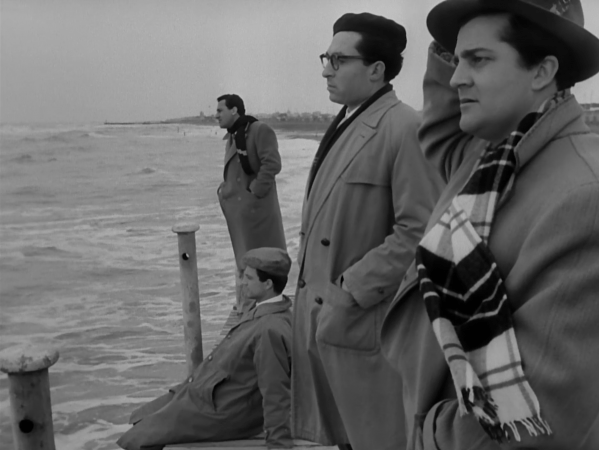
Federico Fellini invites us to hang out with a group of unemployed, lazy twentysomethings in 1953’s I vitelloni, one of his earliest films and an interesting portrait of life in a sleepy Italian town. For José, comparisons to his youth in a sleepy Spanish town abound; Mike finds links to British films that evoke similar feelings. I vitelloni is both culturally specific and universally relatable – every society has some version of the gang one grows up with, and the middle-class youngsters who think they rule the place.

We consider the motif of homosexuality – evoked in different ways by different characters, sometimes explicitly and sometimes only if we want to see it, but present throughout – and the theme of patriarchy, considering particularly the roles of women in the film, be they wives, mothers, or playthings, and ask what their agency is, if any – do they even believe they have any? Life in I vitelloni‘s seaside town is unconducive to personal progress, development, opportunity, and freedom, but where another story would express the frustrations felt by the constricted youth, here they harbour few ambitions.

I vitelloni is evocative and timeless – as coherent and understandable today as it was seventy years ago.

With José Arroyo of First Impressions and Michael Glass of Writing About Film.