Tag Archives: comedy

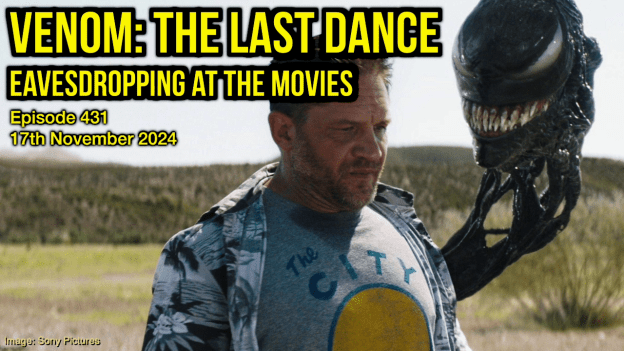
431 – Venom: The Last Dance

Listen on the players above, Apple Podcasts, Audible, Spotify, or YouTube Music.

We enjoyed the first. We didn’t care for the second. Does the third bring back the fun?

No, not really.

With José Arroyo of First Impressions and Michael Glass of Writing About Film.
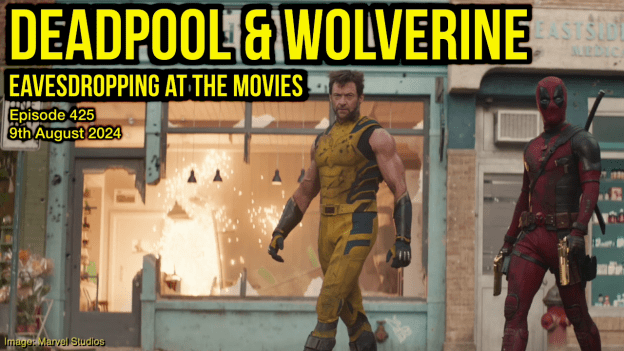
425 – Deadpool & Wolverine

Listen on the players above, Apple Podcasts, Audible, Spotify, or YouTube Music.

Deadpool 2 put us in such a foul mood when it came out in 2018 that we threw away our podcast on it. It was too toxic to publish. Fortunately, Deadpool & Wolverine, the third in the series, didn’t have such an effect on us – even José found some things to compliment about it.

Perhaps it’s the relative diminishment of Marvel since its peak in 2018, when it was reaching the climax of the story it had been building for a decade, that makes Deadpool & Wolverine work as it otherwise might not – its jokes about the X-Men joining the MCU at a low point really landed, for example. It’s far from perfect – Ryan Reynolds’ schtick remains smug, and the film tries to have it both ways, delivering snarky commentary on the sorts of things films like this do, then discarding the snark when it wants to do them itself. But it’s pacey, energetic, full of intense action with a delightfully cartoony attitude, filled with so many attempts to make you laugh that some of them are bound to work, and featuring a pair of enjoyable, charismatic villains: Matthew Macfadyen’s Mr. Paradox is a marvellously hammy presence, while Emma Corrin’s Cassandra Nova’s slight physique and genteel demeanour make her telepathic abilities all the more threatening.

With José Arroyo of First Impressions and Michael Glass of Writing About Film.
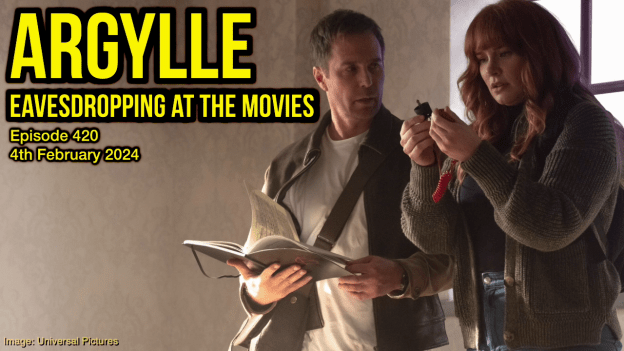
420 – Argylle

Listen on the players above, Apple Podcasts, Audible, Google Podcasts, or Spotify.

Is the world right, or is Mike? Argylle, Matthew Vaughn’s new spy comedy, has received terrible reviews and is bombing at the box office – but Mike thinks everyone else is wrong, taking it far too seriously, and missing the parody. José is more in tune with the vox populi, finding the film a slog, Henry Cavill’s hair ugly, and Bryce Dallas Howard ill-cast. But we find concord when it comes to the film’s action scenes, and we discuss the transitions between Cavill and Sam Rockwell, Howard’s look and movement, Mike’s continuing complaint about the peculiar look of British visual effects, and more.

With José Arroyo of First Impressions and Michael Glass of Writing About Film.
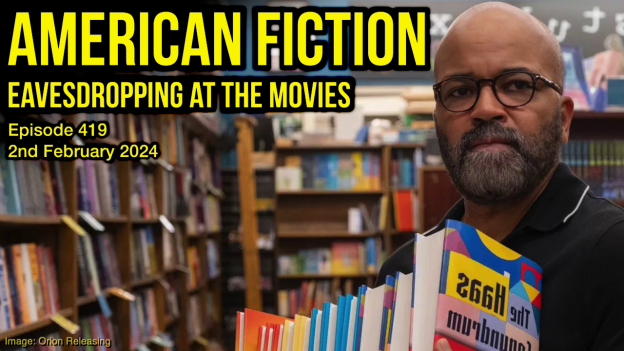
419 – American Fiction

Listen on the players above, Apple Podcasts, Audible, Google Podcasts, or Spotify.

Writer-director Cord Jefferson’s debut feature, American Fiction, combines satire with family dynamics to fairly charming, if visually uninspiring, effect. Jeffrey Wright’s Thelonius is a novelist forced into a leave of absence from his teaching position, whereupon he returns to Boston and reconnects with his family, from whom he’s distant. He’s also furious that his latest manuscript has been rejected for not being black enough, and that what “black enough” means involves every negative stereotype of black people and culture imaginable. But when he sarcastically writes such a novel to shove society’s attitude in its face, it’s taken seriously by the white literary elite, who shower it with praise.

From the trailer, Mike was expecting more focus on the satire, and more energy à la Boots Riley’s Sorry to Bother You. It’s a surprise, then, that American Fiction spends so much time developing the family drama, but not an unpleasant one, and José finds that aspect the film’s most interesting. We consider the idea that the film uses the family story to practice what it preaches, offering a story about black people that doesn’t require them to be black in order to justify its existence – it’s a universal story about distanced siblings, a mother with failing health, and broken marriages. And we discuss the film’s ending, or lack thereof, in which the inescapability of the culture that demands stereotype is emphasised at the expense of a satisfying, earned conclusion to the story we’ve been told.

American Fiction doesn’t create a single artful image, and that ending is disappointing, but the film is also interesting, absorbing, and funny. Worth a look.

With José Arroyo of First Impressions and Michael Glass of Writing About Film.
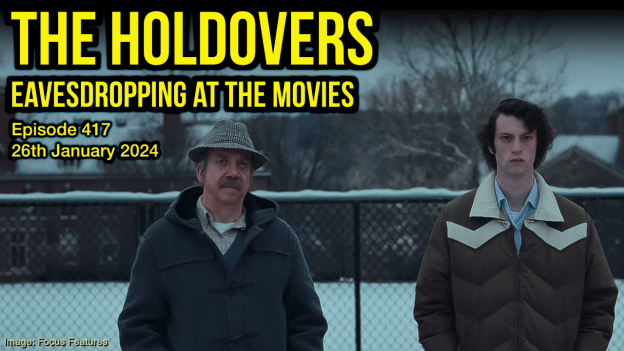
417 – The Holdovers

Listen on the players above, Apple Podcasts, Audible, Google Podcasts, or Spotify.

Alexander Payne evokes the Seventies in form and aesthetic in The Holdovers, a comedy-drama about the students and staff forced to stay at a New England boarding school over Christmas. It exudes charm and, over time, warmth, as the frosty relationship between student and teacher thaws, Payne handles the meandering tone beautifully, and it’s full of good jokes. For José, it doesn’t quite reach the level of the best in its genre; for Mike, it’s a good genre film elevated by some mysterious cinematic alchemy he doesn’t understand.

With José Arroyo of First Impressions and Michael Glass of Writing About Film.
414 – Poor Things

Listen on the players above, Apple Podcasts, Audible, Google Podcasts, or Spotify.

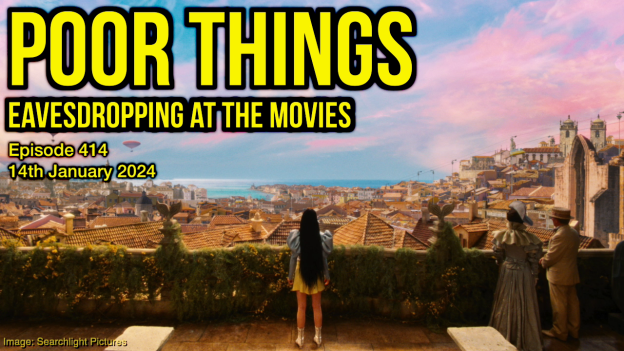
Yorgos Lanthimos’ latest absurd comedy, Poor Things, creates a wonderful confluence of themes, all through the lens of Bella, a grown woman with a child’s brain, experiencing the world anew and detached from emotion. We discuss Bella’s attitude to the world she encounters, the men who try to control and cage her, Lanthimos’ idiosyncratic visual style and comedic sensibility, the examination of the nuances of sex, what Mike finds lacking in the brothel scenes, and more.

With José Arroyo of First Impressions and Michael Glass of Writing About Film.
409 – Next Goal Wins

Listen on the players above, Apple Podcasts, Audible, Google Podcasts, or Spotify.

In something of a return to the sort of film that made his name, Taika Waititi co-writes and directs a quirky, charming comedy-drama set in Polynesia. Next Goal Wins adapts the true story of the American Samoan football team (and the 2014 documentary about it that gives this film its title), famously one of the worst teams on the planet, who begin the film in despair following their 31-0 world-record international defeat to Australia. Seeking new inspiration, they recruit Thomas Rongen, a Dutch-American coach with a reputation for losing his temper and getting sacked, to lead them in their quest for World Cup qualification.

We discuss Waititi’s comedic style, to what extent the film requires knowledge of the culture and sport it shows, the complexities of Rongen’s history and relationship with his ex-wife, and how Fassbender, not known for his work in comedy, fits uncomfortably into such a role, but what he brings to it dramatically that you wouldn’t typically expect. Most of all – we have fun! Next Goal Wins is an immensely likeable and charming film and it’s Christmas, after all. Or at least it was when we saw it.

With José Arroyo of First Impressions and Michael Glass of Writing About Film.

407 – Wonka

Listen on the players above, Apple Podcasts, Audible, Google Podcasts, or Spotify.

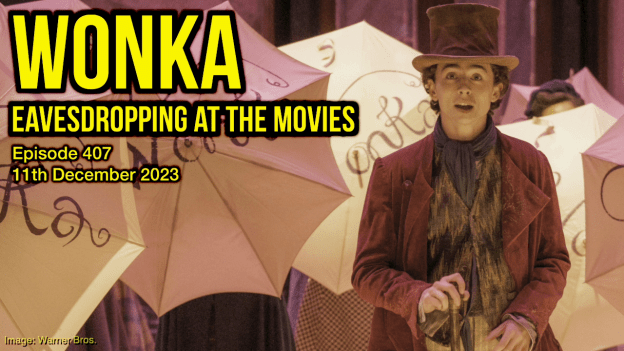
Paul King, the director of Paddington and Paddington 2, brings us Wonka, another reimagining of a British children’s classic. Roald Dahl’s beloved 1964 novel, Charlie and the Chocolate Factory, has been adapted twice: once in 2005 by Tim Burton, but most memorably in 1971 by Mel Stuart, with Gene Wilder as eccentric chocolatier Willy Wonka. It’s from the 1971 version that Wonka takes some of its cues (including musical ones), but in the service of that most 21st-century of cinematic artefacts: an origin story.

Within, discussions of: What we make of the world in which Wonka is set, one in which institutions purportedly in place for the public good are instead supportive only of corporate power; the reinterpretation of the Oompa-Loompas as a wronged people whose representative is out to retrieve what was stolen from them; Mike’s dissatisfaction with CGI and visual effects in British films and the production of the vocals in Wonka‘s songs; José’s opinion on Timothée Chalamet’s career and (apparently) uneven face; whether this film really benefits from its sentimental backstory and overtones; and how chocolate is best enjoyed.

With José Arroyo of First Impressions and Michael Glass of Writing About Film.
406 – Dream Scenario

Listen on the players above, Apple Podcasts, Audible, Google Podcasts, or Spotify.

Nicolas Cage plays a meme. Not just in real life any more, but now also in Dream Scenario, a quirky fantasy in the mould of Charlie Kaufman and Woody Allen, although nowhere near as funny. Cage’s biology professor starts appearing in countless people’s dreams for no obvious reason, blankly observing the events within, and soon becomes a minor celebrity – but as his presence in the dreams grows more active, public opinion turns on him.

Dream Scenario flirts with a variety of themes of modern society, such as fame, celebrity, cancel culture, power dynamics in academia, male ego, and the grammar of social media – arguably without meaningfully committing to any of them, but equally arguably avoiding the pitfalls that doing so might create. It dramatises the difference between who a public figure of opprobrium actually is and who the version of that figure is in the minds of the public that reviles him, depicting its angry mob with a mix of horror and amused fascination, but also refuses to indulge in cancel culture whining, explicitly critiquing the anti-woke world of the likes of Jordan Peterson and Joe Rogan. (An additional and crucial detail of the film is that, unlike people at the centre of similar real-life pile-ons, Cage’s professor has done nothing to instigate the hatred – his presence in people’s dreams and behaviour within them is entirely without explanation.)

Dream Scenario is an interesting film that builds on the infamous memeability – memeness? memeitude? – of its star to explore observations and nuances of modern, hyper-online, highly personalised culture. With all that said… we wish it were funnier.

With José Arroyo of First Impressions and Michael Glass of Writing About Film.

393 – Barbie

Listen on the players above, Apple Podcasts, Audible, Google Podcasts, or Spotify.

After a few months off, during which Mike has forgotten how to record podcasts – sorry about the audio early on – we’re back for Barbenheimer weekend. Never mind your Infinity Wars, this is the crossover they said would never happen, and the clash of tone between joy-of-pink Barbie and sin-of-man Oppenheimer, coincidentally released during the same weekend, has unexpectedly and charmingly reignited the public’s interest in going to the pictures. The question isn’t, “which one will you see?”, it’s, “which one will you see first?”

And we picked Barbie. Our screening was packed with young girls typically unaddressed by the biggest releases, and this film does a great job of correcting that. José describes its treatment of patriarchy as a fact as one of the most radical things he’s seen, and it’s a sign of where we are culturally that it can be, and that every joke and piece of commentary the film builds upon it is implicitly understood by an audience the film treats as intelligent.

Yes, Barbie‘s a toy advert. Yes, you’re always aware that every joke at the expense of Mattel and Barbie’s cultural footprint has the company’s stamp of approval. Yes, Mike brings up Jean Baudrillard. (He’s such a Ken at times.) But it’s also witty, ironic, self-knowing, and really good fun.

With José Arroyo of First Impressions and Michael Glass of Writing About Film.