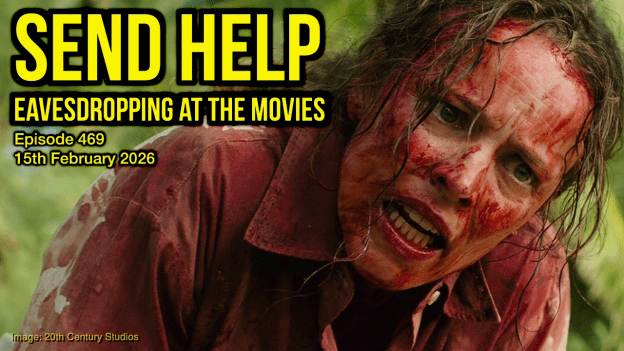
Send Help sees Rachel McAdams marooned on a desert island with her asshole boss in a cartoonishly gory comic adventure the likes of which made director Sam Raimi’s name. We discuss how feminist it really is – at the very least, it’s a bloke’s idea of female empowerment – and praise McAdams’ and Dylan O’Brien’s performances, upon which the entire film relies.
Possibly the sweetest and lightest gay BDSM biker film ever made, Pillion opens up conversations on power dynamics, consent and boundaries, and made Mike cry. Everything about it is so assured, particularly Harry Melling’s understated protagonist, meek and new to BDSM; Alexander Skarsgård’s commanding, mysterious lover; and Harry Lighton’s direction, the control of tone he exhibits a remarkable achievement for a first feature. We explore the film’s themes, offer different interpretations of events, and ask what’s good and bad about the relationship depicted.
Pillion is a wonderful film, with, given the subject matter, a surprisingly funny and wholesome spirit. Highly recommended.
Yorgos Lanthimos’ fourth collaboration with Emma Stone yields a darkly comedic thriller about two conspiracy theorists who kidnap a CEO, determined to reveal the truth that she’s an alien from Andromeda. We’ve all at least considered it.
While funny and absurd, Bugonia is also tragic and misanthropic, and we’re unconvinced that its ending is either earned or fitting, despite Mike’s insistence that he’s seen it coming for weeks. We consider the film’s messaging, aesthetics, and tone; what its stars bring to it and how they differ; what the title might mean; and how a comparison with Alex Garland’s Ex Machina reveals the lacks in the storytelling here. We pick at Bugonia left, right and centre, but despite our complaints, it showed us a very entertaining time, and there’s a lot about it to recommend.
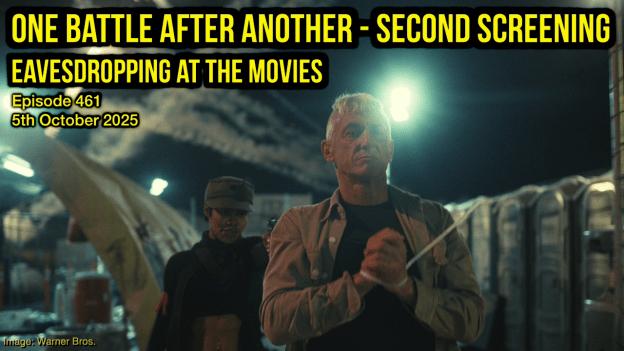
We’re joined by our resident Paul Thomas Anderson expert (and Mike’s brother), Stephen Glass, to whom we’ve previously spoken about Phantom Thread and Licorice Pizza, for another discussion of One Battle After Another. Stephen’s seen it in both VistaVision and IMAX 70mm, and can offer a sense of the experience Mike and José missed seeing it in IMAX Digital, and so begins a wide-ranging conversation about the film’s aesthetics, tone, politics, influences and more.
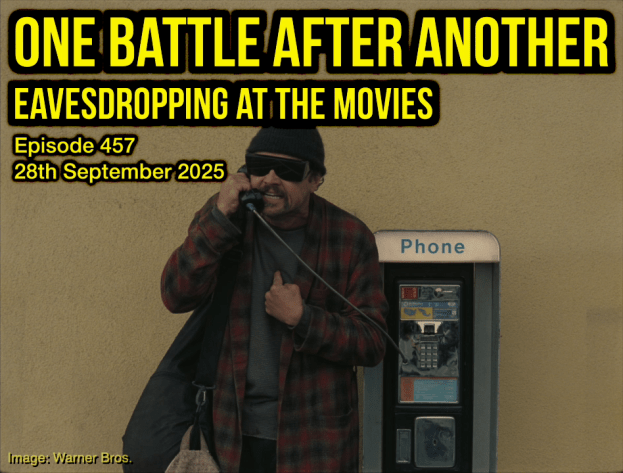
By far Paul Thomas Anderson’s most expensive film, with a budget some four or five times what he’s used to, and probably his most accessible, One Battle After Another entertains us enormously and effortlessly without sacrificing the complexity and nuance for which his work is known. Set in an alternate America oppressed by Christofascism, the alternate part is that there’s a very active militant revolutionary group, the French 75, setting bombs off and freeing detained minorities. Leonardo DiCaprio is part of it, and sixteen years after the conclusion of his group’s activities, their work has entered countercultural legend, but he’s become a drug-addicted, paranoid burnout, trying to raise a teenage daughter. When the powers that be come looking for them, they’re separated, all hell breaks loose, and he has to step up.
José finds One Battle After Another to be the film of the moment, the state of the nation film that Eddington could only dream of being, a powerful, invigorating expression of what ails America and what it means to resist. Mike is more cynical, seeing an element of mockery in the revolution that has no apparent intention to end and is carried out over generations. We love the easygoing style of filmmaking that Anderson seems to have grown into, comparing it to the rigid formality of his early work, and finding that he has a talent for action cinema that’s never quite come out before. We also discuss the film’s themes of youth and ageing, parenting, the Christian right and more.
One Battle After Another is an unmissable film, the kind that fifty years ago would have defined America’s national conversation. Cinema no longer holds that level of cultural cachet, sadly, but One Battle After Another is a powerful, energetic, and very funny reminder of what film can do at its best.
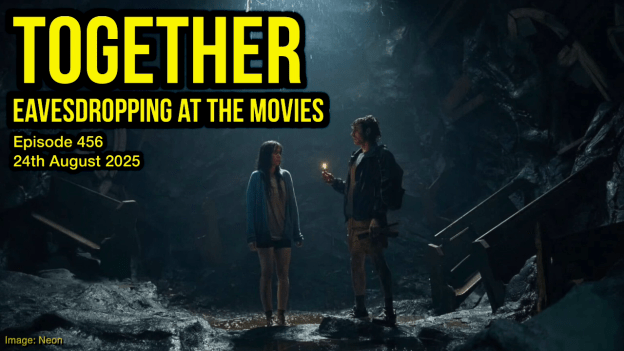
Commitment is scary. It’s especially scary when you drink water from a cursed puddle that wants to make a hybrid of you and your partner. Together tells the story of a couple moving to a new home during a questionable period in their relationship: she has a new job and is responsible for the move away; he’s emotionally distant since the death of his parents and relies on her for transportation and financial security. They love each other, but will they last?
First-time director Michael Shanks demonstrates a good instinct for tone, effectively combining comedy and horror – that Alison Brie and Dave Franco (married in real life) are both experienced comic actors helps the film draw out the absurdity of the events it depicts. What quibbles we might have with details of its supernatural basis are easily ignored because its focus always remains on the central couple. It doesn’t matter that some specific detail might not be explained to our satisfaction: the question is always, how do the couple respond to their predicament? Together never loses sight of what’s most important, and that makes it one of the best horrors – maybe one of the best films full stop – that we’ve seen in a while.
Most film and TV has quietly agreed to pretend that the Covid pandemic never happened. Perhaps it’s too awkward to discuss it. Perhaps it’ll date your work. Writer-director Ari Aster doesn’t share these worries, telling a story about the days of lockdowns, mask mandates and conspiracy theories – days of particular hostility and division in the USA, in which individual freedom does constant battle with the greater good.
Eddington is an ambitious attempt at the state-of-the-nation film: a darkly comic thriller with wild tonal shifts, a mass of interwoven themes, uneven pacing, and an eventual climb out of reality into absurdity. José finds much to dislike, particularly its dismissive attitude towards the young people it depicts supporting the Black Lives Matter movement; Mike is surprised at how much he likes it, given how let down he felt by Hereditary. Eddington is certainly a mixed bag, but we’re glad to have seen it.
Mike loves Tim Key. This much has been true for some time, and he’s thrilled to discover that the comic poet’s unique approach to wordplay and social interactions finds a natural place on the cinema screen, in the character of an eccentric lottery winner who lures his favourite folk duo, long since broken-up, to the lonely island on which he lives for a private gig. Tom Basden’s singer-songwriter finds the forced reunion an unwelcome intrusion from his past, and so begins a comedy about grief, loss, loneliness, and rice.
The plot is easily predicted, the visual nous close to absent, but it has a good heart and, in Key, an irresistably energetic, unusual central performance. It filled the Mockingbird with laughter and left us all feeling warm and cuddly and sad and happy. The Ballad of Wallis Island is a charming film, well worth watching.
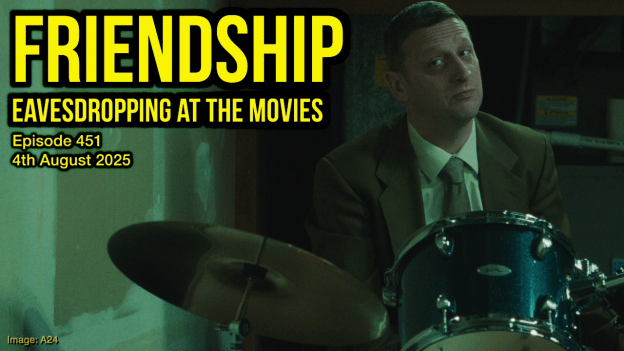
We talk adult male friendships, stress and surreality in our discussion of Friendship, in which oddball everyman Tim Robinson finds himself enamoured with effortlessly cool new neighbour Paul Rudd, but lacks any of the social nous to naturally bond with him. The film gets huge laughs from meaningful subject matter, a far cry from our experience with The Naked Gun. Its tone is idiosyncratic and its observations on human nature ring true in their exaggerated way, and Robinson is a fascinating and hilarious presence on the cinema screen. Friendship won’t be for everyone, but we highly recommend it.
The Naked Gun is rebooted with Liam Neeson in the part that was once Leslie Nielsen’s, and he shows just how hard comedy can be. We discuss everything the film gets wrong. If only they’d asked us for help.





 Eavesdropping at the Movies