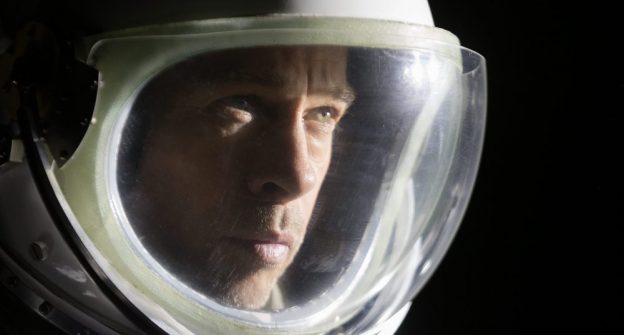
Ad Astra sees a withdrawn, isolated Brad Pitt take to the stars as Roy McBride, an astronaut in search of his father, and with him writer-director James Gray shows us stunning imagery and brings us brilliantly into McBride’s suppressed mental state. José is head over heels in love with the film’s epic feel, its exploration of universal human problems, the way in which it imagines a human race that, in spreading to and taming other planets and moons, brings its pre-existing problems with it, and the way in which Gray expresses McBride’s inner turmoil through action. Mike is less keen, particularly arguing for the weakness of the film’s first act, and asking questions of the film’s gender theming, but finds much to love too.
Ad Astra is a vast, careful, $100m art movie, the likes of which only Christopher Nolan normally gets to make. It’s very much worth your time. See it on the largest screen you can.
The podcast can be listened to in the players above or on iTunes.
J-Lo runs the show and steals every scene in Hustlers, Lorene Scafaria’s crime flick about a team of strippers who run a scam to steal from Wall Street traders and CEOs. Its style, energy and representational strategies impress us, it drew an audience to Cineworld that we aren’t used to seeing, and we discuss how it fits into what we decide to call “state of the nation cinema”, films that brazenly and deliberately depict, condemn and critique the institutions and power structures of modern America.
The podcast can be listened to in the players above or on iTunes.
A gentle, somewhat meandering podcast to follow a gentle, somewhat meandering film. Joanna Hogg’s The Souvenir talks of artistic development, the vigour of youth, life without money worries, and the complications of love, all through a soft camera and subtle performances. It’s a film that refers to and respects art, that remembers the past fondly, and that leads José to explain the Portuguese concept of saudade, quoting Eugène Green here.
The podcast can be listened to in the players above or on iTunes.
Ne Zha, a Chinese animated film, holds the record for the biggest box office in a single market (having made over $700m in China), but Mike isn’t that impressed with it, comparing it to the likes of Ice Age. José had a better time, though asks himself why he overlooks some of its more questionable elements, including a rather homophobic running joke that just doesn’t go away. But there’s a certain flair and thoughtfulness to some of its visual design and characterisation that we appreciate, and it gives us food for thought.
Discussing Ne Zha leads us into a conversation about British film culture as it relates to foreign language cinema. It’s not impossible to see foreign language films in Birmingham – though Ne Zha making it to Cineworld, as opposed to the Electric or mac, is notable – but outside London, the kind of culture that European and South American countries have of showing films from other countries as a matter of course in the main cinemas just doesn’t exist here. In going through our list of podcasts so far we see this reflected, a little over one eighth of our podcasts to date being about non-UK/US films, and a number of those thanks to MUBI, the streaming service, rather than cinema screenings. We can definitely do better, and intend to, but it is the case that foreign cinema culture in the UK barely exists.
The podcast can be listened to in the players above or on iTunes.
Adapted from the 1944 novel of the same name by Anna Seghers, writer-director Christian Petzold’s Transit behaves to some degree like Shakespeare in modern dress. The story follows a German man, Georg (Franz Rogowski), escaping facist-occupied Paris to Marseille, and there encountering other refugees, forging connections and affections with them, making arrangements at consulates for passage and visas to Mexico and the USA, all while rumour and hearsay about the spread of the occupation to the port city hangs over him. But with markers from nearly a century later – present-day vehicles in particular, although much of the clothing lives in an ageless world that bridges the years, and an ethnic component that makes more sense in today’s world than the Forties – Petzold turns a historical narrative into a fable of creeping fascism and the refugee crisis of today. Indeed, the idea that Transit functions like modern-dress Shakespeare might make it sound terribly stilted and artificial, but the real power of Transit‘s transposition to the modern day is just how perfectly it works. Transit‘s world is deeply convincing.
Mike argues that part of the reason that this is the case is the film’s focus on the refugees, and the details of day-to-day life in a city merely threatened by future occupation rather than currently undergoing it. The film’s explicit visual symbols of occupation – stormtroopers lining up citizens against walls, dragging refugees from their families – do stand out, and are both necessary and necessarily rare. That the occupation looms is enough, for the most part – it’s what it makes people do and feel that is the film’s focus, and it doesn’t need to build a Children of Men-style dystopia to explore that. The film is described on the poster, in rather an exciting quote from Indiewire, as “Casablanca as written by Kafka” – a glib line that we partially agree with. The Casablanca connection is clear, at least in basic terms being a complicated World War II love story set in a – for now – safe haven for refugees, the assignment and value of visas and travel documents of constant importance. The Kafka connection is inaccurate, the bureaucratic systems depicted in the Mexican and US consulates being ones that, while overwhelmed by vast numbers of refugees, aren’t designed to confuse or dehumanise. Whatever ails Georg isn’t Kafkaesque.
Georg, as José points out, is something of a cipher. We hear little of his story, know only one or two real details about him of any substance – and even one of those may be a lie – but to the film’s credit it’s not something we ever question. His mental state, reasons for behaving as he does, are always clear, if, as Mike suggests, a little frustrating at one point. Through him, we are able to hear people’s stories, those he encounters in queues and cafés keen to tell him who they are and why they’re there. Being able to tell one’s story and having it heard is a central theme to the film, as well as the ways in which we change or misremember our stories to our benefit – a slightly unreliable narrator occasionally describing things that differ in details from how we’re shown them. Georg may not speak much, may not tell anyone his story during the course of the film, but the narration tells his story in the third person – José having read that some or all of the narration is lifted directly from Seghers’ novel, though having not read the novel, we cannot be entirely certain of how much.
The narration, when it faithfully describes what we see, comes across to Mike as rather needless – showing and telling at the same time to pointless effect. Mentioning one scene in which the narration tells us that a number of refugees feel shame for standing by as a woman is violently separated from her family, he complains that the film should be able to convey this visually. José argues that underlining the point through narration is purposeful, bringing home that we in the present day should feel the same shame for standing by as refugees and immigrants have the same things done to them today. The narration changes a dramatisation into a call to action, and in so doing the film constantly asks us pointed ethical and moral questions of ourselves.
In short, Transit is a considerable film and unquestionably worth your time. We can’t recommend it highly enough.
The podcast can be listened to in the players above or on iTunes.
Following 2017’s It, the characters are 27 years older, the events of the first film mere memories, and the effects are more thrilling than ever. But it leaves us feeling much the same as its predecessor – despite fantastic production values, wonderful monster design, and attempts to delve into interesting themes of trauma and the scars with which it leaves us, it’s, well, kind of stupid really.
The podcast can be listened to in the players above or on iTunes.
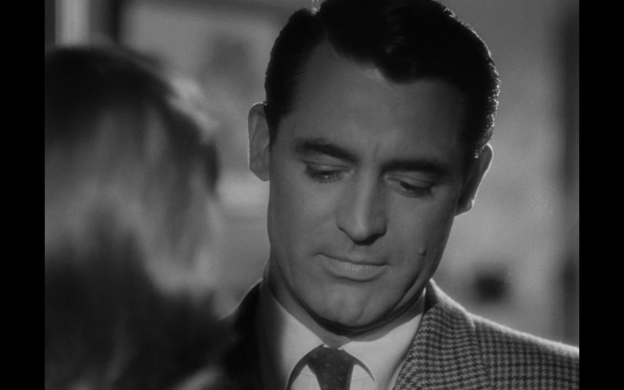
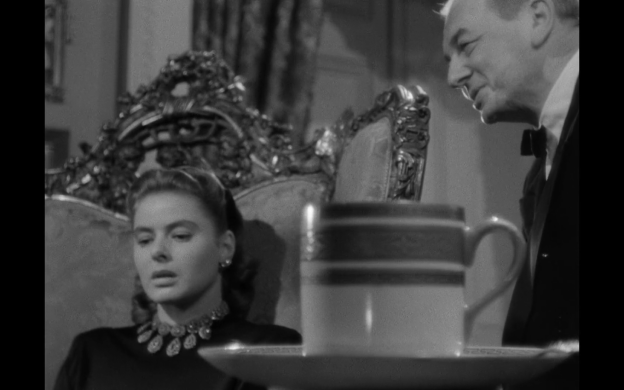
Considered by some to be his best film, Alfred Hitchcock’s Notorious comes to the MAC in a beautiful 4k restoration. We explore its sumptuous close-ups, complex characterisation and smart, effective editing, which elicited big responses from the audience, and José tells us about Ben Hecht, the film’s screenwriter.
The podcast can be listened to in the players above or on iTunes.
It’s probably fair to say that Pedro Almodóvar’s films seem to be made specifically for José. It’s in every detail: the locations, eras, sexuality, ways of life, attitudes, class, love of cinema and countless other aspects of Almodóvar’s oeuvre speak to José on a deep, intimate level. He’s watched every one of his films time and time again, and he considers Pain and Glory, which he has already seen twice and plans to see again, a masterpiece. Mike doesn’t have anything like such a specific relationship to Almodóvar, and indeed has only seen one other of his films, 2016’s Julieta, which he liked very much – and indeed he likes Pain and Glory just as much… though not quite as much as José.
We discuss how Pain and Glory stands alone but might benefit from being seen in relation to Almodóvar’s oeuvre. Several of his regular collaborators appear, including Cecilia Roth, Antonio Banderas, Julieta Serrano and Penélope Cruz; this film, as with The Law of Desire, Broken Embraces and Bad Education, is about a filmmaker; it makes use of art as an unconscious but pointed visual layering and underlying theme; images of characters writing on typewriters or computers show up – this is a film about, amongst other things, writing. Mike brings up the way chance events are used to drive the plot forward and thinks about how they’re contextualised; José praises how fluid Almodóvar’s storytelling is here, effortlessly bringing together disparate timelines and plot strands.
Is this autofiction, as the mother in the film accuses her filmmaker son of so often indulging in? José considers the appearance of Almodóvar’s own mother in his previous films and how so many of his previous films are in fact about mothers (All About My Mother and Volver being the most obvious examples). We discuss the structure of the film, the movement from the relationship with an actor who’s an addict to a previous relationship with an addict, through the performance of a confessional monologue titled Addiction, then a sexual awakening seen from a young boy’s point of view. Representations of Spain in the 50s, memories of the past and a present setting fluidly intermingle. We also consider its themes of illness, ageing and loss, and how it’s a film about cinematic expression, the revelation that half of the diegetic world is in fact a film within a film recontextualising half the story, similar to Bad Education but to different effect here.
It’s a film on which as soon as we finished, José regretted not saying more: The references to Lucrecia Martel’s La niña santa, the clear allusion to Fellini’s 8½, the use of Rosalía to sing the song by the river, the section on films that feature water such as Splendor in the Grass and Niagara. He’s only scratched the surface of a great film.
The podcast can be listened to in the players above or on iTunes.
There’s a remarkable female gaze in Animals, Sophie Hyde’s adaptation of Emma Jane Unsworth’s novel, and a wonderful sense of insightful observation in the world occupied by and behaviours of the two friends whose stories it tells.
Mike, who’d been anticipating it keenly since seeing the trailer, feels a little shortchanged by the triteness of the larger themes on which the film builds and the relative lack of excitement in comparison to what the trailer conveyed. José shares a little of that feeling but is keen to express his pleasure at seeing a film so confidently and originally expressive of a female perspective, particularly in its sex scenes. And we both adore the stars, Alia Shawkat for her fabulously performative comic theatrics, and especially Holliday Grainger for her extraordinary, sensitive, soulful expression of a girl falling in and out of love and friendship and upset with her own failings.
Animals is a film that explodes with creativity and expressiveness in the details, but whose big picture leaves us wanting.
The podcast can be listened to in the players above or on iTunes.















 Eavesdropping at the Movies